
How We Help Livestock Farms Treat High-Solids Organic Wastewater with Anaerobic Technologies
Global livestock inventories such as swine remain stable, yet the pressure to manage manure sustainably continues to grow. The US has developed technical models represented by integrated crop-livestock systems with on-field application and Comprehensive Nutrient Management Plans; Denmark, the Netherlands, and others have developed centralized biogas projects with digestate application systems.
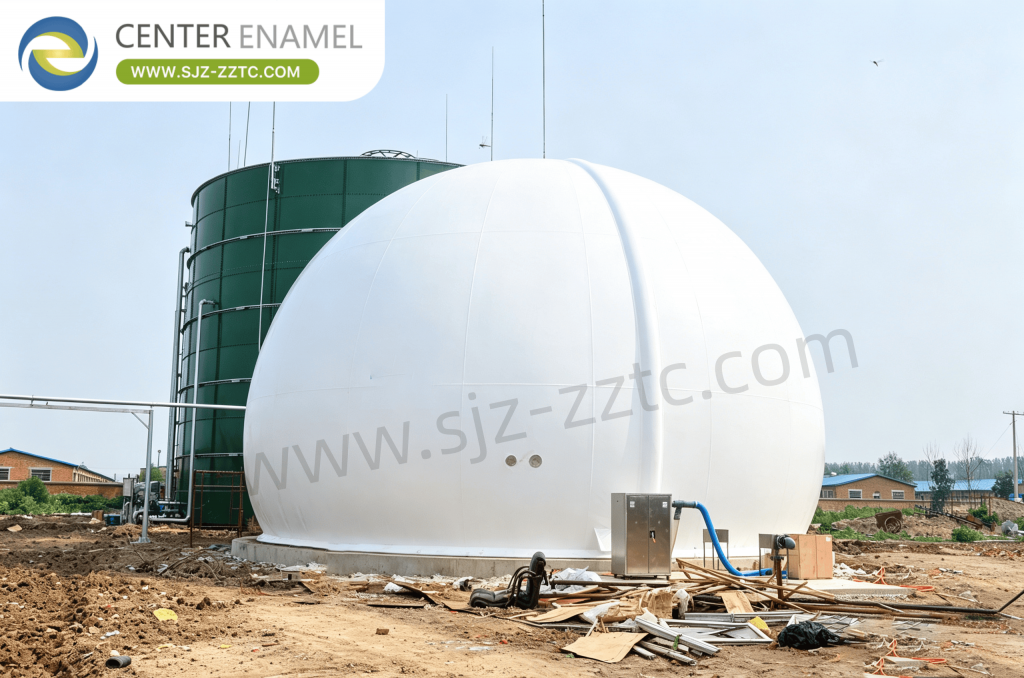
China's large-scale farms still have considerable room for improvement in supporting biogas project coverage, and digestate resource utilization rates lag behind advanced European levels. Greenhouse gas emissions from livestock account for a significant proportion of total global anthropogenic emissions, making manure management a critical battleground for agricultural carbon reduction. Latin American countries started later in manure management but are accelerating relevant infrastructure development. Against this backdrop, selecting the right Anaerobic Technologies and a reliable EPC Solutions partner has become essential for farms aiming to turn waste into value.
What Is the USR Process?
USR, or Upflow Solids Reactor, is an upflow anaerobic process modified for high-suspended-solids, high-solids organic wastewater, specifically designed to solve problems of clogging, sludge washout, and uneven reaction common in traditional anaerobic processes for high-solids wastewater. The process eliminates complex three-phase separators, simplifies internal structure, and relies on upflow hydraulics to promote thorough mixing of solid materials and anaerobic sludge. No strict granular sludge formation conditions are required-flocculent sludge can operate stably. The key feature is high solids tolerance and impurity resistance, with very high influent suspended solids tolerance. It is a dedicated high-efficiency anaerobic process for livestock manure, agricultural organic waste, and high-solids livestock wastewater, specifically developed for agricultural and environmental applications.
Where Livestock Wastewater Comes From
Livestock wastewater is the core agricultural pollution wastewater from large-scale poultry, livestock, and aquaculture operations, generated primarily during farming operations and facility cleaning. Poultry and livestock wastewater is the main component, including wash water from pig, cattle, and poultry housing, manure and urine seepage, and facility washdown-rich in livestock metabolic residues. Aquaculture wastewater comes from periodic pond water exchange and pond cleaning, with feed residues and metabolic waste as pollutants. Wastewater is primarily generated in peri-urban and rural farming areas. Small-scale farmers lack adequate collection facilities, with wastewater discharged directly to land and water. Large-scale farms have collection systems for centralized treatment, with water production varying with production cycles and cleaning frequency. Understanding these sources is the first step in designing effective Anaerobic Technologies and tailored EPC Solutions.
Center Enamel Development History
Center Enamel has been deeply engaged in the environmental bolted storage equipment field for over 30 years. Starting with proprietary enamel anti-corrosion material technology, the company has gradually completed the full-industry-chain upgrade from a single tank manufacturer to a comprehensive environmental EPC service provider. Throughout its 30+ year history, the company has been recognized as a National High-Tech Enterprise, National Specialized and Sophisticated "Little Giant," Manufacturing Single Champion, and Provincial Green Factory. It has successfully delivered over 30,000 environmental projects globally, establishing itself as a leading enterprise in the global GFS tank storage industry. The company has fully integrated the entire chain from enamel frit R&D, intelligent environmental equipment manufacturing, to EPC project contracting-every business breakthrough has been achieved through proprietary core anti-corrosion technology.
Table 1: Center Enamel at a Glance
| Indicator | Detail |
| Years in industry | 30+ |
| Global projects delivered | 30,000+ |
| Business scope | Enamel frit R&D, equipment manufacturing, EPC contracting |
| Key honors | National High-Tech Enterprise, Manufacturing Single Champion, Provincial Green Factory |
Professional Construction Team Manpower Reserve
Center Enamel has established its own domestic and international certified construction teams, with regular practical training on GFS tank installation and overseas construction standards for various countries. Domestically, regional construction teams cover multiple zones, capable of simultaneously deploying multiple teams for large tank farm projects. Internationally, cross-border professional installation teams are equipped to various country construction standards-sufficient manpower reserves ensure uninterrupted construction delivery for remote African sites, high-standard European/American facilities, and other projects.
Center Enamel R&D Team
Center Enamel has built a full-chain professional team covering R&D, design, marketing, installation, and after-sales. The R&D team is led by national-level materials technology experts, specializing in enamel frit and tank anti-corrosion core technologies. External senior environmental engineering and mechanical structure engineers are retained to strengthen R&D capabilities, focusing on anti-corrosion coating formulations, specialty corrosion-resistant tanks, and anaerobic supporting integrated equipment-continuously breaking through industry technological barriers.
The team operates through proprietary laboratories with external university research collaboration-conducting year-round new material and new process durability pilot testing and long-term corrosion simulation testing. Specialized enamel formulations are iteratively developed for extreme conditions such as high-salinity wastewater, strong acid/alkali POME, and high-organic livestock manure-providing core technical support for the company's annual new invention and utility patents-building a proprietary material technology barrier.
Innovative Material Technology
Center Enamel has independently developed over 200 anti-corrosion enamel formulations, with proprietary double-sided double-layer enameling technology-GFS tank anti-corrosion service life exceeds 30 years-far surpassing concrete and ordinary equipment-suitable for global high-corrosion wastewater and biogas fermentation conditions.
Table 2: Core R&D and Material Capabilities
| Capability | Detail |
| Enamel formulations | 200+ anti-corrosion formulas |
| Enameling technology | Proprietary double-sided double-layer |
| GFS tank service life | 30+ years |
| Research collaboration | University joint laboratories |
| Target conditions | High-salinity, strong acid/alkali, high-organic wastewater |
Ready to upgrade your livestock manure treatment with proven Anaerobic Technologies and end-to-end EPC Solutions?
Contact Center Enamel today for a customized design and a free project consultation tailored to your farm's high-solids organic wastewater challenges.
Let's turn your manure into biogas, fertilizer, and long-term value-reach out to our team and start your project with confidence.
FAQ
1. What makes USR Process different from traditional anaerobic technologies?
USR eliminates complex three-phase separators and does not require granular sludge formation. It tolerates high suspended solids, resists clogging, and operates stably with flocculent sludge-ideal for livestock manure and high-solids organic wastewater.
2. How does Center Enamel deliver EPC Solutions for livestock projects?
We cover the full chain: enamel frit R&D, equipment manufacturing, engineering design, installation, commissioning, and operator training. Our certified construction teams and global service network ensure reliable delivery in over 100 countries.
3. Why choose Center Enamel's GFS tanks for biogas projects?
Our GFS tanks feature 200+ enamel formulations and a 30+ year anti-corrosion service life. They withstand high-salinity, high-ammonia, and high-sulfide environments, making them ideal for livestock manure and biogas fermentation.