
How We Efficiently Treat Livestock Wastewater with USR Process and GFS Tanks
The livestock manure treatment market is transitioning from environmental compliance-driven to dual-value-driven by energy and fertilizer valorization. This shift is redefining what farms expect from their treatment systems. The European digestate concentration fertilizer market is mature, and large-scale biogas projects in North America commonly include digestate processing centers. In terms of business model innovation, the asset-light model of farmers paying per volume treated has been piloted successfully in some countries.
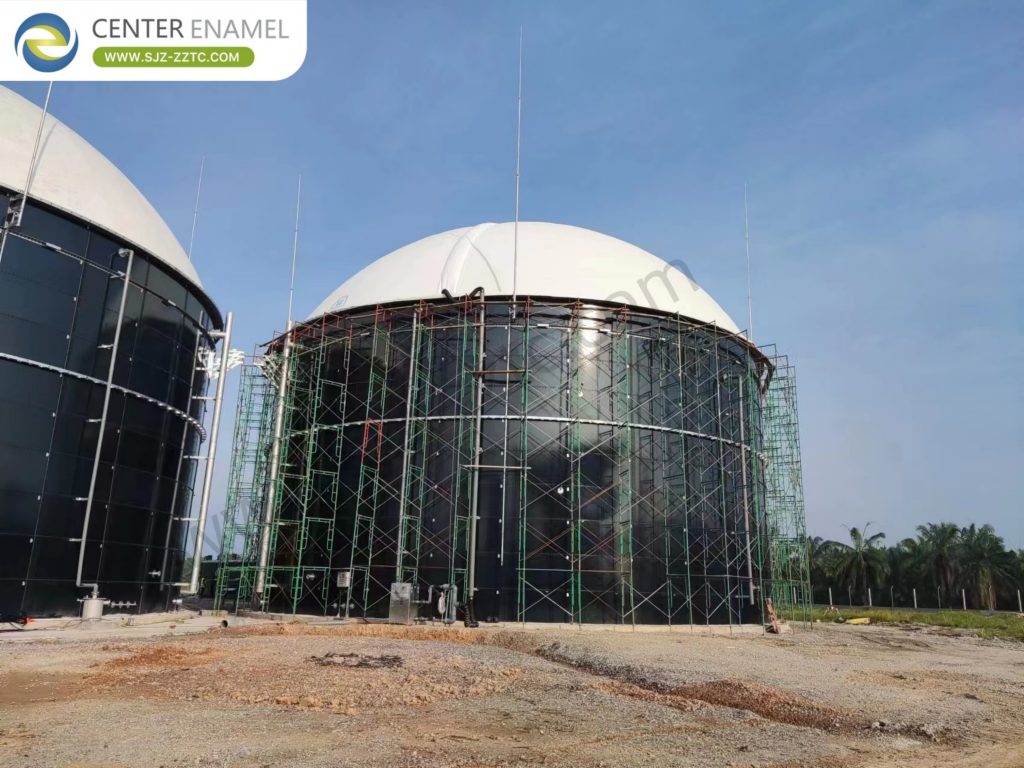
China's "biogas operation outsourcing" model is beginning to penetrate county-level projects. Digital technology-driven precision nutrient management platforms are emerging as new industry links connecting farms, treatment centers, and agricultural end-users. In terms of process equipment, CSTR is the mainstream anaerobic digestion process for treating livestock manure. After anaerobic digestion, manure produces biogas for power generation or grid-injection purification, while digestate is processed into organic fertilizer for farmland application. GFS tanks, with strong corrosion resistance and low maintenance costs, are widely used in manure treatment projects on large-scale farms in North America, Europe, and China, particularly suited to the corrosive environments of high ammonia-nitrogen and high hydrogen sulfide in manure.
GFS Tanks: Bolted Assembly Construction Advantages
GFS tanks are assembled on-site from prefabricated panels, with short construction periods and support for expansion, relocation, and reuse-advantages distinctly different from immovable concrete tanks. Concrete tank pouring requires formwork, rebar tying, pouring, and long curing periods, with a single tank construction taking months. Rain, snow, and low temperatures force work stoppages and delays. Once poured, they are permanent fixed structures that cannot be dismantled, expanded, or relocated-project relocation means complete abandonment.
GFS tank panels are all factory-prefabricated, transported to site, and directly assembled in panels with simple procedures. Construction can proceed even in low-temperature, light-rain conditions, with installation time only one-third that of concrete tanks-construction schedules are controllable. For expansion, additional steel panels can be installed to increase volume; for plant relocation, tanks can be fully disassembled with panels transported to new sites for reassembly and reuse, significantly reducing material and construction costs for new construction and reconstruction. This is ideally suited for short-term environmental projects, phased expansion projects, and relocated construction projects.
Table 1: GFS Tanks vs. Concrete Tanks
| Comparison Item | GFS Tanks | Concrete Tanks |
| Construction period | One-third of concrete tanks | Months per tank |
| Weather impact | Works in low temperature, light rain | Rain, snow, low temperature cause stoppage |
| Expansion | Add panels to increase volume | Difficult, permanent structure |
| Relocation | Fully disassembled and reused | Abandoned |
| Best suited for | Short-term, phased, relocated projects | Permanent fixed sites |
USR Process Advantages
High solids tolerance, clog resistance, and strong adaptability, perfectly suited for high-suspended-solids, high-impurity, high-solids organic wastewater. Extremely simple equipment structure, no precision wear parts, low capital investment, long service life, virtually no clogging failures, and extremely low subsequent maintenance costs. No strict requirements on sludge morphology-no need to cultivate mature granular sludge, flocculent sludge can operate stably, with fast start-up and short sludge acclimation period for rapid commissioning. Gentle hydraulic disturbance results in low sludge washout and high sludge utilization, with stable organic pollutant degradation. Simple operation with low automation requirements and high error tolerance, suitable for remote sites, farms, and other settings with limited O&M capabilities-outstanding stability and practicality advantages.
Environmental Toxicity of Livestock Wastewater Pollutants
No synthetic chemical toxicity, no hazardous substances-very low risk of acute or chronic toxicity. Pollution impacts are primarily biological and nutrient pollution. All pollutants are natural organics from livestock metabolites and feed residues, with no inhibition of microbial activity and no toxicity to soil, water, or aquatic organisms. However, they are rich in nitrogen, phosphorus, and suspended impurities, carrying E. coli, parasite eggs, and pathogens. Direct discharge without treatment rapidly causes eutrophication, black-odor conditions, mosquito breeding, and disease transmission. Long-term discharge causes soil compaction and elevated nutrient levels in groundwater-persistent ecological pollution, but no hazardous substance accumulation or carcinogenic/mutagenic risks.
Full-Process Standardized Installation Quality Control
Demonstrating high-standard installation quality through long-term stable global project performance, Center Enamel has established full-chain quality control standards across four dimensions: factory protection, on-site assembly construction, completion inspection, and long-term warranty-ensuring quality control for every GFS tank.
At the factory stage, all enameled panels, seals, and structural components receive rust-proof and moisture-proof independent packaging with dedicated protective supports-preventing damage during sea and land transport and avoiding enamel coating damage. On-site construction strictly follows unified assembly process specifications-panel by panel tightening and leak testing in layers, with airtightness and verticality testing after each tank section completion-dual-membrane covers and anaerobic piping undergo simultaneous pressure testing and acceptance.
Differentiated quality acceptance standards are customized for different regions: EU/US projects follow stringent CE/NSF inspection criteria; Southeast Asian hot humid regions receive enhanced corrosion protection and sealing acceptance; remote African sites have additional foundation settlement re-inspection procedures. Upon project completion, complete construction inspection reports, pressure test records, and anti-corrosion appearance acceptance documents are issued, with full photo/video archives retained. Over 10,000 tanks delivered globally have operated long-term without large-scale leakage or structural deformation-preventing future O&M issues at source.
Table 2: Four-Dimension Quality Control Standards
| Stage | Key Measures | Regional Differentiation |
| Factory protection | Rust-proof, moisture-proof packaging with protective supports | All regions |
| On-site assembly | Panel-by-panel tightening, layered leak testing, verticality checks | All regions |
| Completion inspection | Pressure test records, anti-corrosion acceptance documents | EU/US: CE/NSF; SE Asia: enhanced sealing; Africa: settlement re-inspection |
| Long-term warranty | Photo/video archives, 10,000+ tanks without leakage | All regions |
Global Benchmark Project Cases
Center Enamel's project portfolio covers over 100 countries across Southeast Asia, Africa, Europe, and the Americas-30,000+ mature projects-accumulating complete industry solutions across palm oil, livestock, municipal, brewing, and food waste biogas-rapidly matching customized solutions for different regional climates, water quality, and regulations.
Aluminum Alloy Trough Deck Roof
Aluminum Alloy Trough Deck Roof is a cost-effective economical tank cover solution for clean water and wastewater storage scenarios, primarily designed for drinking water, production wastewater, and firewater reserve tanks, balancing practicality and cost advantages. The main body is integrally formed from anti-corrosion aluminum alloy plates, paired with aluminum support trusses. Its lightweight design imposes less load on the tank foundation, reducing civil construction investment. A naturally formed dense oxide protective layer on the surface resists rain and mild wastewater corrosion, withstands outdoor sun and rain exposure, and effectively blocks wind, rain, insects, fallen leaves, and odor volatilization, protecting water quality by preventing dust and debris from falling in and causing secondary contamination.
The flat roof structure is neat and orderly, allowing installation of maintenance walkways, guardrails, vents, and level monitoring ports on top, facilitating daily inspection and equipment maintenance. The simple sealing structure enables straightforward installation with short construction timelines, and virtually eliminates the need for anti-corrosion painting maintenance, resulting in extremely low operational costs. It is suitable for various small, medium, and large atmospheric pressure water storage tanks, and has been widely implemented in waterworks clear water tanks, industrial circulating water tanks, park firewater tanks, and domestic wastewater temporary storage facilities. It is highly compatible with water storage applications that do not require biogas collection or high-pressure sealing.
Ready to treat your livestock wastewater efficiently with proven USR Process and GFS Tanks?
Contact Center Enamel today for a customized solution and a free consultation on your farm's specific manure treatment needs.
Let's turn your livestock waste into clean energy and organic fertilizer-reach out to our team and start your project with confidence.
FAQ
1. How does the USR Process improve livestock manure treatment efficiency?
The USR Process tolerates high suspended solids, resists clogging, and requires no granular sludge. It offers fast start-up, low sludge washout, and stable degradation-ideal for remote farms with limited O&M capabilities.
2. Why are GFS Tanks preferred over concrete for manure projects?
GFS Tanks install in one-third the time, resist high ammonia and hydrogen sulfide corrosion, and support expansion, relocation, and reuse. Over 10,000 delivered tanks have operated without large-scale leakage.
3. What quality control ensures GFS Tank reliability?
Center Enamel applies four-dimension control: factory protection, on-site assembly with layered leak testing, completion inspection with regional standards (CE/NSF, enhanced sealing, settlement checks), and long-term warranty archives.