
How We Help Livestock Farms Treat Wastewater Efficiently with GFS Tanks and USR Process
Livestock farms face a wastewater problem that is both concentrated and relentless: high-strength organic effluent produced every day, in volumes that fluctuate with production cycles and cleaning routines. Treating it efficiently requires two elements working in concert-a containment vessel that survives the aggressive chemistry of manure, and a biological process that tolerates high solids without clogging. Center Enamel answers both needs by pairing corrosion-resistant GFS Tanks with the purpose-built USR Process. The result is a treatment system that recovers energy as biogas, resists the toughest farm conditions, and keeps operating costs low. This guide explains the challenges, the technology, and the proven results behind that approach.
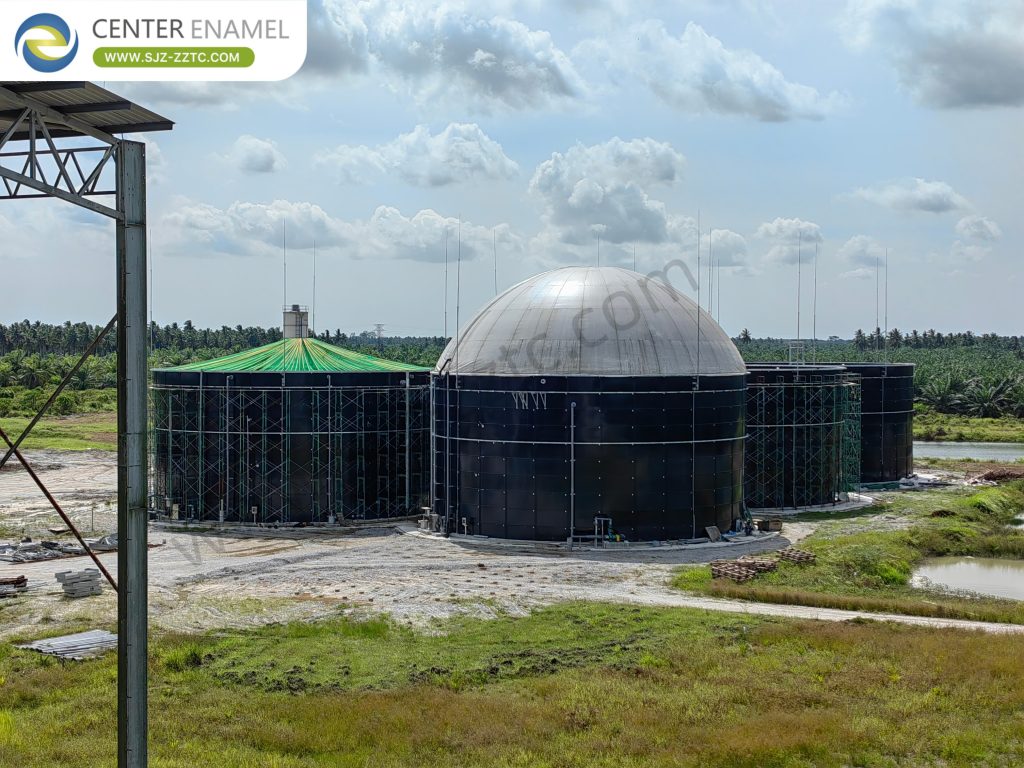
Why Livestock Wastewater Is One of Agriculture's Toughest Treatment Problems
Livestock wastewater is the core agricultural pollution wastewater from large-scale poultry, livestock, and aquaculture operations, generated primarily during farming operations and facility cleaning. Poultry and livestock wastewater is the main component, including wash water from pig, cattle, and poultry housing, manure and urine seepage, and facility washdown-rich in livestock metabolic residues. Aquaculture wastewater comes from periodic pond water exchange and pond cleaning, with feed residues and metabolic waste as pollutants.
The problem is not only volume but concentration. Livestock wastewater is a typical high-concentration organic wastewater with "four highs"-high COD, high ammonia nitrogen, high total phosphorus, and high suspended solids-creating a very high pollution load. COD can exceed 8,000 mg/L, with high turbidity and suspended solids. Nitrogen and phosphorus levels far exceed discharge standards, making livestock wastewater a primary cause of eutrophication. The wastewater readily turns black and odorous, and water quality fluctuates significantly with production cycles, seasons, and washing frequency.
Wastewater is primarily generated in peri-urban and rural farming areas. Small-scale farmers lack adequate collection facilities, with wastewater discharged directly to land and water. Large-scale farms have collection systems for centralized treatment, with water production varying with production cycles and cleaning frequency. This variability is precisely why a robust process like the USR Process, housed in durable GFS Tanks, is essential.
GFS Tanks-Containment Built to Outlast Aggressive Manure Chemistry
Because manure digestion produces high ammonia-nitrogen and hydrogen sulfide, the tank itself becomes a critical engineering decision. GFS Tanks can undergo customized wind and seismic design based on project site climate and geological conditions, with environmental adaptability far superior to concrete tanks. Concrete tanks are cast-in-place monolithic structures, with seismic and wind resistance entirely dependent on on-site construction quality. In remote areas, typhoon-prone zones, and earthquake belts, construction quality is difficult to control. Under strong earthquakes or typhoons, concrete tanks are prone to cracking and base settlement damage, with subsequent reinforcement costs equivalent to rebuilding.
GFS Tanks take a fundamentally different approach. Before construction, local seismic intensity, maximum wind pressure, and foundation bearing capacity data are collected, with customized thickened steel panels, stiffening ribs, and anchored base components-all factory-prefabricated to standardized specifications. The bolted panel structure has excellent stress distribution capability, making it less prone to overall fracture under seismic and typhoon impacts, and minor foundation settlement will not cause through-cracking. Structural parameters can be flexibly adjusted for mountainous, coastal typhoon-zone, and high-seismic-zone projects, providing long-term protection against extreme natural climate damage. This durability makes GFS Tanks the preferred vessel for livestock wastewater treatment worldwide.
The USR Process-Engineered for High-Solids, Clog-Prone Wastewater
Containment alone does not treat wastewater. The USR Process, or Upflow Solids Reactor, is an upflow anaerobic process modified for high-suspended-solids, high-solids organic wastewater. It was specifically designed to solve the problems of clogging, sludge washout, and uneven reaction common in traditional anaerobic processes when treating high-solids wastewater.
How the USR Process Works
High-solids organic wastewater, after simple pretreatment to remove large debris, is uniformly fed into the reactor through the bottom distribution system. The upward flow drives solid substrates and anaerobic sludge to slowly rise and thoroughly mix. In the sealed anaerobic environment, microorganisms sequentially hydrolyze and acidify, then methanogenically ferment, degrading macromolecular organic pollutants and generating biogas and treated water. Without complex separation structures, gentle hydraulic disturbance prevents clogging.
The mixed liquor rises to the upper portion of the reactor where natural gas-liquid-solid separation occurs. Biogas is collected, effluent overflows, and solid sludge and unreacted substrate settle back to the lower reaction zone for continued reaction. A small amount of aged sludge is periodically discharged, enabling continuous stable operation.
Advantages That Matter on Real Farms
The USR Process offers high solids tolerance, clog resistance, and strong adaptability. Equipment structure is extremely simple, with no precision wear parts, low capital investment, long service life, virtually no clogging failures, and extremely low maintenance costs. No strict requirements exist for sludge morphology-there is no need to cultivate mature granular sludge, as flocculent sludge operates stably, with fast start-up and a short sludge acclimation period. Simple operation with low automation requirements and high error tolerance makes the USR Process ideal for remote sites and farms with limited O&M capabilities. Combined with GFS Tanks, it forms a complete, low-maintenance treatment solution.
Supporting Equipment That Completes the USR System
Even a robust process requires carefully matched ancillary equipment. Center Enamel's core equipment is the GFS tank, with no complex media or precision three-phase separators, featuring a rugged clog-resistant structure. The bottom large-diameter anti-clogging distribution system is suitable for high-solids wastewater, preventing pipe clogging.
Supporting equipment includes influent lift pumps, simple pretreatment screens, and equalization tanks for impurity removal and water quality balancing. Simple top gas collection devices and biogas conveying and desulfurization equipment enable biogas resource recovery. Temperature, level, and pH online monitoring equipment provides operational visibility. Bottom large-diameter sludge discharge pipes and pumps allow rapid removal of high-concentration residual sludge. The complete system has extremely low failure rates, outstanding wear and clog resistance, and is far easier to maintain than conventional anaerobic processes.
A Standardized Treatment Train for Rural and Agricultural Settings
With tanks, process, and equipment defined, the complete treatment train ties everything together. Adapted to agricultural and rural settings, Center Enamel's standardized solution uses a low-cost treatment train of "solid-liquid separation + anaerobic digestion + ecological polishing," specifically addressing high-suspended-solids, high-concentration organic wastewater.
Pretreatment uses solid-liquid separation equipment and sedimentation tanks to rapidly remove solid impurities like manure and feed residues, significantly reducing biochemical load. The main stage uses USR/CSTR anaerobic processes for efficient organic degradation with simultaneous biogas energy recovery. Subsequent A/O biological treatment precisely removes nitrogen and phosphorus, with final constructed wetlands or stabilization ponds for polishing. Digester tanks use Center Enamel GFS Tanks, resistant to manure corrosion and with convenient assembly for rural projects. The entire process has strong shock load resistance, adapts to significant water quality and quantity fluctuations, is simple to operate, and achieves both pollution control and resource recycling.
Proven Results-The Bangladesh Poultry Farm Reference Project
The effectiveness of combining GFS Tanks with anaerobic treatment is demonstrated by a benchmark project in Southeast Asia. The Bangladesh Large-Scale Poultry Farm Manure Resource Recovery Project targets local poultry farm manure resource recovery with daily treatment of 47 tons.
Influent COD, BOD, and SS measure as high as 50,000 mg/L, 25,000 mg/L, and 50,000 mg/L. After CSTR + UASB anaerobic treatment, all three parameters are reduced to below 200 mg/L, 100 mg/L, and 100 mg/L-effluent compliant with local environmental discharge standards. The project produces approximately 4,900 m³ of biogas daily. Each cubic meter of biogas can generate 2 kWh of electricity, with daily power generation of 9,800 kWh-simultaneously achieving pollutant reduction and clean energy recovery.
Table 1: Bangladesh Poultry Farm Manure Recovery Project-Performance Results
| Parameter | Influent Concentration | After Anaerobic Treatment | Removal Rate |
| COD | 50,000 mg/L | Below 200 mg/L | >99.6% |
| BOD | 25,000 mg/L | Below 100 mg/L | >99.6% |
| SS | 50,000 mg/L | Below 100 mg/L | >99.8% |
| Daily Treatment Capacity | 47 tons poultry manure | - | - |
| Biogas Production | 4,900 m³/day | - | - |
| Power Generation | 9,800 kWh/day | - | 2 kWh per m³ biogas |
Operating Economics-Why USR and GFS Tanks Deliver the Best Value
Beyond technical performance, the financial case for this approach is compelling. O&M costs for livestock wastewater treatment are relatively low with an excellent input-output ratio-the highest cost-effectiveness among the five major wastewater types.
Core treatment units are primarily physical separation, anaerobic digestion, and ecological polishing-no high-end precision equipment or expensive chemicals. Equipment is simple with low failure rates and low maintenance costs. Anaerobic digestion produces stable biogas for plant heating and power generation, offsetting energy costs. Ecological treatment units have virtually no ongoing O&M costs. Only periodic cleaning of sedimentation tanks and polishing ponds is required, with low labor costs. Manure solids, sludge, and digestate can be sold as resources, further reducing net treatment costs.
Table 2: Cost and Performance Advantages of the GFS Tank + USR Process Combination
| Factor | Conventional Anaerobic Systems | GFS Tanks + USR Process |
| Solids Tolerance | Limited; clogging common | High; designed for high-solids waste |
| Sludge Requirements | Granular sludge cultivation needed | Flocculent sludge operates stably |
| Start-Up Time | Long acclimation period | Fast start-up |
| Maintenance Cost | Higher; frequent clogging repairs | Extremely low; no precision wear parts |
| Corrosion Resistance | Depends on construction quality | 30+ year enamel service life |
| Automation Requirement | Often complex | Low; high error tolerance |
| Energy Recovery | Variable | Stable biogas for heat and power |
| Suitability | Municipal, low-solids waste | Farm, rural, remote sites |
Global Project Experience Backing Every Installation
These results are not isolated. Center Enamel has been engaged in the environmental bolted storage equipment field for over 30 years, delivering over 30,000 environmental projects globally. In 2009, the company completed its first overseas GFS tank installation in Niger, Africa. In 2015, it achieved China's first GFS tank export and installation to the US, passing strict US acceptance standards.
The installation team brings practical experience from over 10,000 GFS tank projects globally, strictly following standardized construction procedures with full control over mobilization, civil coordination, tank assembly, piping, and commissioning. The team is proficient in complete standardized installation processes for GFS tanks, dual-membrane gas storage covers, USR/CSTR/IC anaerobic reactors, and biogas desulfurization systems-adaptable to large-scale farms, remote mountainous sites, and coastal high-corrosion locations.
Whether you are designing a new facility or upgrading an existing lagoon system, Center Enamel offers the GFS Tanks and USR Process expertise to deliver reliable, low-maintenance results. Contact our team today to discuss your wastewater characteristics and receive a tailored treatment proposal. Let us show you how farms and developers worldwide have turned livestock wastewater challenges into clean energy and compliance success with Center Enamel.
Frequently Asked Questions
Why is the USR Process better than conventional anaerobic digestion for livestock wastewater?
USR tolerates high suspended solids and impurities, resists clogging, requires no granular sludge cultivation, and operates simply with low maintenance-ideal for farms with fluctuating loads and limited technical staffing.
What makes GFS Tanks suitable for livestock wastewater treatment?
GFS Tanks use double-sided double-layer enamel fired at high temperature, resisting ammonia, hydrogen sulfide, and organic acids while withstanding seismic and typhoon loads-delivering a 30+ year service life with minimal maintenance.
Can this system generate revenue for farms?
Yes. Anaerobic digestion produces biogas for electricity and heat, while digestate can be processed into organic fertilizer, offsetting treatment costs and creating additional income streams.