
Where Does Pharmaceutical Wastewater Come From? Treating High-Strength Effluent with GFS Tanks and IC Process
The Asia-Pacific region, particularly China, has become the world's largest industrial wastewater treatment market, with the operation and maintenance service segment's contribution continuing to rise, marking a shift from project construction to long-term operational management.
The North American market focuses on upgrading existing facilities, while Europe emphasizes high-value-added resource recovery technologies. Wastewater from the new energy industry chain (lithium batteries, photovoltaics, hydrogen) has become the most notable emerging growth area due to its complex composition and high treatment difficulty, generating significant demand for customized solutions.
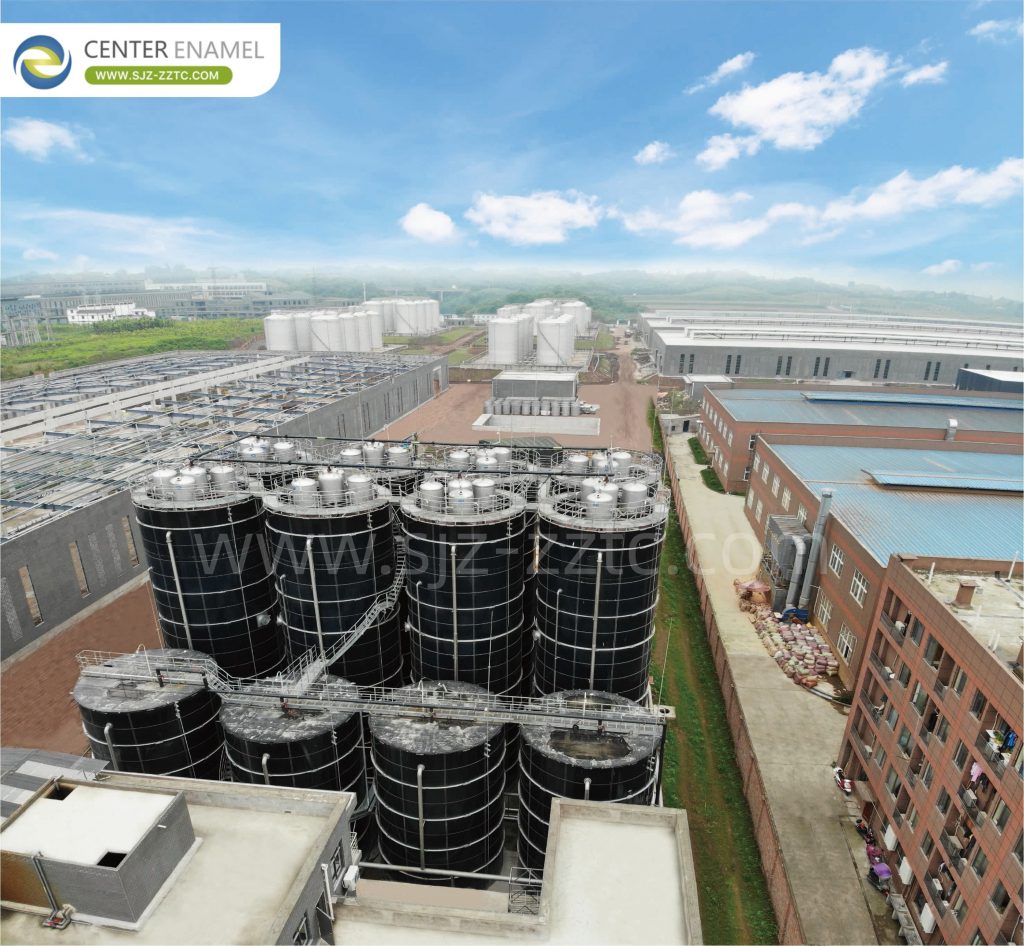
The maturity of third-party treatment models in industrial parks continues to improve, driving consolidation in the professional operation market. The Middle East has strong demand for advanced treatment and reuse of industrial wastewater due to water scarcity; manufacturing transfer in Southeast Asia drives local industrial wastewater treatment facility construction demand. Across all these regions, a Pharmaceutical Wastewater Treatment Project remains one of the most technically demanding undertakings.
GFS Tanks Built to Withstand Extreme Climates
GFS tanks can undergo customized wind and seismic design based on project site climate and geological conditions, with environmental adaptability far superior to concrete tanks.
Concrete tanks are cast-in-place monolithic structures, with seismic and wind resistance entirely dependent on on-site construction quality. In remote areas, typhoon-prone zones, and earthquake belts, construction quality is difficult to control. Under strong earthquakes or typhoons, concrete tanks are prone to cracking and base settlement damage, with subsequent reinforcement costs equivalent to rebuilding.
GFS tanks undergo collection of local seismic intensity, maximum wind pressure, and foundation bearing capacity data before construction, with customized thickened steel panels, stiffening ribs, and anchored base componentsall factory-prefabricated to standardized specifications. The bolted panel structure has excellent stress distribution capability, making it less prone to overall fracture under seismic and typhoon impacts, and minor foundation settlement will not cause through-cracking. Structural parameters can be flexibly adjusted for mountainous, coastal typhoon-zone, and high-seismic-zone projects, providing long-term protection against extreme natural climate damage. In a Pharmaceutical Wastewater Treatment Project, the tank shell is the barrier that protects both the process and the surrounding environment.
What the IC Process Actually Is
IC, or Internal Circulation Anaerobic Reactor, is the third-generation high-efficiency anaerobic treatment technology built upon UASB. Its core innovation is the built-in gas-lift internal circulation system, enabling autonomous wastewater recirculation without external pumps.
This design allows the reactor to maintain high biomass concentrations, tolerate shock loads, and achieve superior COD removalmaking the IC Process particularly suited to the high-strength, variable-quality streams found in pharmaceutical manufacturing.
Tracing Pharmaceutical Wastewater to Its Source
Pharmaceutical wastewater originates from the entire production process of chemical synthesis, fermentation antibiotics, traditional Chinese medicine, and biopharmaceuticals, representing a typical high-difficulty industrial wastewater.
Key pollution-generating stages include raw material washing, reaction synthesis, fermentation culture, extraction crystallization, and filtration separation. Auxiliary wastewater includes equipment washing, workshop floor cleaning, laboratory testing, and exhaust gas scrubbing.
Fermentation wastewater mainly consists of bacterial cell residues and spent culture media; chemical synthesis wastewater is rich in reaction byproducts and organic solvent residues; TCM wastewater is concentrated in herb decoction and alcohol precipitation/concentration stages. Wastewater generation is continuous, with significant variations due to drug type and production batch changes.
Small and medium-sized pharmaceutical companies lack stable production conditions, causing extreme fluctuations in water quality and quantitythe highest industry-wide pollution control difficulty. This variability is why any Pharmaceutical Wastewater Treatment Project must be designed with wide operational tolerance, not just peak capacity.
Three Decades of Environmental Engineering
Center Enamel has been deeply engaged in the environmental bolted storage equipment field for over 30 years. Starting with proprietary enamel anti-corrosion material technology, the company has gradually completed the full-industry-chain upgrade from a single tank manufacturer to a comprehensive environmental EPC service provider.
Throughout its 30+ year history, the company has been recognized as a National High-Tech Enterprise, National Specialized and Sophisticated "Little Giant," Manufacturing Single Champion, and Provincial Green Factory. It has successfully delivered over 30,000 environmental projects globally, establishing itself as a leading enterprise in the global GFS tank storage industry. The company has fully integrated the entire chain from enamel frit R&D, intelligent environmental equipment manufacturing, to EPC project contractingevery business breakthrough has been achieved through proprietary core anti-corrosion technology.
The Team Behind the Technology
Center Enamel has built a full-chain professional team covering R&D, design, marketing, installation, and after-sales. The R&D team is led by national-level materials technology experts, specializing in enamel frit and tank anti-corrosion core technologies.
External senior environmental engineering and mechanical structure engineers are retained to strengthen R&D capabilities, focusing on anti-corrosion coating formulations, specialty corrosion-resistant tanks, and anaerobic supporting integrated equipmentcontinuously breaking through industry technological barriers.
The team operates through proprietary laboratories with external university research collaborationconducting year-round new material and new process durability pilot testing and long-term corrosion simulation testing. Specialized enamel formulations are iteratively developed for extreme conditions such as high-salinity wastewater, strong acid/alkali POME, and high-organic livestock manureproviding core technical support for the company's annual new invention and utility patentsbuilding a proprietary material technology barrier.
Key Data at a Glance
Table 1: Pharmaceutical Wastewater Sources and Characteristics
| Source Stage | Main Pollutants | Treatment Challenge |
| Raw material washing | Suspended solids, residual solvents | Variable load |
| Reaction synthesis | Reaction byproducts, organic solvents | High COD, toxicity |
| Fermentation culture | Cell residues, spent media | High solids, poor biodegradability |
| Extraction crystallization | Solvent residues, intermediates | Refractory organics |
| Equipment & floor washing | Dilute contaminants | Large volume, low concentration |
Table 2: Center Enamel at a Glance
| Metric | Value |
| Years in environmental equipment | 30+ |
| Global projects delivered | 30,000+ |
| Wastewater projects | 2,000+ |
| Biogas projects | 1,000+ |
| Core technologies | Enamel frit R&D, GFS tanks, IC Process |
| Recognitions | National High-Tech Enterprise, Little Giant, Green Factory |
Aluminum Alloy Trough Deck Roof for Storage Tanks
Aluminum Alloy Trough Deck Roof is a cost-effective economical tank cover solution for clean water and wastewater storage scenarios, primarily designed for drinking water, production wastewater, and firewater reserve tanks, balancing practicality and cost advantages.
The main body is integrally formed from anti-corrosion aluminum alloy plates, paired with aluminum support trusses. Its lightweight design imposes less load on the tank foundation, reducing civil construction investment. A naturally formed dense oxide protective layer on the surface resists rain and mild wastewater corrosion, withstands outdoor sun and rain exposure, and effectively blocks wind, rain, insects, fallen leaves, and odor volatilization, protecting water quality by preventing dust and debris from falling in and causing secondary contamination.
The flat roof structure is neat and orderly, allowing installation of maintenance walkways, guardrails, vents, and level monitoring ports on top, facilitating daily inspection and equipment maintenance. The simple sealing structure enables straightforward installation with short construction timelines, and virtually eliminates the need for anti-corrosion painting maintenance, resulting in extremely low operational costs.
It is suitable for various small, medium, and large atmospheric pressure water storage tanks, and has been widely implemented in waterworks clear water tanks, industrial circulating water tanks, park firewater tanks, and domestic wastewater temporary storage facilities. It is highly compatible with water storage applications that do not require biogas collection or high-pressure sealing.
Frequently Asked Questions
1. Where does pharmaceutical wastewater come from?
It originates from chemical synthesis, fermentation, TCM processing, and biopharmaceutical productionincluding washing, extraction, crystallization, and equipment cleaning stages.
2. Why use GFS Tanks with IC Process?
GFS Tanks resist corrosion and gas leakage, while the IC Process handles high-strength, toxic wastewater with stable performancetogether they form a durable treatment system.
3. What makes a Pharmaceutical Wastewater Treatment Project difficult?
Highly variable water quality, toxicity to biomass, high salinity, and strict discharge limits require a combined, robust treatment train.
Let's Address Your Pharmaceutical Wastewater Challenge
Planning a Pharmaceutical Wastewater Treatment Project and need a system that tolerates real-world variability? Contact Center Enamel to discuss GFS Tanks and IC Process configuration for your site.
Share your wastewater analysis with our engineering teamwe'll respond with a practical, compliant, and cost-conscious solution tailored to your production profile.