
Treatment Volume Solutions: Sizing Tankage to Daily Flow
A treatment volume solution sizes equalization, reaction, and clarification tankage to the design daily flow multiplied by a peak factor, so the plant absorbs load swings instead of bypassing them. Volume, not just flow, is the variable that decides whether a reactor stays in its design window.
1. Start From Daily Flow and Peak
Design begins with average daily flow and the peak factor (how much higher the busy hour runs). Equalization tankage is sized to shave those peaks so the biological stage sees a steady feed. Skip this and every shock load hits the biomass directly, with upsets that show up in the effluent.
2. Volume per Stage
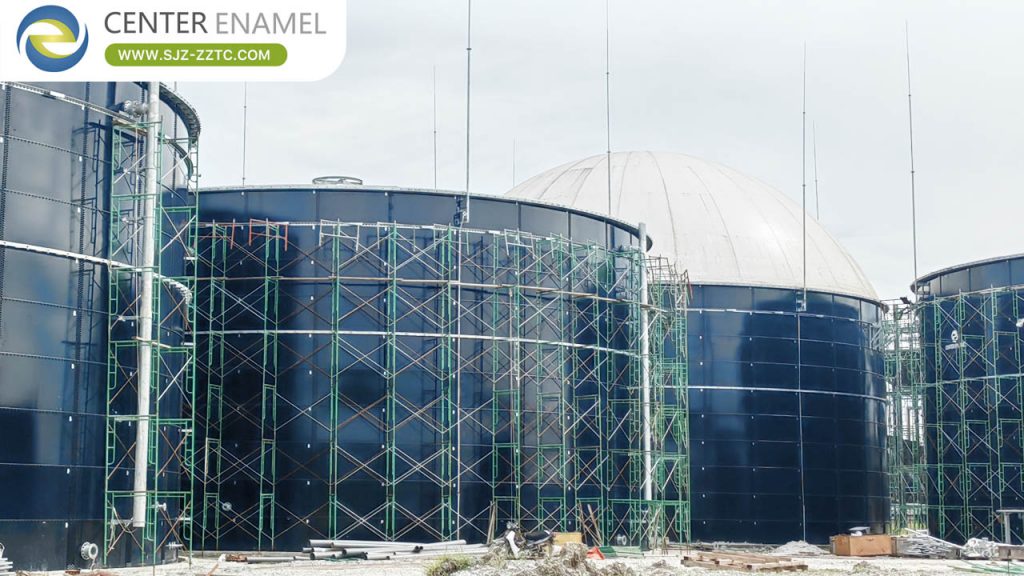
Each stage needs its own volume: equalization for peak shaving, reaction (anaerobic or aerobic) for the required residence time, and clarification for solids settling. The sum, not any single number, sets the tankage program. Bolted GFS tanks - 200-60,000 m3, glass fused at 820-930 C, ISO 28765 and AWWA D103 - deliver that volume in corrosion-resistant, expandable units.
3. Avoid Over- and Under-Sizing
Too little volume means bypass and non-compliance; too much wastes tankage, land, and energy heating or mixing empty space. The volume solution is the balanced middle, matched to measured flow rather than a rule-of-thumb multiple.
Comparison: Volume Drivers
| Stage | Volume driver | Purpose |
| Equalization | Peak factor | Steady the feed |
| Reaction | Residence time | Remove pollutant |
| Clarification | Settle rate | Recover solids |
Project Case Study
Beijing 5S Pig Farm Wastewater Treatment Project (Beijing, China, 2020). A livestock wastewater plant built for 580 m3/day on a UASB + AOAO train, demonstrating volume sized to a concrete daily throughput: COD cut from at least 10,000 to at most 200 mg/L across the physical, biological, and chemical steps.
| Project | Beijing 5S Pig Farm Wastewater Treatment Project |
| Location | Beijing, China |
| Industry | Livestock / Hoggery |
| Application | Pig farm wastewater |
| Process | UASB + AOAO |
| Capacity | 580 m3/day |
| Key result | COD >=10,000 -> <=200 mg/L |
| Status | Delivered 2020 |
| Pollutant | Influent | Effluent |
| COD Cr | >= 10,000 mg/L | <= 200 mg/L |
| BOD5 | >= 8,000 mg/L | <= 100 mg/L |
| Ammonia N | >= 1,000 mg/L | <= 80 mg/L |
| Total P | >= 200 mg/L | <= 8 mg/L |
| SS | >= 10,000 mg/L | <= 100 mg/L |
About Shijiazhuang Zhengzhong Technology Co., Ltd (Center Enamel)
Shijiazhuang Zhengzhong Technology Co., Ltd (Center Enamel) manufactures the bolted GFS tanks that hold the designed volume: enamel fused at 820-930 C forms an inert barrier against corrosive livestock wastewater, engineered to ISO 28765 and AWWA D103, shipped flat-pack and assembled on site. Volume is delivered as tankage that matches the flow.
Size tankage to daily flow and peak factor, stage by stage, and you get a plant that rides out load swings. Send your average and peak flow and we will size the equalization, reaction, and clarification volume.
Frequently Asked Questions (FAQ)
Q1: How do you size treatment tankage?
A: From design daily flow and peak factor, sizing equalization, reaction, and clarification in turn.
Q2: What is the peak factor?
A: The ratio of peak hourly flow to average daily flow; it drives equalization volume.
Q3: Why equalization tanks?
A: They shave peaks so the biological stage sees steady feed and avoids upsets.
Q4: What tank sizes are available?
A: GFS tanks from 200 m3 to 60,000 m3.
Q5: What standards apply?
A: Tanks are built to ISO 28765 and AWWA D103.
Q6: Why avoid oversizing?
A: Excess volume wastes tankage, land, and the energy to mix or heat empty space.
Suggested CTA
Send your average and peak flow. We will size the treatment volume solution in GFS tankage.