
Turkey's Kitchen Waste to Biogas: Innovative Biogas Project Solutions with GFS Tanks and CSTR Process
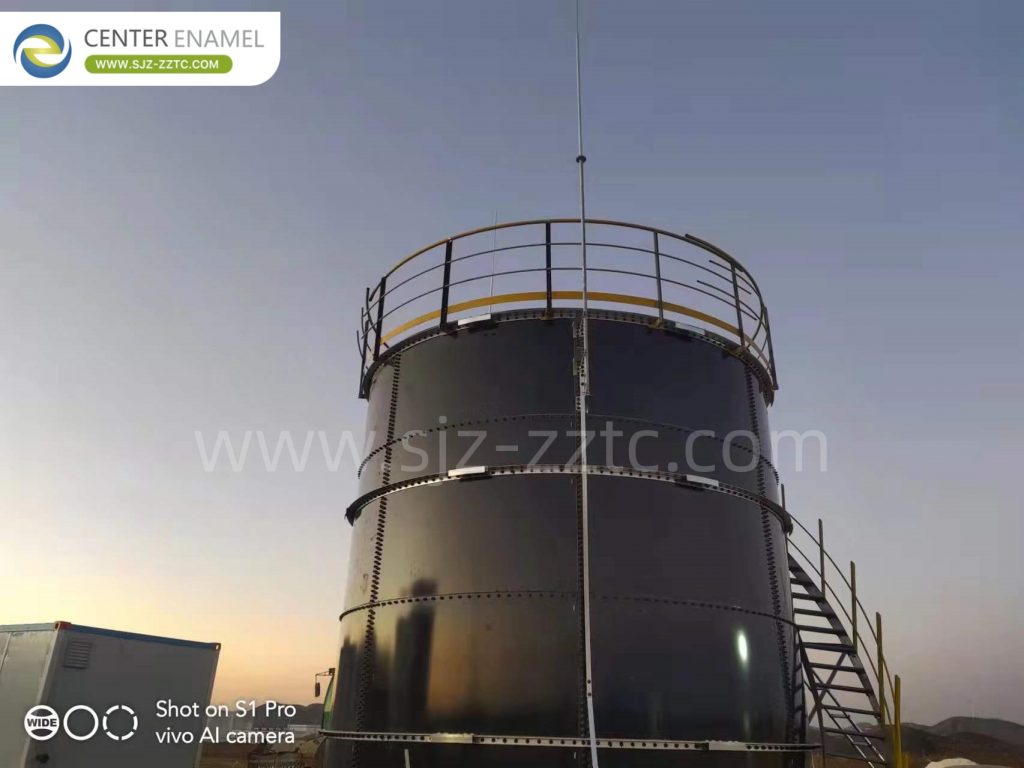
Turkey is transforming its significant kitchen waste challenge into a renewable energy opportunity through advanced Biogas Project technology. The implementation of the efficient CSTR Process and durable GFS Tanks enables the nation to convert organic waste into valuable biogas while addressing environmental sustainability goals.
Turkey's Kitchen Waste Challenge: A Significant Environmental Opportunity
Turkey generates substantial kitchen waste, presenting both a significant environmental challenge and a valuable resource opportunity. According to waste characterization studies, biodegradable wastes account for a substantial portion of Turkey's solid waste stream. The Waste Management Action Plan indicates that biodegradable wastes have a share of 56% in the distribution of solid waste types .
This organic waste stream, primarily from households, restaurants, hotels, and food processing facilities, has traditionally been directed to landfills where it decomposes and releases methane—a potent greenhouse gas. However, with Turkey's growing focus on sustainable development and circular economy principles, kitchen waste is increasingly recognized as a valuable resource for renewable energy production. The country's tourism sector, particularly in regions like Antalya and Istanbul, generates substantial organic waste from hotels and restaurants, creating opportunities for integrated waste management and energy recovery solutions .
The Advantage of Converting Kitchen Waste to Biogas in Turkey
Kitchen waste presents an ideal feedstock for anaerobic digestion due to its rich organic content. Turkish cuisine, with its abundant vegetables, grains, proteins, and fats, creates a diverse waste stream with excellent biogas potential. This organic matter, when processed through anaerobic digestion, produces biogas primarily composed of methane (50–70%) that can be utilized for electricity generation, heating, or upgraded to biomethane for grid injection .
The conversion process delivers multiple benefits: it reduces the volume of organic waste requiring landfill disposal, captures harmful methane emissions, produces renewable energy for local use, and creates a nutrient-rich digestate that can be applied as organic fertilizer in agriculture. Given Turkey's agricultural sector significance, the digestate from Biogas Project operations provides a valuable soil amendment alternative to chemical fertilizers, supporting sustainable farming practices.
CSTR Process: Core Technology for Turkish Kitchen Waste Treatment
At the heart of Turkey's advanced Biogas Project solutions is the CSTR Process (Continuous Stirred-Tank Reactor), an anaerobic treatment technology specifically designed for high-solids, high-concentration organic waste like kitchen waste. The CSTR Process reactor is equipped with a mechanical stirring device that keeps fermentation materials and microorganisms in a state of complete mixing .
Through continuous or semi-continuous feeding at a constant temperature (mesophilic range around 35°C), the CSTR Process ensures efficient degradation of organic matter while maintaining stable biogas production. The mechanical agitation prevents solids from settling and crust formation on the reactor surface, which is particularly important when processing Turkish kitchen waste containing diverse food materials including starchy vegetables, proteins, and cooking oils. This constant mixing creates optimal conditions for anaerobic microorganisms to break down complex organic compounds into simple molecules, maximizing methane yield from the feedstock.
Center Enamel: Professional Biogas Project Design Solutions
Center Enamel offers comprehensive design solutions for Biogas Project applications, bringing extensive expertise in anaerobic digestion systems to Turkey's renewable energy sector . As a premier global manufacturer of bolted tank technology, the company provides complete engineering solutions covering every aspect of Biogas Project development .
The design process begins with comprehensive feedstock analysis to determine optimal reactor configuration, mixing parameters, and retention times. Engineers evaluate the specific characteristics of Turkish kitchen waste—including organic loading rates, volatile solids content, and expected biogas yields—to develop customized solutions that maximize efficiency.
Center Enamel integrates multiple system components into each Biogas Project design, including pretreatment systems for feedstock preparation, the CSTR Process reactor with mechanical stirring, gas collection and purification systems, and storage infrastructure. The company's international certifications, including CE/EN1090, ISO 9001, NSF/ANSI 61, WRAS, and EN ISO 28765, ensure all designs meet rigorous quality and safety standards .
Premium Storage Solutions: GFS Tanks and Double Membrane Roof
GFS Tanks (Glass-Fused-to-Steel) represent the premium coating technology in the storage tank market and are essential components of Center Enamel's Biogas Project solutions for Turkey. The manufacturing process involves firing steel panels at 820°C-930°C, causing molten glass to react with the steel surface and form an inert, inorganic bond .
This fusion combines the strength and flexibility of steel with outstanding glass corrosion resistance, making GFS Tanks ideal for the challenging environment of anaerobic digestion. The non-porous glass surface prevents adhesion of organic materials, facilitates cleaning, and provides excellent protection against hydrogen sulfide and methane corrosion . With a 30+ year service life and compliance with ISO 28765 and AWWA D103-09 standards, these tanks deliver reliable, long-term performance for Turkish Biogas Project applications.
The Double Membrane Roof is the preferred cover solution for anaerobic digestion processes and biogas applications in Turkey. This innovative roof design offers significant advantages including cost optimization through direct reduction of roof construction expenses and improved space efficiency compared to traditional structures. The Double Membrane Roof significantly reduces floor area requirements and eliminates foundation construction costs associated with ground-mounted gas holders. Its excellent airtightness makes it ideal for biogas collection and odor control, making it a superior option for integrated AD tanks with covers on top.
Comprehensive Storage Tank Solutions
Center Enamel offers diverse tank options including Galvanized Steel Tanks with tough, wear-resistant protective coatings, Fusion Bonded Epoxy Tanks developed in partnership with AkzoNobel for innovative coating solutions, and Stainless Steel Tanks in AISI 304/316 grades for high-purity applications.
Diverse Cover Solutions
Center Enamel provides multiple cover options including the Aluminum Geodesic Dome Roof with corrosion resistance and efficient construction, the Glass-Fused-to-Steel Roof for airtight applications, Single and Double Membrane Roofs for anaerobic digestion, Aluminum Alloy Trough Deck Roofs for economical storage, Stainless Steel Roofs for harsh environments, and FRP Roofs for non-airtight applications.
Essential Biogas Project Equipment
Complete Biogas Project solutions require additional equipment including Gas Holders for biogas storage, Black Membrane covers for lagoons, Solid-liquid Separators for digestate processing, Torch Systems for emergency gas flaring, Lifting Pumps for material transfer, Dehydration and Desulfurization Tanks for biogas purification, and Screw Sludge Dewatering Machines for efficient sludge handling.
Efficient Installation and Project Execution
Center Enamel delivers efficient installation of GFS Tanks through modular construction with factory-prefabricated components, standard panel sizes for rapid assembly, reduced on-site construction time of 3-5 weeks, minimal weather dependency, simplified foundation requirements, easy expansion capabilities, and comprehensive installation support.
One-Stop Solution Provider for Biogas Projects
Center Enamel offers complete Biogas Project solutions with integrated EPC services, process package design, equipment supply, professional engineering expertise, international certification compliance, adherence to design standards (AWWA D103, OSHA, EN28765, EuroCode), extensive experience in diverse applications, and global project delivery capability.
Successful Project Implementations
Center Enamel has delivered Biogas Project solutions for various applications globally.
Biogas Project in Singapore
Process: CSTR
Tank dimensions:
φ18.34m x 8.4m (H) (1 unit)
φ8.41m x 9.0m (H) (1 unit)
φ11.46m x 7.2m (H) (1 unit)
Total volume: 3,458 m³
Completion year: 2021
Biogas Project in France
Process: CSTR
Tank dimensions: φ18.33m x 8.4m (H) (1 unit)
Total volume: 2,215 m³ (1 unit)
Completion year: 2021
Conclusion
Turkey's commitment to sustainable waste management and renewable energy development positions the nation for significant advancement in Biogas Project implementation. The combination of the efficient CSTR Process and durable GFS Tanks provides an ideal approach to converting kitchen waste into renewable energy. Center Enamel offers comprehensive solutions including professional design, premium storage infrastructure, and complete equipment packages to support Turkey's waste-to-energy goals.
Frequently Asked Questions
Q1: How does the CSTR Process accommodate Turkey's diverse kitchen waste composition?
The CSTR Process is designed to handle variable feedstock compositions, making it ideal for Turkey's diverse kitchen waste containing vegetables, grains, proteins, and fats. The continuous mixing action ensures complete homogenization while maintaining stable process conditions, allowing the system to adapt to seasonal variations in waste composition common in Turkish cuisine and tourism patterns.
Q2: Why are GFS Tanks particularly suitable for Turkey's seasonal climate variations?
GFS Tanks perform exceptionally well in Turkey's varied climate conditions, from hot Mediterranean summers to cold winters in central Anatolia. The glass-fused-to-steel coating provides excellent thermal stability, resists temperature-induced expansion and contraction stresses, and maintains structural integrity throughout seasonal changes, ensuring reliable year-round biogas production.
Q3: How does Center Enamel support Turkey's circular economy goals through Biogas Projects?
Center Enamel provides complete solutions that convert organic waste into renewable energy and valuable fertilizer products, directly supporting circular economy principles. By offering turnkey Biogas Project solutions including CSTR Process technology, GFS Tanks infrastructure, and essential equipment, the company enables Turkish municipalities and private enterprises to close the organic waste loop and create sustainable value from waste streams.