
Turkey’s Livestock Manure Biogas Project: Durable GFS Tanks & High-efficiency CSTR Process
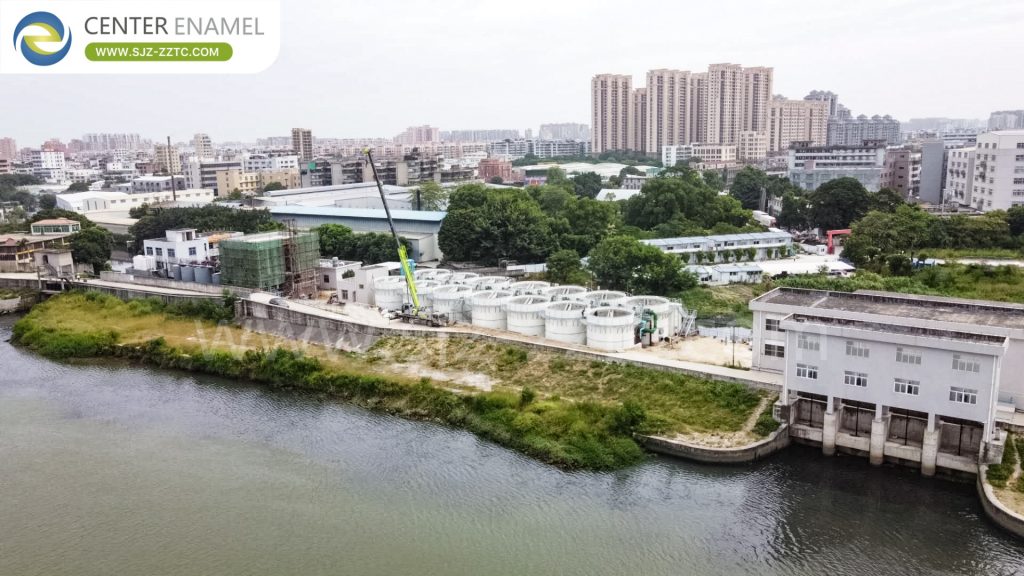
As one of Europe and West Asia’s core livestock breeding nations, Turkey generates massive volumes of livestock manure across diversified breeding layouts nationwide. Intensive pig, broiler and dairy cattle concentrated farms gather around Marmara coastal plains, Central Anatolia and Aegean coastal provinces, producing huge daily dung and urine from confined indoor industrial feeding patterns. Free-range cattle, sheep and goat grazing dominates Eastern Anatolia’s mountainous highlands, leaving scattered solid manure across open pastures and small rural barns.
Millions of scattered smallholder backyard farms prevail across remote Southeastern villages, creating decentralized mixed manure without unified centralized collection networks. Besides, domestic slaughterhouses and feed processing factories discharge high-moisture organic residues, serving as stable raw feedstock for local Livestock Manure Biogas Project powered by mature anaerobic technologies and robust GFS Tanks.
Prevailing Livestock Manure Disposal Challenges in Turkey
Turkey’s booming livestock industry brings prominent manure governance obstacles aggravated by mixed Mediterranean, continental and semi-arid climatic features across different regions. Most untreated livestock waste is randomly piled beside croplands, riverbanks and rural roadside vacant lands, releasing pungent ammonia and hydrogen sulfide gas to trigger widespread village odor pollution. Seasonal heavy rainfall washes residual antibiotics, heavy metals and organic pollutants into underground aquifers and major river basins like Sakarya and Kızılırmak, accelerating water eutrophication and irreversible farmland soil degradation. Surplus manure is transported to saturated municipal landfills, causing uncontrolled methane leakage and obstructing Turkey’s national carbon reduction goals set for 2053 carbon neutrality roadmap.
Local farmers conduct open-air manure incineration during dry summer months, worsening regional seasonal haze across inland Anatolia. Limited national government fiscal investment leads to inadequate centralized manure disposal facilities, while conventional open composting achieves poor decomposition efficiency under Turkey’s hot dry summer and humid coastal weather, making standardized Livestock Manure Biogas Project equipped with anti-corrosion GFS Tanks and proven CSTR Process the most practical disposal option.
Four-stage Anaerobic Fermentation: How Livestock Manure Converts Into Biogas
Complete manure-to-biogas biochemical transformation happens inside sealed anti-corrosion GFS Tanks and matched anaerobic reactors under strict oxygen-free environments, consisting of four sequential core biochemical phases supporting all anaerobic technologies including mainstream CSTR Process:
- Hydrolysis Stage: Anaerobic microbes secrete specific enzymes to decompose large organic substances such as coarse fiber, livestock protein and leftover feed starch into soluble small organic acids and monosaccharides.
- Acidification Stage: Acid-forming bacteria ferment soluble organics into volatile fatty acids and alcohols, accumulating acidic intermediate products inside closed fermentation GFS Tanks.
- Acetogenesis Stage: Acetogenic microorganisms further degrade fatty acid intermediates into acetic acid, hydrogen and carbon dioxide to prepare raw materials for subsequent methane generation.
- Methanation Stage: Strictly anaerobic methanogens convert acetic acid plus hydrogen-carbon dioxide mixture into crude biogas containing 55%–70% methane content.
After desulfurization, dehydration and compression purification, refined biogas can be applied for on-site farm power generation, livestock barn heating and rural household gas supply. Post-fermentation digestate is further refined into premium organic fertilizer for Turkey’s wheat, sunflower, olive and fruit plantation fields, realizing full circular resource recycling within the whole Livestock Manure Biogas Project.
Comprehensive Benefits of Livestock Manure Biogas Project for Turkey’s Sustainable Development
Deploying standardized Livestock Manure Biogas Project fitted with durable GFS Tanks and mature CSTR Process alongside other anaerobic technologies delivers multi-layer environmental, energy, economic and social advantages for Turkey’s agriculture sector:
- Environmental Benefits: It drastically reduces random manure stacking and landfill occupation, curbs soil, surface water and underground water contamination, cuts fugitive methane emissions and seasonal open-burning haze, strongly facilitating Turkey’s national carbon neutrality and climate protection targets.
- Energy Benefits: Self-produced clean biogas lowers Turkey’s heavy dependence on expensive imported fossil fuels, effectively easing frequent seasonal power shortages in remote Eastern and Southeastern rural regions with insufficient national grid coverage.
- Economic Benefits: It constructs a closed-loop circular industrial chain of “livestock breeding → manure collection & anaerobic fermentation → biogas utilization → organic fertilizer returning to farmland”, greatly cutting farmers’ traditional waste disposal costs and improving market competitiveness of Turkey’s domestic eco-friendly livestock industry.
- Social Benefits: The biogas industry generates abundant local employment positions in manure collection, biogas plant operation, equipment maintenance and organic fertilizer production, boosting rural household income and narrowing the economic gap between urban and rural Turkey.
Four Advanced Anaerobic Technologies Including Core CSTR Process for Diverse Turkish Manure Conditions
Center Enamel develops four differentiated mature anaerobic technologies fully compatible with standard modular GFS Tanks, customized for varied project scales of Turkey’s nationwide Livestock Manure Biogas Project, among which CSTR Process is the most widely adopted core technique:
- CSTR (Continuously Stirred Tank Reactor / CSTR Process): Equipped with built-in mechanical stirring devices inside matched GFS Tanks, it achieves full uniform mixing of high-moisture pig and poultry manure to avoid tank crust and raw material stratification with outstanding anti-shock load capacity; perfectly suitable for large centralized biogas plants serving intensive breeding clusters in Marmara and Central Anatolia core farming zones.
- UASB (Upflow Anaerobic Sludge Blanket): Relies on high-activity granular sludge bed to realize efficient COD removal with low daily power consumption, applicable only for pre-treated liquid manure after solid-liquid separation processing.
- USR (Upflow Solid Reactor): Features compact layout, low construction cost and excellent anti-clogging performance, allowing direct high-solid raw manure fermentation without complicated pre-treatment, ideal for scattered small household biogas stations across remote Southeastern Turkish villages.
- IC (Internal Circulation Reactor): High-efficiency anaerobic equipment with 3–5 times higher processing capacity than conventional reactors, tailor-made for super-large cross-district centralized manure disposal hubs in Turkey’s major agricultural provinces.
Full Set Core Equipment for Turkey’s Livestock Manure Biogas Project
All supporting equipment is designed to withstand Turkey’s variable climate including hot dry inland weather, heavy coastal rainfall and Aegean sea salt corrosion environment, centered on core GFS Tanks and systematic anaerobic solutions featuring mature CSTR Process:
- GFS Tanks: Core fermentation reactor & digestate storage hardware with anti-corrosion enamel coating supporting over 30-year service life against tropical acid and salt erosion; modular bolt-connected design allows rapid field installation and flexible capacity adjustment for manure fermentation and byproduct storage.
- Double Membrane Gas Holder: Stores crude biogas from GFS Tanks and balances unstable gas production & consumption via automatic pressure regulation; UV-resistant outer membrane adapts to Turkey’s intense summer sunlight and variable heavy rainfall.
- Black Membrane: Low-cost lagoon fermentation facility for small-scale Turkish family farms; impermeable HDPE film locks biogas inside and prevents manure leakage into local soil and rivers.
- Solid-liquid Separator: Preprocess raw manure by separating solid and liquid fractions before feeding into GFS Tanks, lowering tank crusting risks and improving overall anaerobic digestion efficiency of the whole Livestock Manure Biogas Project.
- Lifting Pump: Corrosion-proof submersible pump continuously transports pre-treated liquid manure into fermentation tanks and circulates digestate across the full biogas system.
- Dehydration and Desulfurization Tank: Purifies raw biogas by removing moisture and toxic hydrogen sulfide to upgrade biogas quality and protect downstream gas-consuming devices from corrosion damage.
- Torch System: Safety environmental gear to automatically fully burn excess biogas, reduce methane escape and odor pollution to meet Turkey’s strict local environmental emission regulations.
- Screw Sludge Dewatering Machine: Dewaters residual sludge discharged from GFS Tanks into dry organic fertilizer, completing full resource recycling of fermentation byproducts for Turkey’s domestic crop planting.
Core Advantages to Select Center Enamel as Full-Service EPC Contractor
- Possesses more than 200 independent enamel tank technical patents; all factory-produced GFS Tanks strictly comply with ISO and AWWA international quality certification standards to ensure stable long-term operation under Turkey’s complex inland and coastal climatic conditions.
- Delivers full turnkey one-stop EPC service covering customized project design, in-house GFS Tanks production, cross-border container shipment, on-site equipment installation, full system commissioning, local operator professional training and long-term global after-sale maintenance support.
- Optimizes overall biogas solution technical parameters including CSTR Process via localized engineering design based on Turkey’s regional manure composition, diversified climate and construction site terrain to maximize per-unit biogas yield and project economic returns for investors.
- Boasts abundant Southeast Asian and Middle East biogas construction experience to flexibly comply with Turkey’s domestic construction codes, agricultural industry norms and local environmental protection regulatory policies.
- Optimizes overall biogas plant layout to cut equipment failure rate and daily operational expenditure, securing steady long-term investment profit for Turkish biogas project investors and breeding farm owners.
- Builds mature global after-sales service network to provide timely remote technical guidance and on-site maintenance for distributed nationwide Turkish manure biogas stations anytime required.
Center Enamel’s Standardized Professional Installation of GFS Tanks
- Unique Hydraulic Jacking Installation Method: Top-down hydraulic jacking construction eliminates high-altitude scaffolding setup, greatly improving construction safety on narrow rural farmlands and dense livestock parks across Turkey’s countryside.
- All-Bolted Assembly without On-site Welding: No field hot welding avoids tank corrosion hazards caused by frequent coastal downpours and high ambient humidity prevailing across Turkey’s Aegean and Mediterranean farming areas.
- Full On-site Technical Supervision: Global professional engineers coordinate closely with local Turkish construction teams to deliver full-cycle construction guidance and shorten overall project construction period effectively.
- Strict Post-installation Multiplex Testing: All finished GFS Tanks pass air tightness, pressure resistance and anti-corrosion strict tests to satisfy anaerobic fermentation standards and stabilize the whole set of biogas solutions including CSTR Process running for local Livestock Manure Biogas Project.
Verified Global Successful Biogas Project Cases of Center Enamel
Case1: Biogas Project in Canada
Tank dimensions: φ8.4m x 7.2m (H) (2 units)
Total volume: 798 m³
Completion year: 2024
Case2: Biogas Project in Sweden
Tank dimensions: φ19.11m x 19.2m (H) (1 unit)
Total volume: 5,510 m³
Completion year: 2024
Turkey’s abundant livestock manure remains a severe environmental burden yet enormous untapped renewable clean energy reserve, making nationwide popularization of standardized Livestock Manure Biogas Project equipped with long-life anti-corrosion GFS Tanks and field-proven core CSTR Process an essential green transition path for Turkey’s traditional livestock farming upgrading.
With rich Middle East and Southeast Asian cross-border biogas engineering experience, Center Enamel’s localized customized biogas solutions perfectly fit Turkey’s variable continental, Mediterranean and semi-arid climate plus distinctive regional manure features. Such biogas projects effectively eliminate widespread manure pollution, expand domestic clean biogas supply to reduce costly fossil fuel import dependency, accelerate circular agriculture development and help Turkey achieve national carbon reduction commitments, laying robust green infrastructure for Turkey’s long-term agricultural sustainable development.