
Turning Brunei's Restaurant Food Waste into Energy: EPC Contractor with GFS Tanks and CSTR Process
Brunei Darussalam, a prosperous high-income nation on the island of Borneo, boasts a stable economy driven by its oil and gas resources and a vibrant culinary scene that includes thousands of restaurants, hotels, and food processing facilities. This prosperity, however, brings a significant environmental challenge. Brunei generates approximately 1.4 kilograms of solid waste per person per day—one of the highest rates in Southeast Asia . Food waste is the single largest component of this waste stream, accounting for 32% to 36% of the total municipal solid waste disposed of at the Sungai Paku Engineered Landfill in Tutong District .
With approximately 500 to 600 tonnes of waste arriving at Sungai Paku daily, and the landfill expected to reach full capacity by 2025, the urgency for sustainable waste management is critical . Currently, 70% of Brunei's waste is sent to landfills while only a meagre 2% is composted . The traditional approach of landfilling restaurant food waste is no longer viable. Decomposing organic matter in landfills releases methane, a potent greenhouse gas, and Brunei's tropical climate accelerates this decay, creating odour and public health challenges . Under Brunei Vision 2035 and its National Climate Change Policy, the government aims to reduce waste generation and achieve a 30% recycling rate by 2035, highlighting the urgent need for advanced, sustainable solutions .
The Advantage of Converting Restaurant Food Waste to Biogas
Transforming this waste stream into a valuable resource is where advanced technology excels. Restaurant food waste is an ideal feedstock for anaerobic digestion due to its high moisture content (80-95%) and rich organic composition, including proteins, cellulose, and fats . By processing this organic matter in an oxygen-free environment, the CSTR Process breaks it down into biogas—a renewable energy source primarily composed of methane. This biogas can be used for electricity generation, heating, or upgraded to biomethane. The process not only captures harmful methane that would otherwise escape into the atmosphere but also produces a nutrient-rich digestate that serves as a high-quality organic fertilizer, supporting Brunei's circular economy and sustainable agriculture goals . Studies have shown that Brunei's landfill gas could generate 367 GWh of electricity annually, saving an estimated 1.6 million USD .
The CSTR Process: Core Technology for High-Efficiency Digestion
At the core of Center Enamel's approach to treating restaurant food waste is the CSTR Process (Continuous Stirred-Tank Reactor). This advanced anaerobic treatment technology is ideally suited for the high-solids, high-concentration organic wastewater generated by the food service industry. The CSTR reactor is a closed, insulated tank equipped with a mechanical stirring device.
Through continuous feeding at a constant temperature (mesophilic range around 35°C), the CSTR Process ensures that the fermentation feedstock and microorganisms remain in a state of complete mixing. This constant agitation, driven by an agitator shaft and paddles, prevents solids from settling and stops crust formation on the surface. A shell-breaking device further enhances mixing, ensuring stable and high biogas yields even with Brunei's diverse food waste streams .
Center Enamel: A Professional EPC Contractor for Biogas Projects
Center Enamel (Shijiazhuang Zhengzhong Technology Co., Ltd.) has emerged as a premier EPC Contractor in the field of sustainable energy. As a full-service EPC Contractor, Center Enamel provides comprehensive, turnkey waste-to-energy solutions that cover the entire project lifecycle—from initial feasibility studies and process engineering to equipment manufacturing, installation, and commissioning .
With over 36 years of history, a 150,000㎡ R&D and production base, and a presence in more than 100 countries, Center Enamel brings unparalleled expertise to every Biogas Project in Brunei. Their solutions are specifically adapted to Brunei's tropical marine climate, ensuring systems are resistant to high humidity, coastal salt spray, and monsoon rains . This deep understanding of local conditions makes them a reliable partner for Bruneian enterprises seeking to convert restaurant waste into a valuable asset.
Durable Infrastructure: GFS Tanks + Double Membrane Roof
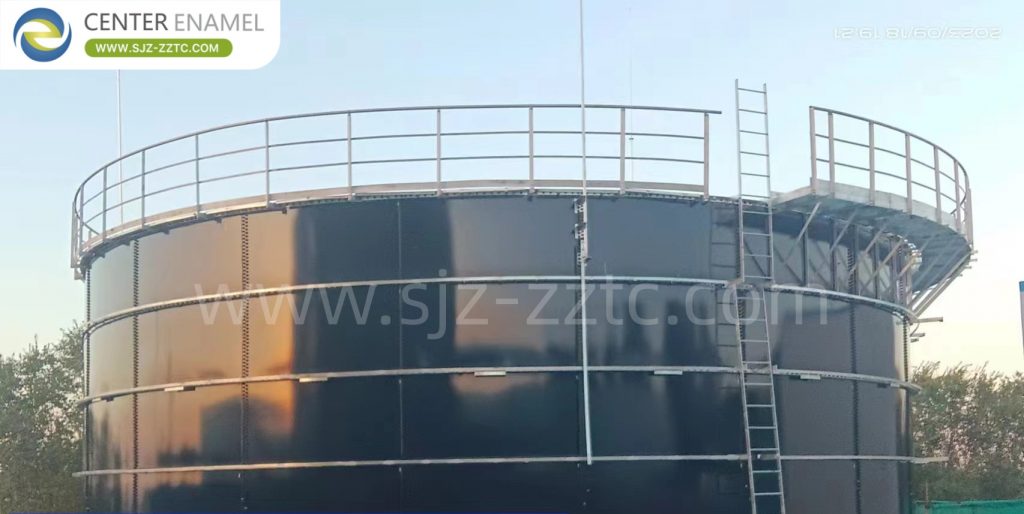
For biogas projects, the reliability and longevity of the storage and digestion infrastructure are paramount. Center Enamel's GFS Tanks (Glass-Fused-to-Steel) are the premier choice for these demanding applications. These tanks are manufactured through a unique high-temperature firing process (820°C–930°C), fusing glass to the steel surface to create an inert, inorganic bond. This provides exceptional corrosion resistance against the organic acids and hydrogen sulfide generated in biogas production, ensuring a service life of over 30 years with minimal maintenance .
For biogas collection, the Double Membrane Roof is the preferred solution under normal working conditions. This innovative roof design offers significant cost optimization and space efficiency. It integrates the gas holder directly on top of the tank, eliminating the need for a separate, ground-mounted gas holder and saving valuable land area—a critical advantage for Brunei's urban development. Its airtightness ensures safe and efficient biogas storage.
Comprehensive Roof Solutions for Every Need
Center Enamel offers a diverse range of storage tank cover solutions to meet specific project requirements and environmental conditions, including:
Glass-Fused-to-Steel Roof: Provides superior airtightness and corrosion resistance, often utilized for pressurized structures and odor control, with a robust cone shape supported by internal or external beams.
Aluminum Geodesic Dome Roof: Offers advanced corrosion resistance, expansive clear-span capability, and cost-effective construction with minimal maintenance, making it suitable for various applications.
Stainless Steel Roof: Provides excellent airtightness and super anti-corrosion performance for harsh environments where a long service life is required.
FRP Roof: A suitable and economical solution for non-airtight applications like drinking water or general wastewater storage, available in dome or flat shapes.
Aluminum Alloy Trough Deck Roof: An economical option for keeping out rain and wind and aiding in odor control, though without airtightness.
Integrated Biogas Project Equipment
A complete Biogas Project requires a suite of reliable auxiliary equipment to ensure efficient and safe operation. Center Enamel provides these critical components to complement the main digestion and storage systems, including:
Gas Holder: For storing the produced biogas.
Torch System: A vital safety component for safely burning off excess biogas during maintenance or emergencies.
Dehydration and Desulfurization Tank: Crucial for purifying raw biogas by removing moisture and corrosive hydrogen sulfide to protect downstream equipment.
Solid-Liquid Separator: Used to separate the digestate into solid and liquid fractions, aiding in waste management.
Screw Sludge Dewatering Machine: For further dewatering the solid digestate, reducing its volume and making it easier to handle.
Lifting Pump: For transferring slurry and digestate throughout the plant.
Efficient Installation and Global Expertise
The modular design of GFS Tanks allows for rapid and efficient on-site installation. Center Enamel's factory-prefabricated panels are assembled with bolts, eliminating the need for extensive on-site welding. This translates to significant time and cost savings.
Key strengths of Center Enamel as an EPC Contractor include:
Rapid Installation: Bolted tank systems can be assembled much faster than traditional welded or concrete structures, shortening project timelines.
Space-Saving Construction: Hydraulic jacking top-down installation requires no scaffolding or large cranes, suitable for Brunei's construction sites.
Quality Manufacturing: With a production capacity of 250,000 tank sheets per year, consistent quality and reliable supply for projects of any scale are ensured.
Proven Performance: Projects span over 100 countries, demonstrating the ability to adapt to diverse climates and conditions.
Center Enamel: Your One-Stop Biogas Project Provider in Brunei
Choosing Center Enamel means selecting a comprehensive, turnkey solution provider. We offer a complete package that simplifies project execution and ensures superior results. Our advantages include:
End-to-End Solutions: From pre-treatment to biogas purification and digestate management, we handle every step of the Biogas Project.
Single-Point Accountability: As the primary EPC Contractor, you deal with one responsible party for the entire project, reducing complexity and risk.
Localized Design: Our engineering adapts to Brunei's specific environmental and regulatory landscape, complying with international standards.
Superior Equipment: GFS Tanks and other equipment are engineered for the highest durability and performance in Brunei's corrosive tropical environment.
Decades of Experience: With over 36 years in the industry, our track record of successful projects speaks for itself.
Successful Biogas Projects
Canada Biogas Project
Tank dimensions: φ8.4m x 7.2m (H) (2 units)
Total volume: 798 m³
Completion year: 2024
Indonesia Biogas Project
Tank application: Palm oil wastewater treatment plant
Tank model: Ø19.86m x 8.4m
Number of tanks: 3 GFS tanks
Installation: 7 personnel, 40 days
Installation date: November 2009
Conclusion
Brunei's restaurant food waste presents a significant challenge, but with the right technology, it becomes a remarkable opportunity. By harnessing the CSTR Process within durable GFS Tanks and relying on the expertise of a professional EPC Contractor like Center Enamel, the nation can transform this waste burden into a source of clean, renewable energy. Center Enamel is committed to providing robust, long-lasting, and efficient solutions that support Brunei's journey toward a sustainable, low-carbon future under Brunei Vision 2035.
Frequently Asked Questions (FAQ)
Q1: How does Brunei's tropical climate affect biogas production, and how are CSTR systems adapted?
Brunei's high-temperature, high-humidity climate accelerates food waste decomposition but is actually favorable for mesophilic anaerobic digestion (around 35°C). CSTR systems are designed to maintain stable operating conditions, and Center Enamel's GFS tanks are specifically coated to resist corrosion from high humidity and coastal salt spray.
Q2: What makes GFS Tanks suitable for Brunei's restaurant food waste biogas projects?
GFS Tanks offer superior corrosion resistance against the aggressive organic acids and hydrogen sulfide produced during food waste digestion. Their modular, bolted design enables rapid on-site installation without welding, which is ideal for Brunei's construction environment, and they require minimal maintenance over a service life exceeding 30 years.
Q3: How does Center Enamel support Brunei's national environmental goals through biogas projects?
Center Enamel's biogas projects directly support Brunei Vision 2035's targets for waste reduction and renewable energy adoption by diverting food waste from the rapidly filling Sungai Paku landfill, reducing greenhouse gas emissions (including methane capture), and generating clean biogas that diversifies Brunei's energy mix beyond oil and gas.