
Turning Kitchen Waste into Green Energy: How GFS Tanks and a Trusted Biogas Solution Provider Make It Possible
Globally, over 1.3 billion tonnes of food is wasted annually, with kitchen waste constituting a major portion of municipal solid waste. Its high moisture, rapid putrefaction, and complex composition – rich in fats, salts, and organics – pose severe environmental risks if landfilled or incinerated. Improper disposal releases methane and leachate, contaminating soil and groundwater. Traditional treatment methods often fall short in efficiency and sustainability. Yet, within this challenge lies a vast energy opportunity. Through advanced anaerobic digestion, kitchen waste can be transformed into renewable biogas, reducing emissions while generating clean power and heat – provided the right technology and expertise are applied.
What is Kitchen waste?
Kitchen waste, the predominant fraction of household food refuse, originates from domestic kitchens, food processing plants, catering services, and institutional canteens. It comprises leftover starches, dietary fibers, animal fats, vegetable peels, and discarded cooking oils - making it the primary organic component of municipal solid waste.
Typically, kitchen waste accounts for nearly 30% of total household garbage by weight. Its defining characteristics are high moisture content (65-95%), rapid putrefaction, and a rich organic load: carbohydrates dominate vegetable scraps (≈50% on a dry basis), while restaurant swill (gānjiǎo) is richer in proteins, starch, and animal fats, with notable salinity (0.8-1.5% wet basis) and free fat (20-30% dry basis). These properties make it both a pollution hazard and a valuable substrate for biological conversion - provided it is handled through professional, large-scale treatment systems.
The Many Pathways of Resource Recovery from Kitchen Waste
Because of its volume and complexity, kitchen waste demands centralized, specialized treatment to unlock its resource value. Several established routes exist:
Biodiesel Production: Through oil-water separation, recovered waste cooking oils are chemically transformed into clean biodiesel, a direct substitute for fossil diesel in vehicles and industrial machinery.
Biogas via Anaerobic Digestion: Under oxygen-free conditions, the organic matter ferments to produce biogas - a renewable energy source for electricity and heat generation.
Animal Feed Additives: After high-temperature sterilization, dehydration, and detoxification, certain fractions can be repurposed as feed ingredients for livestock.
Organic Fertilizer: Composting or controlled fermentation yields high-quality soil conditioners for agriculture, improving soil structure and fertility.
Among these, however, one method stands out for its energy efficiency, environmental footprint, and scalability: anaerobic digestion for biogas recovery.
Why Anaerobic Digestion Is the Premier Treatment Route
Transforming kitchen waste into biogas relies on a well-established biological process - anaerobic digestion (AD). The workflow unfolds in three key stages:
Pre-treatment: Incoming waste passes through sorting equipment (e.g., trommel screens and magnetic separators) to remove plastics, metals, and glass. The clean organic fraction is then shredded and pulped into a homogeneous slurry, followed by centrifugal oil separation - the recovered oils can either be sold for biodiesel or co-fed into the digester to boost methane yield.
Anaerobic Fermentation: The prepared slurry enters sealed fermentation tanks, kept strictly oxygen-free. Depending on the microbial culture, the temperature is maintained at mesophilic (~35°C) or thermophilic (~55°C). Hydrolytic, acidogenic, and methanogenic bacteria sequentially break down carbohydrates, proteins, and fats, generating raw biogas composed of 50-70% methane (CH₄), carbon dioxide (CO₂), and trace hydrogen sulfide (H₂S).
Biogas Upgrading and Utilization: The raw gas is desulfurized and dehydrated to meet safety and purity standards. The final product can fuel combined heat and power (CHP) units, be purified to biomethane for grid injection, or serve as compressed vehicle fuel.
This approach not only diverts waste from landfills but also creates a stable, dispatchable renewable energy stream - making it the preferred solution for municipalities and industrial operators alike.
Core Process Technology: The CSTR Advantage
For kitchen waste, the industry gold standard is the Continuous Stirred Tank Reactor (CSTR) - also known as a conventional complete-mix anaerobic digester. This reactor keeps fermentation feedstock and microbial biomass in a thoroughly mixed, homogeneous state through continuous mechanical agitation.
With over a century of application in sludge and high-solids organic wastewater treatment, CSTR technology relies on anaerobic activated sludge to adsorb, absorb, and biodegrade pollutants, converting organic carbon into biogas. While its hydraulic retention time equals the sludge retention time (precluding very high biomass accumulation), its operational simplicity, tolerance to high suspended solids, and ability to handle feedstocks with high COD and high solids content make it ideal for substrates like kitchen waste, livestock effluent, yeast and distillery wastewater, fruit-processing effluents, and pulp/paper mill streams. Modern CSTR designs have improved mixing efficiency and volumetric loading, making them a robust choice for large-scale biogas plants.
The Enabling Equipment: Why GFS Tanks Are the Industry’s Preferred Vessel
At the heart of every CSTR-based AD plant lies the fermentation vessel - and the Glass-Fused-to-Steel (GFS) tank (also known as glass-lined steel) has emerged as the premier storage and reaction solution. Manufactured by fusing molten glass with steel at 820-930°C, this coating forms an inert, inorganic bond that combines the mechanical strength and flexibility of steel with the exceptional corrosion resistance of glass.
Compared to epoxy-coated or welded painted tanks, GFS tanks offer decisive advantages:
Rapid, cost-effective installation with a short construction period.
Outstanding corrosion resistance, ensuring a service life exceeding 30 years.
Easy assembly without heavy lifting equipment or highly specialized labor.
Modular design allows future capacity expansion.
Tanks can be dismantled, relocated, and reused.
Aesthetic finish with customizable color options.
These attributes make GFS tanks not only ideal for anaerobic digesters but also for biogas holders, storage basins, and post-digestion treatment units - reinforcing their role as a cornerstone of any robust biogas solution provider’s offering.
Complementary Equipment for a Complete Treatment Line
A fully functional kitchen waste-to-energy plant requires more than just digesters. The following auxiliary equipment ensures seamless operation across all stages:
Gas Holder: Buffers and stores produced biogas, ensuring steady supply for power or heating.
Dual-shaft Crusher: Performs primary size reduction, tearing bulky organics and breaking rigid contaminants.
Multi-function Crushing and Sorting Machine: Simultaneously reduces particle size and separates inert impurities (plastics, metals, textiles) from organic matter.
Mixed Crushing Pulping Tank: Blends feedstock into a homogeneous, pumpable slurry for efficient digestion.
Dehydration and Desulfurization Tank: Removes excess moisture from digestate and strips H₂S from biogas to protect downstream equipment.
Lifting Pump: Transfers liquids and slurries vertically between process stages.
Submersible Mixer: Maintains solids suspension and uniform temperature/concentration in storage or reaction tanks.
Solid-liquid Separator: Splits digested material into solid fiber (for composting or RDF) and liquid fraction (for water recycling or further treatment).
Each component plays a critical role in ensuring high biogas yield, operational stability, and compliance with environmental standards.
Center Enamel - A Leading Biogas Solution Provider Delivering Integrated EPC Solutions
When it comes to turnkey kitchen waste treatment, Center Enamel stands out as a globally recognized biogas solution provider that offers not just equipment, but complete process-engineering packages. Acknowledging the inherent complexity of kitchen waste - its variable composition, high fat and salt content, and abrasive solids - we base our projects on the proven CSTR process, ensuring thorough mixing, optimal mass transfer, and maximum methane conversion.
Our proprietary GFS tanks serve as the backbone of our digesters and gas storage systems, combining decades of coating expertise with rigorous quality control. Beyond tanks, we supply the entire auxiliary equipment line - from crushers and sorting machines to pumps, mixers, and separators - guaranteeing smooth integration from pre-treatment to digestate handling.
But our commitment goes deeper: we provide full life-cycle support, including process design, civil works, installation, commissioning, and operator training. Our goal is to help clients achieve the “3R” objectives - reduction, detoxification, and resource recovery - through tailored, bankable, and sustainable solutions.
Reference Projects - Proven Performance in the Field
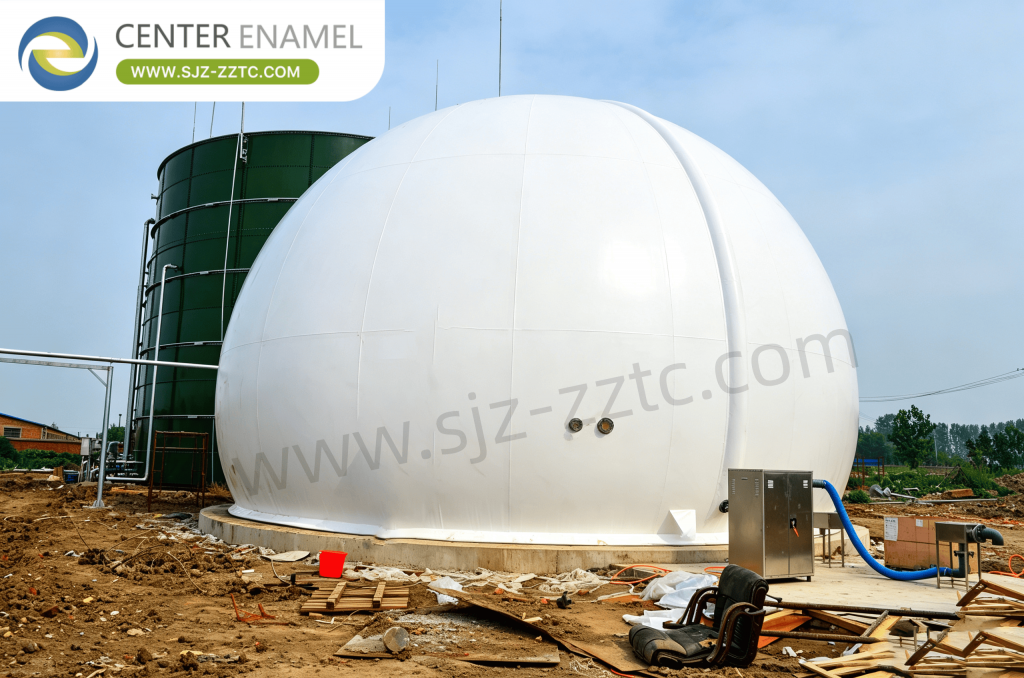
Case 1 - Turkey Kitchen Waste Project
Process: CSTR
Tanks: 2 × φ16.81 m × 16.8 m (H)
Total Volume: 7,452 m³
Commissioned: 2020
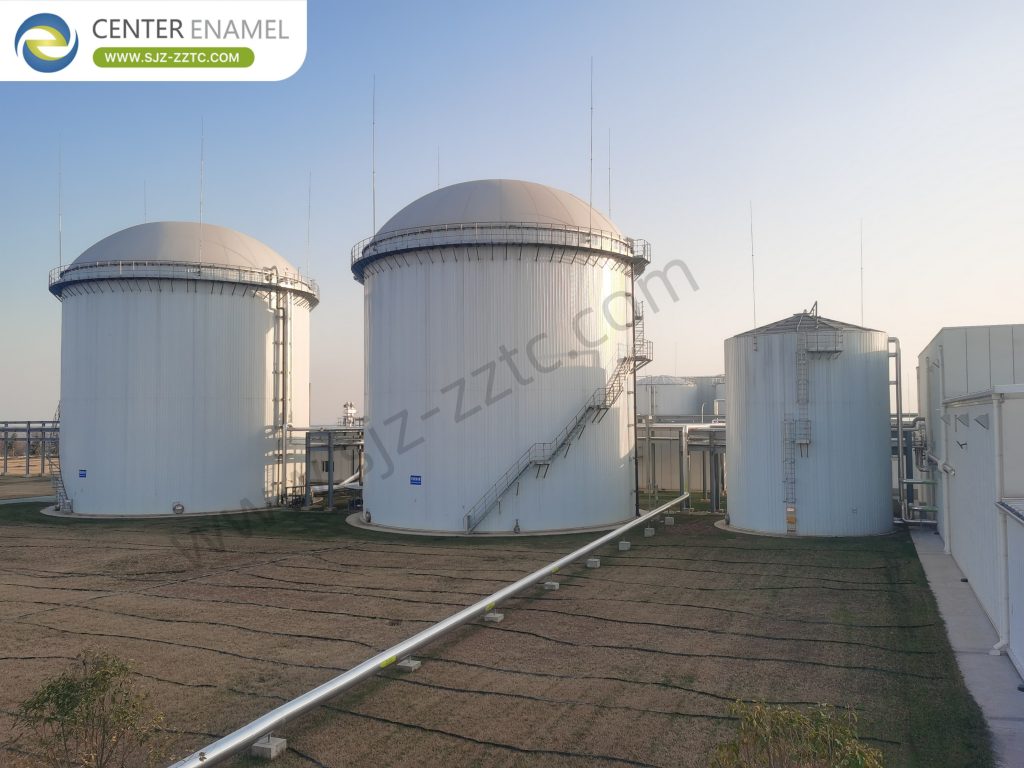
Case 2 - Beijing Kitchen Waste Project
Application: Kitchen waste treatment
Location: Beijing, China
Tanks: 3 × φ12.99 m × 13.2 m (H)
Total Volume: 5,244 m³
Completed: 2018
Both projects demonstrate the reliability of the CSTR + GFS combination under different climatic and operational conditions, delivering consistent biogas output and long-term durability.
Frequently Asked Questions (FAQ)
Q1: What is the typical biogas yield from one ton of kitchen waste using CSTR technology?
Under mesophilic conditions with proper pre-treatment, one ton of kitchen waste (with 80-85% moisture) can produce 80-120 m³ of raw biogas with 55-65% methane content, depending on fat and organic content. Higher fat levels generally increase yield.
Q2: How long does a GFS tank last in a corrosive biogas environment, and what maintenance is required?
With proper installation and routine inspection, a GFS tank can exceed 30 years of service life. Maintenance is minimal - mainly periodic checks of gaskets, bolts, and coating integrity. The glass coating is inert and resistant to H₂S, organic acids, and salinity, making it ideal for aggressive AD environments.
Q3: Can Center Enamel provide a complete turnkey solution, including civil works and permitting support?
Yes. As an experienced biogas solution provider, Center Enamel offers EPC (Engineering, Procurement, and Construction) services. We handle everything from site assessment and process design to tank fabrication, equipment supply, civil construction, installation, and commissioning. We also assist with local regulatory compliance and operator training to ensure smooth project handover.