
Turning Livestock Wastewater into Energy Vietnam: EPC Contractor with GFS Tanks and CSTR Process Solution
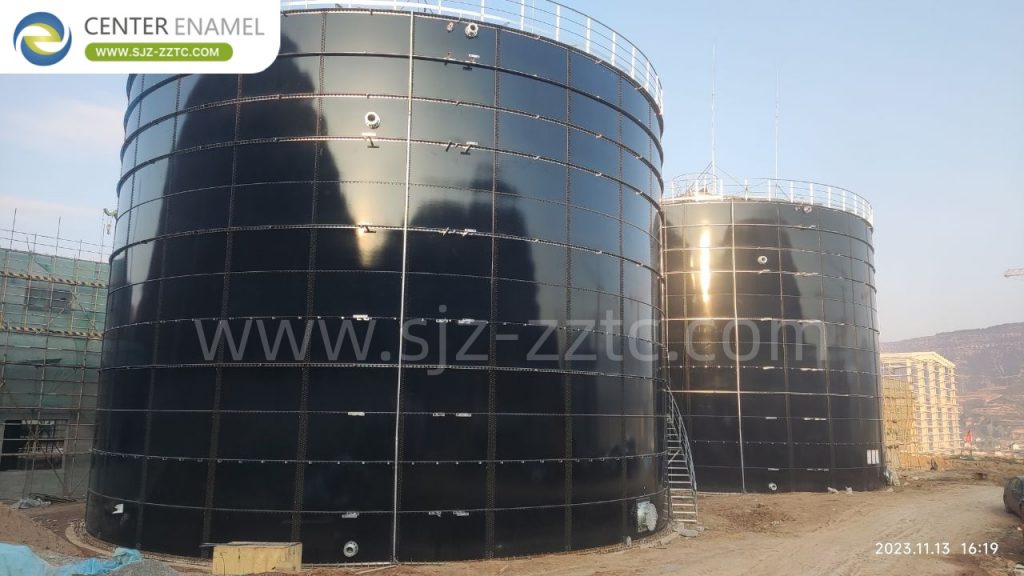
Vietnam's rapidly expanding livestock sector generates vast quantities of organic wastewater, creating urgent environmental challenges while also offering a remarkable opportunity for renewable energy production. Through advanced anaerobic digestion technologies delivered by an experienced EPC Contractor, livestock wastewater can be effectively transformed into clean biogas, reducing pollution and providing sustainable energy for agricultural operations.
Vietnam's Livestock Industry and Wastewater Challenges
Vietnam possesses one of Southeast Asia's largest livestock populations, with approximately 31 million pigs (ranking sixth globally), over 584 million poultry (ranking second in Southeast Asia), 6.14 million cattle, and 1.95 million buffalo . The livestock sector forms a cornerstone of the national economy, supporting millions of livelihoods and contributing significantly to food security and agricultural GDP.
However, this growth has brought substantial environmental burdens. Slaughterhouses and meat processing facilities generate large volumes of wastewater containing blood, fats, manure, undigested food, and suspended solids. Research conducted in Vietnamese slaughterhouses has revealed wastewater with pollutant levels far exceeding discharge standards, with documented concentrations of COD, BOD, and total coliform that pose serious risks to water quality and public health . Untreated effluents are frequently discharged directly into water bodies, causing severe deoxygenation, contaminating groundwater, and threatening communities .
The problem is particularly acute in regions like Binh Duong and the Mekong Delta, where concentrated slaughterhouse operations produce high-strength organic waste that overwhelms local treatment capacity . As Vietnam pursues its Green Growth Strategy and enforces stricter environmental regulations under the Law on Environmental Protection (2020), the need for advanced treatment infrastructure has never been greater .
Transforming Livestock Wastewater into Biogas
The conversion of livestock wastewater into biogas through anaerobic digestion offers a compelling solution to Vietnam's dual challenge of waste management and energy security. Anaerobic digestion is a biological process that breaks down organic matter in the absence of oxygen, producing biogas—a renewable fuel composed primarily of methane (typically 55-65%) and carbon dioxide.
This process delivers multiple substantial benefits for Vietnamese livestock operations. First, anaerobic digestion achieves exceptional organic matter removal, with studies demonstrating COD removal efficiencies of up to 95% and biogas production rates of 0.31 L/L·d when treating high-strength organic wastewater . Second, the captured methane—a potent greenhouse gas that would otherwise escape into the atmosphere—can be converted to energy for farm operations, heating, or electricity generation, substantially reducing reliance on external energy sources. Third, the residual digestate serves as a nutrient-rich organic fertilizer, supporting Vietnam's circular economy approach and benefiting agricultural productivity.
With Vietnam's livestock population continuing to grow and the government promoting modernization and industrialization of the sector, the potential for biogas recovery from slaughterhouse and livestock wastewater represents a significant opportunity for sustainable energy development and environmental protection .
The CSTR Process: Core Technology for Biogas Production
At the heart of efficient livestock wastewater treatment lies the CSTR Process (Continuous Stirred-Tank Reactor), a sophisticated anaerobic treatment technology designed for maximum biogas production. The CSTR Process operates by maintaining fermentation raw materials and microorganisms in a fully mixed state within a closed tank, ensuring optimal contact between organic substrates and the microbial community responsible for biogas generation.
The CSTR Process employs a high-performance mechanical stirring device that continuously agitates the tank contents, preventing stratification and ensuring uniform distribution of nutrients, temperature, and pH conditions throughout the reactor. By feeding continuously or semi-continuously at a constant temperature, the CSTR Process effectively degrades high-concentration organic wastewater with high suspended solids content—conditions that characterize typical livestock wastewater streams from Vietnamese slaughterhouses and dairy operations.
Research has confirmed that CSTR systems exhibit excellent organics removal performance and energy recovery at high organic concentrations while possessing strong anti-shock load ability . This stability is essential for maximizing methane yield and ensuring consistent biogas production even when feedstock composition varies, making the CSTR Process the preferred choice for Biogas Project applications requiring robust and reliable performance.
Center Enamel: Professional Design Solutions for Biogas Projects
Center Enamel stands as Asia's largest manufacturer of Glass-Fused-to-Steel (GFS) tanks, bringing extensive international expertise to Vietnam's sustainable development goals. With a 150,000m² R&D and production base, annual production capacity of 250,000 tank sheets, and a workforce of over 500 employees, the company delivers world-class biogas solutions to the Vietnamese market.
For livestock wastewater treatment, Center Enamel provides professional design solutions tailored to the specific conditions of each project. The company's engineering team conducts detailed assessments of client operations, calculating precise organic loading rates, hydraulic retention times, and expected biogas yields based on daily livestock volumes and wastewater characteristics. By adhering to rigorous international design standards—including AWWA D103, EN28765, and EuroCode—Center Enamel ensures that every tank and roof structure delivers robust performance across Vietnam's diverse climate zones, from the tropical Mekong Delta to the highland regions .
As a premier global EPC Contractor, Center Enamel leverages extensive environmental engineering expertise to deliver sustainable wastewater management solutions that meet Vietnam's tightening environmental compliance standards .
GFS Tanks and Double Membrane Roof for Biogas Applications
For the digestion, storage, and gas collection components of livestock wastewater treatment systems, Center Enamel supplies two primary products: GFS Tanks and the Double Membrane Roof.
GFS Tanks (Glass-Fused-to-Steel) are the preferred bolted tank solution for anaerobic digesters in Biogas Project applications. The enamel coating is fused to steel at temperatures exceeding 820°C-930°C, creating a hard, inert, and exceptionally smooth surface . This glass coating provides outstanding corrosion resistance—essential for livestock wastewater applications where the digester environment is acidic and chemically aggressive. The smooth surface prevents biofilm buildup, reduces cleaning requirements, and ensures consistent performance over decades of service with a lifespan exceeding 30 years. GFS Tanks are delivered as prefabricated panels and bolted together on-site, allowing for rapid assembly even in remote locations across Vietnam where access for heavy construction equipment may be limited .
The Double Membrane Roof serves as the standard gas holder for the biogas produced. Under normal working conditions, this roof type is the preferred solution due to several key advantages. First, it offers significant cost optimization by directly reducing the roof budget. Second, it provides excellent space efficiency by eliminating the need for a separate ground-mounted gas holder—the biogas is stored directly within the double membrane chamber on top of the GFS Tank. This integrated design reduces the overall footprint of the treatment plant, saves foundation construction costs, and simplifies site layout .
Storage Tank and Roof Solutions
Center Enamel offers a comprehensive range of storage tank options to meet diverse project requirements:
Glass-Fused-to-Steel Tanks (GFS) provide superior corrosion resistance with a service life exceeding 30 years. The double coating layer structure combines the strength and flexibility of steel with the outstanding corrosion resistance of glass, making these tanks ideal for demanding biogas applications .
Galvanized Steel Tanks receive a tough, wear-resistant, and durable protective coating through the galvanizing process, offering superior corrosion resistance compared to other steel protection methods.
Fusion Bonded Epoxy Tanks utilize innovative FBE coating technology developed in partnership with AkzoNobel, providing exceptional protection for specialized applications.
Stainless Steel Tanks (AISI 304/316) are designed to meet the most stringent requirements, including the storage of high-purity water and liquids in extremely harsh environments.
For roof solutions, Center Enamel provides multiple options:
Aluminum Geodesic Dome Roof: Offers advanced corrosion resistance, expansive clear span capability, efficient construction, and minimal maintenance costs.
Aluminum Alloy Trough Deck Roof: An economical option for potable water, wastewater, and firewater storage, keeping out rain and wind without air-tightness requirements.
Glass-Fused-to-Steel Roof: Provides air-tightness for pressurized structures, featuring a cone shape with external/internal beams—a viable solution for demanding applications .
Stainless Steel Roof: Offers air-tightness, super anti-corrosion performance, and long service life for harsh environments.
Single and Double Membrane Roof: Superior option for anaerobic digestion processes and biogas applications, providing air-tightness for biogas collection with integrated AD tank design for cost effectiveness .
FRP Roof: Suitable for applications without air-tightness requirements such as drinking water, agriculture, fire water, and wastewater storage, available in dome or flat shapes.
Biogas Project Supporting Equipment
A complete Biogas Project requires a comprehensive suite of supporting equipment to ensure efficient operation:
Gas Holder: Provides safe, flexible storage for the produced biogas.
Black Membrane: Utilized in containment applications for improved system efficiency.
Solid-Liquid Separator: Efficiently splits digestate into solid waste and liquid fertilizer for easier post-processing.
Torch System: Safely flares excess biogas when pressure management is required.
Lifting Pump: Ensures reliable, consistent transfer of slurry between treatment units.
Dehydration and Desulfurization Tank: Purifies raw biogas by removing moisture and hydrogen sulfide.
Screw Sludge Dewatering Machine: Drastically reduces final sludge volume, simplifying disposal.
Center Enamel: Efficient GFS Tank Installation Capabilities
Center Enamel delivers efficient installation of GFS Tanks through several key capabilities:
Modular Construction: Tanks are delivered as prefabricated panels and bolted together on-site, eliminating the need for large-scale construction equipment and enabling rapid assembly in remote locations .
Fast Assembly: GFS tank installation typically requires significantly less time than traditional construction methods—as demonstrated by a 3-tank project in Indonesia completed in just 40 days with 7 personnel—reducing project timelines and minimizing disruption to farm operations .
Weather-Independent Installation: Bolted tank assembly can proceed in varied weather conditions, avoiding the delays common with cast-in-place structures that require specific environmental conditions .
Expandable Design: Tank capacity can be easily expanded as farm operations grow, providing flexibility for future needs without requiring complete replacement .
Quality Assurance: Rigorous quality control at every stage of manufacturing and installation ensures reliable, long-lasting performance.
Local Capacity Building: Center Enamel provides training and knowledge transfer to build local capacity in tank installation and maintenance, ensuring long-term project sustainability.
Center Enamel: One-Stop EPC Contractor for Vietnam
Center Enamel serves as a dedicated one-stop EPC Contractor for complete Biogas Project implementation across Vietnam:
EPC Services: Comprehensive engineering, procurement, and construction services ensure seamless project delivery from concept to commissioning .
Process Package: Complete process design packages optimized for Vietnamese livestock wastewater characteristics and local climate conditions .
Equipment Supply: High-quality equipment supply backed by international certifications including CE/EN1090, ISO9001, NSF61, WRAS, and EN28765 .
Design Standards: Adherence to AWWA D103, OSHA, EN28765, and EuroCode ensures world-class quality and reliability .
Manufacturing Capacity: Asia's largest GFS Tanks manufacturer with 250,000 tank sheets annual production capacity ensures timely delivery.
Technical Expertise: Extensive experience in water, wastewater, and biogas projects across diverse global markets.
Quality Assurance: Rigorous quality control at every stage of design, manufacturing, and installation.
After-Sales Support: Comprehensive technical support and maintenance services ensure long-term operational success.
Featured Projects of Center Enamel
Sweden Biogas Project
Tank dimensions: φ19.11m x 19.2m (H) (1 unit) Units
Total capacity: 5,510 m³
Completion year: 2024
Biogas Project in Indonesia
Application: Anaerobic reactors for a palm oil mill effluent (POME) treatment plant
Tank models: Ø17.58 × 8.4 m, Ø16.82 × 7.2 m
Quantity: 3 GFS tanks
Installation date: 2013
Conclusion
Vietnam's agricultural sector, with its massive livestock population of over 31 million pigs and 584 million poultry, stands at the forefront of a renewable energy revolution. By implementing advanced CSTR Process technology and GFS Tanks storage solutions, livestock wastewater that currently threatens water resources can be transformed into clean biogas, addressing both environmental concerns and energy needs. Center Enamel brings world-class expertise, manufacturing capacity, and professional EPC contracting capabilities to Vietnam, delivering comprehensive Biogas Project solutions tailored to local conditions. As the nation pursues sustainable development goals and seeks to modernize its livestock sector, the adoption of anaerobic digestion technology for livestock wastewater treatment represents a strategic investment with substantial environmental, economic, and social returns.
FAQs
Q1: Why is the CSTR Process particularly suitable for treating livestock wastewater in Vietnam?
The CSTR Process is specifically designed to handle feedstocks with high suspended solids—a defining characteristic of livestock wastewater from Vietnamese slaughterhouses and dairy operations. Its mechanical stirring system ensures complete mixing and prevents stratification, maintaining stable conditions even when feedstock composition varies. Research confirms CSTR systems exhibit strong anti-shock load ability and excellent performance, making them ideal for Vietnam's diverse climate zones from the Mekong Delta to the highlands .
Q2: How does Center Enamel as an EPC Contractor support biogas project implementation in Vietnam?
As an EPC Contractor, Center Enamel provides comprehensive services including feasibility studies, site-specific process design, precision manufacturing of GFS tanks and equipment, turn-key installation, and training for local operators. The company manages every phase of the project to ensure environmental compliance with Vietnam's Law on Environmental Protection (2020) and long-term financial viability for Vietnamese municipalities and enterprises .
Q3: What are the environmental and economic benefits of converting livestock wastewater to biogas in Vietnam?
Converting livestock wastewater to biogas delivers multiple benefits: achieving up to 95% COD removal efficiency, significantly reducing pathogen loads that contaminate water bodies, capturing methane that would otherwise contribute to greenhouse gas emissions, and producing nutrient-rich digestate that serves as organic fertilizer for Vietnam's agricultural sector. The biogas generated provides renewable energy that reduces reliance on fossil fuels and lowers operational costs for livestock operations, supporting Vietnam's Green Growth Strategy and circular economy goals .