
How Turnkey Biogas Plant Solutions Are Revolutionizing Waste-to-Energy Worldwide
The global biogas industry is at an inflection point. As countries tighten methane regulations and renewable energy targets, the demand for Turnkey Biogas Plant infrastructure has surged. Yet the challenge remains consistent: how do you convert complex organic waste streams into stable, profitable biogas energy while ensuring structural durability in highly corrosive environments?
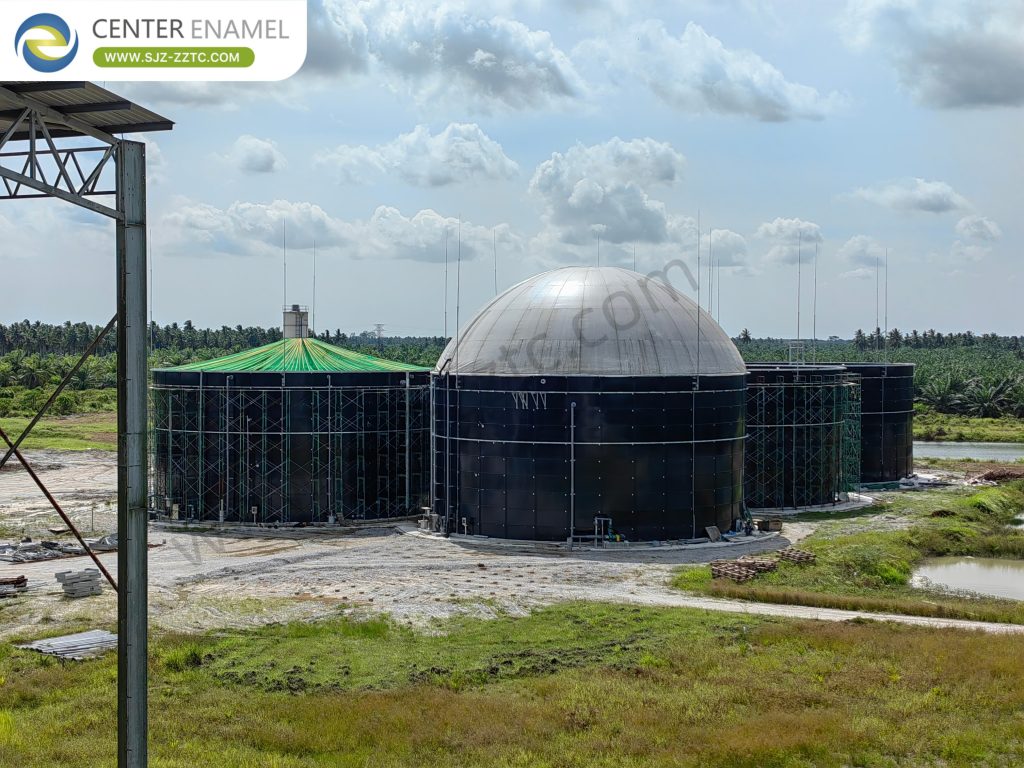
This is where Center Enamel's integrated approach-combining proprietary GFS Tanks with full-scope EPC delivery-transforms risk into reliability.
Global Biogas Market Landscape: From EPC Dominance to Carbon Asset Innovation
The competitive dynamics of the biogas sector reveal a clear divergence. Leading companies dominate major project market shares through the "EPC + Operation" integrated model, while small and medium-sized enterprises focus on county-level distributed projects and specialized equipment segments. China's biogas equipment exports continue to expand, with generator sets primarily flowing to emerging markets.
Business model innovation is accelerating. Carbon asset development has become a standard feature of large projects, converting methane emission reductions into tradable carbon credits. Some countries have piloted digestate fertilizer carbon credit trading, encouraging the integration of digestate application to farmland with carbon accounting. Meanwhile, the "biogas operation outsourcing" service model is emerging, improving operational efficiency of county-level projects through professional management.
From a technology and equipment perspective, anaerobic digestion remains the core process of biogas engineering. GFS Tanks-Glass-Fused-to-Steel storage tanks-have become the mainstream choice for large anaerobic digestion facilities. Their excellent sealing, corrosion resistance, and construction convenience make them the preferred vessel for Turnkey Biogas Plant projects globally. The modular design of GFS Tanks can be combined with membrane gas holders to form an integrated "fermentation + gas storage" solution, with penetration rates continuing to rise across biogas industry clusters.
Why GFS Tanks Outperform Concrete in Full-Process Factory Standardization
GFS Tanks are fully factory-prefabricated to standardized specifications, delivering finished product quality stability that far exceeds cast-in-place concrete tanks. All concrete tank processes are completed in the open air, where rebar tying, concrete pouring, and curing are heavily influenced by worker skill, temperature, and rainfall. Wall thickness, density, and strength vary significantly between batches, with hidden defects like honeycombing, voids, and insufficient wall thickness common-quality cannot be uniformly controlled.
Center Enamel's GFS Tank steel panels, seals, and reinforcement components are all mass-produced in automated factories. Steel stamping, high-temperature enameling, and dimensional cutting are controlled by CNC equipment, with each panel's parameters and enamel thickness strictly following unified national standards. All components are uniformly packaged and transported to site, with assembly following standardized construction drawings.
Full-process quality inspection from raw materials to finished components ensures highly consistent product performance parameters, completely eliminating the uncontrollable quality risks of on-site concrete construction. Every GFS Tank delivers stable, consistent performance-project after project, country after country.
Comparative Data: GFS Tanks vs. Concrete Tanks for Biogas Applications
| Dimension | GFS Tanks | Concrete Tanks |
| Quality Control | Factory-prefabricated, CNC-controlled parameters | On-site casting, dependent on worker skill and weather |
| Corrosion Resistance | Double-sided fused glass coating; resistant to H₂S, organic acids, high salinity | Requires additional anti-corrosion linings; prone to failure |
| Sealing Performance | Precision-bolted, gas-tight construction | Curing cracks common; gas leakage risk |
| Installation Timeline | Modular assembly; weeks vs. months | Cast-in-place; weather-dependent schedule |
| Maintenance & Repair | Individual panel replacement; minimal downtime | Structural repair difficult; often requires demolition |
| Service Life | 30+ years with proper maintenance | 15–20 years with lining maintenance |
USR Supporting Equipment: Built for High-Solids Agricultural Wastewater
The core equipment is the GFS Tank with no complex media or precision three-phase separators, featuring a rugged clog-resistant structure. The bottom large-diameter anti-clogging distribution system is suitable for high-solids wastewater, preventing pipe clogging.
Supporting equipment includes influent lift pumps, simple pretreatment screens, and equalization tanks for impurity removal and water quality balancing. Simple top gas collection devices and biogas conveying/desulfurization equipment enable biogas resource recovery. Temperature, level, and pH online monitoring equipment ensure process stability. Bottom large-diameter sludge discharge pipes and pumps facilitate rapid removal of high-concentration residual sludge, suitable for high-solids conditions.
The complete USR system has extremely low failure rates, outstanding wear and clog resistance, and is far easier to maintain than conventional anaerobic processes-making it the ideal complement to a Turnkey Biogas Plant deployment.
Biogas Sources: Five Major Organic Feedstock Categories
Turnkey Biogas Plant facilities use organic waste as feedstock to produce biogas through anaerobic digestion-the core technological pathway for biomass energy utilization. Biogas sources cover five major organic feedstock categories:
(1) Livestock manure (pig, cattle, poultry manure from large-scale farms)-rich in easily degradable organics with high gas production efficiency; the most mainstream biogas feedstock.
(2) Crop straw and agricultural residues (corn stover, wheat straw, rice straw, vegetable waste)-high cellulose/hemicellulose content requiring pretreatment to improve gas yield.
(3) Food waste and kitchen residues-rich in oils, starches, proteins, with high organic loading and large gas production.
(4) Municipal sludge (primary and waste activated sludge from WWTPs)-high solids content, suitable for high-solids anaerobic digestion.
(5) Industrial organic waste residues and liquids (distillers' grains, sugar factory waste, fruit pomace, papermaking black liquor)-high-concentration organic liquids with excellent gas production efficiency.
Various feedstocks can be digested alone or in co-digestion, with mixed feedstocks providing more balanced nutrition and stable gas production. Core anaerobic processes use CSTR/USR with Center Enamel GFS Tanks as digesters-corrosion-resistant, excellent sealing, ensuring stable anaerobic conditions and efficient biogas production.
Feedstock Comparison for Biogas Production
| Feedstock Category | Key Characteristics | Pretreatment Needs | Gas Yield Potential |
| Livestock manure | High easily degradable organics | Minimal; screening | High |
| Crop straw/residues | High cellulose/hemicellulose | Shredding, hydrolysis | Moderate |
| Food waste | Rich in oils, starches, proteins | De-packaging, pasteurization | Very High |
| Municipal sludge | High solids content | Thickening, dewatering | Moderate |
| Industrial organic waste | High-concentration liquids | pH adjustment, screening | High to Very High |
Ghana Municipal Domestic Wastewater Treatment Project: GFS Tanks in Action
Completed installation in 2021, the Ghana project treats 1,800 m³/day of municipal wastewater using UBF anaerobic + A²/O nitrogen/phosphorus removal mature processes. The facility is equipped with multiple Center Enamel GFS Tanks including 1 UBF anaerobic reactor, 1 secondary clarifier, and 2 internal/external double-layer A²/O biological tanks.
Ghana Project Technical Specifications
| Parameter | Specification |
| Location | Ghana |
| Completion Year | 2021 |
| Treatment Capacity | 1,800 m³/day |
| Process Train | UBF Anaerobic + A²/O Nitrogen/Phosphorus Removal |
| GFS Tank Components | 1 UBF Anaerobic Reactor, 1 Secondary Clarifier, 2 A²/O Biological Tanks |
| Application | Municipal Domestic Wastewater Treatment |
Full-Category Complete Product Matrix of Center Enamel
Center Enamel has built a complete product matrix of "core storage tanks + supporting covers + specialty pressure vessels + complete environmental engineering services"-the only company globally to achieve integrated enamel frit R&D, self-manufacturing, and GFS Tank application.
① Core: Proprietary GFS Tanks - Using proprietary double-sided hot-rolled double-layer enamel anti-corrosion technology-resistant to strong acids/alkalis, high salinity, and microbial corrosion-modular quick assembly-suitable for all strong-corrosion conditions in wastewater, biogas, and chemical applications.
② Supporting: Fusion Bonded Epoxy Tanks - Produced on China's first intelligent standardized production line-primarily for drinking water, fire water, and neutral medium storage.
③ Sealing: Aluminum Dome Covers - Proprietary high-strength aluminum alloy self-supporting structure-meeting international waterproof and load-bearing standards-suitable for tank sealing and biogas collection.
④ Other Tanks: Carbon Steel Tanks, Stainless Steel Tanks, Composting Tanks, Various Non-Standard Pressure Vessels.
⑤ Engineering Services: Environmental EPC General Contracting, Anaerobic Process Section Subcontracting-one-stop coverage across food waste, leachate, municipal wastewater, livestock biogas, petrochemical/metallurgical, and seawater desalination industries-customizable tank volume, corrosion protection grade, and complete process solutions with integrated equipment manufacturing and engineering construction.
This vertically integrated capability is what makes Center Enamel's Turnkey Biogas Plant offering fundamentally different from equipment-only suppliers.
Global Integrated Standardized Service System
Leveraging regional sales centers in China and overseas local agent networks, Center Enamel has established a complete after-sales service loop covering all markets. The system provides four core service pillars:
24/7 rapid response mechanism - immediate technical support and emergency coordination
On-site domestic/overseas installation services - certified installation teams deployed to project sites
Full-project-cycle after-sales support - from commissioning through long-term operation
Long-term warranty protection - structural and performance guarantees for GFS Tanks
This forms a complete service chain from preliminary site survey, mid-term construction management, to long-term inspection and maintenance. The entire system is uniformly adapted to both domestic and international project service standards, coordinating personnel scheduling, material support, and on-site coordination for simultaneous projects across multiple regions-significantly reducing customer multi-party coordination costs and ensuring efficient domestic and overseas project delivery.
Frequently Asked Questions
Q1: What does a Turnkey Biogas Plant include?
A: A turnkey biogas plant bundles seven work packages: feasibility and feedstock analysis, process and civil engineering, permits and grid connection paperwork, equipment supply (including GFS Tanks, mixers, gas cleaning, and CHP or upgrading systems), civil works and tank erection, commissioning with performance testing and staff training, and a warranty period with guaranteed output parameters. The contractor bears full integration risk across all subsystems.
Q2: Why are GFS Tanks preferred over concrete for biogas digesters?
A: GFS Tanks offer superior corrosion resistance against hydrogen sulfide and organic acids, exceptional gas-tightness for methane capture, factory-prefabricated quality consistency, and modular assembly that cuts construction timelines. Unlike concrete, GFS Tanks resist cracking and require minimal maintenance-individual panels can be replaced without dismantling the entire structure.
Q3: How long does a Turnkey Biogas Plant project take?
A: Farm-scale plants typically complete in 8–12 months; commercial CHP plants in 12–18 months; and biomethane plants with grid connection in 18–24 months. The permitting period is often the longest single item, so experienced providers start it in parallel with design work.
Your waste is an untapped energy asset - let's turn it into revenue. Reach out to Center Enamel now and discover how our Turnkey Biogas Plant and GFS Tank solutions cut construction time, reduce corrosion risk, and lock in long-term gas output.