
How We Deliver Turnkey Solution for Anaerobic Digestion Projects
The global biogas industry is undergoing a phase of large-scale expansion, with China contributing the major share of new capacity and emerging as the fastest-growing single market. Europe’s mainstream model focuses on combined heat and power (CHP) and biomethane grid injection, while China emphasizes vehicle fuel and industrial heating alongside fertilizer utilization of digestate. Southeast Asian markets show rapidly growing food waste treatment demand, becoming key areas for international companies. Across these regions, one common challenge persists: converting complex organic waste streams into stable, profitable biogas operations. This is precisely where a Turnkey Solution approach for Anaerobic Digestion becomes essential.
Regional Biogas Development: A Landscape of Differentiated Paths
Countries show differentiated development paths in biogas resource utilization. Europe focuses on energy output, China emphasizes comprehensive utilization, and emerging markets prioritize pollution control. This divergence means that a one-size-fits-all Anaerobic Digestion approach rarely succeeds. Instead, projects demand localized adaptation-adjusting process configuration, corrosion protection, and regulatory compliance to match each region’s specific waste composition and operational conditions.
Why GFS Tanks Outperform Traditional Concrete for Anaerobic Digestion
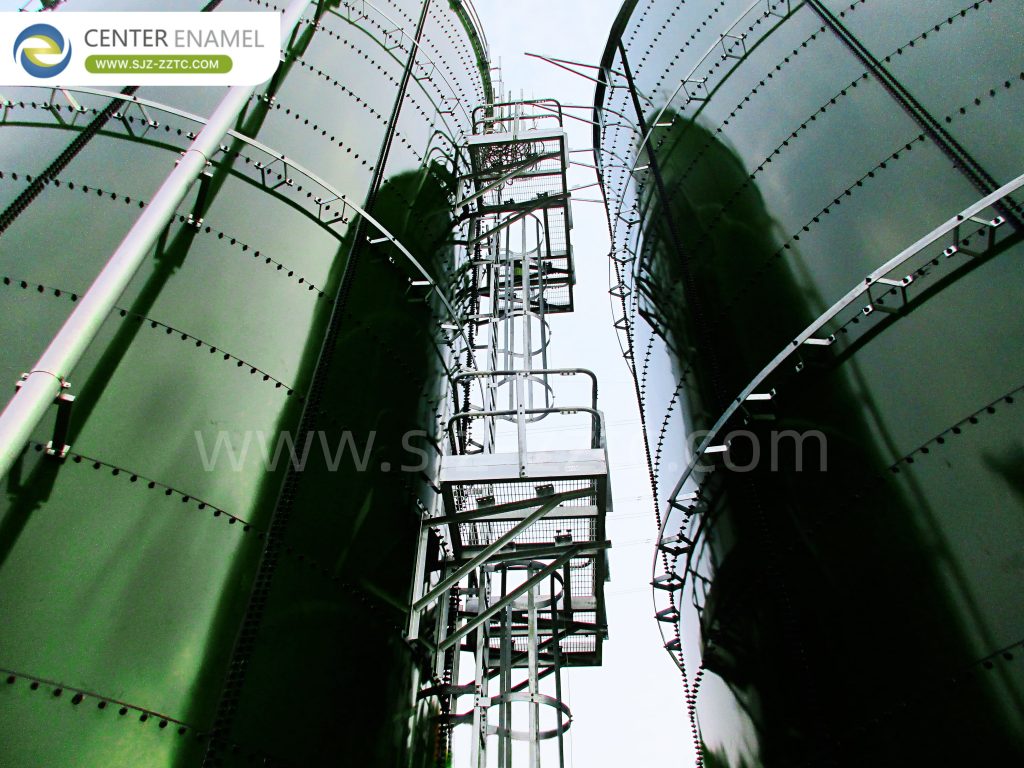
Center Enamel’s independently developed double-sided double-layer enameling technology represents the industry’s leading coating anti-corrosion technology, with corrosion resistance completely surpassing concrete tanks. Concrete tank interiors are riddled with pores, allowing wastewater and acid/alkaline media to easily penetrate and corrode the structural layer. Long-term use leads to irreversible problems such as internal wall spalling, water seepage, and rebar corrosion-issues that are difficult to repair and cannot be fundamentally resolved.
GFS tanks feature high-temperature enameling on both interior and exterior surfaces of steel panels, creating a dense, non-porous enamel finish that completely blocks corrosive liquids and biogas permeation. The enamel layer has extremely strong chemical stability, resisting acids, alkalis, salts, and microbial corrosion. Concrete tanks develop extensive corrosion and leakage after 5–8 years of use, while GFS tank anti-corrosion service life can exceed 30 years, with no need for frequent internal lining repairs throughout the service life. This significantly reduces long-term maintenance investment and fundamentally eliminates environmental risks of medium leakage contaminating sites and groundwater.
| Comparison Factor | Traditional Concrete Tanks | Center Enamel GFS Tanks |
| Anti-corrosion service life | 5–8 years before major degradation | Exceeding 30 years |
| Porosity | Highly porous; prone to penetration | Dense, non-porous enamel surface |
| Maintenance need | Frequent lining repairs required | No internal lining repairs needed |
| Chemical resistance | Limited; degrades with acids/alkalis | Resists acids, alkalis, salts, microbial corrosion |
| Risk of medium leakage | High after 5–8 years | Negligible |
Compared to traditional concrete and FRP tanks, GFS tank coatings have no risk of peeling or blistering, and are adaptable to highly corrosive conditions such as palm oil mill effluent, livestock manure, and chemical high-salinity wastewater, with outstanding long-term comprehensive cost advantages.
USR: The Dedicated Process for Agricultural High-Solids Wastewater
The USR (Upflow Solid Reactor) is a dedicated process for agricultural high-solids wastewater, primarily suitable for large-scale livestock manure, livestock soaking water, agricultural straw leachate, and livestock slaughterhouse high-solids wastewater. For high-suspended-solids, high-organics, high-impurity wastewater conditions, it serves as the core process for rural livestock pollution treatment and agricultural organic waste resource utilization. The USR is suitable for township decentralized wastewater treatment and small to medium-sized agricultural enterprise wastewater treatment. It can function as the primary process for large livestock base manure resource recovery, combining wastewater treatment with biogas recovery. It is also suitable for various high-solids, easily clogged, difficult-to-treat organic wastewater pretreatment, with superior suitability in agricultural environmental applications compared to other anaerobic processes.
Wastewater Sources in Anaerobic Digestion Plants
Biogas plant wastewater is secondary wastewater from organic waste resource recovery-primarily digestate from Anaerobic Digestion, distinct from primary production wastewater. It originates from anaerobic digestion of livestock manure, crop straw, food waste, and brewery residues, as a byproduct of biogas fermentation. Auxiliary wastewater includes equipment washing, digester tank cleaning, desulfurization system drainage, and plant floor washdown. Production is continuous and stable, with only minor variations according to feedstock input and fermentation cycles. Pollutants are significantly transformed through anaerobic digestion, with composition distinct from primary high-concentration organic wastewater-it is the core wastewater requiring treatment in biogas plants.
Bangladesh Poultry Farm: A Turnkey Solution Benchmark
Targeting local poultry farm manure resource recovery with daily treatment of 47 tons, influent COD, BOD, and SS as high as 50,000 mg/L, 25,000 mg/L, and 50,000 mg/L were reduced after CSTR + UASB anaerobic treatment to below 200 mg/L, 100 mg/L, and 100 mg/L respectively-effluent compliant with local environmental discharge standards. The project produces approximately 4,900 m³ biogas daily-each m³ biogas can generate 2 kWh of electricity, with daily power generation of 9,800 kWh-simultaneously achieving pollutant reduction and clean energy recovery. This is a benchmark project for livestock waste recycling in Southeast Asia.
| Parameter | Influent Concentration | Effluent Concentration |
| COD | 50,000 mg/L | Below 200 mg/L |
| BOD | 25,000 mg/L | Below 100 mg/L |
| SS | 50,000 mg/L | Below 100 mg/L |
| Daily treatment capacity | 47 tons | - |
| Daily biogas production | 4,900 m³ | - |
| Daily power generation | 9,800 kWh | - |
Center Enamel’s Global Market Presence and Delivery Capability
Center Enamel’s global business covers over 100 countries and regions, with more than 30,000 successful overseas projects. Products are exported to all major regions including Europe, the Americas, the Middle East, Africa, Southeast Asia, and Latin America, supported by a well-established global localized service network.
Domestically, the company is organized into North, South, Central, East, and Southwest marketing regions, covering environmental, water utility, livestock, and petrochemical customers nationwide. Internationally, the company adopts a “standardized products + localized adaptation” model-adjusting tank corrosion protection, sealing, and pressure standards for different national water quality and environmental regulations-with multiple global landmark projects including large-volume GFS tanks in Italy, 20 m tower water supply tanks in Colombia, coastal seawater treatment tanks in Costa Rica, and large municipal wastewater aluminum dome projects in Saudi Arabia. The company has established long-term stable strategic partnerships with many Fortune 500 companies.
Center Enamel is the pioneer of Chinese GFS equipment exports, with installation service coverage across over 100 countries and regions-possessing full delivery capability across climates, regulations, and geographies. Overseas coverage includes Southeast Asia (Vietnam, Thailand, Malaysia, Indonesia, Cambodia, Bangladesh, Nepal, etc.), Africa (Ghana, South Africa, Mali, Guinea, Zambia, Kenya, Pakistan, etc.), Europe/Americas (Sweden, USA, Russia, etc.), the Middle East, and Latin America-adaptable to tropical rainy high-salt spray, high-altitude mountainous, Nordic severe cold, and high-standard European/American facility conditions.
The company uses a dual-service model of “own cross-border construction teams + overseas local agent coordination”-whether clients are in developed countries or remote developing regions-providing one-stop services including on-site survey, on-site installation, process commissioning, and operator training. Complete coverage spans biogas engineering, municipal wastewater, industrial wastewater, livestock manure, drinking water storage, and other global mainstream environmental engineering projects-possessing the full delivery capability to undertake large-scale tank farm projects in any country worldwide.
Frequently Asked Questions
What is included in a Turnkey Solution for Anaerobic Digestion?
A Turnkey Solution covers the entire project lifecycle: feasibility assessment, process design, equipment manufacturing (including GFS tanks), on-site installation, commissioning, and operator training. Center Enamel manages everything from design to handover.
How does USR differ from CSTR in Anaerobic Digestion?
USR (Upflow Solid Reactor) is optimized for high-solids agricultural wastewater such as livestock manure and straw leachate. CSTR (Continuous Stirred Tank Reactor) handles a broader range of feedstocks but is less suited to extremely high suspended solids. Selection depends on feedstock characteristics.
What biogas yield can a typical agricultural Anaerobic Digestion project achieve?
The Bangladesh poultry farm project processes 47 tons daily and produces 4,900 m³ biogas, generating 9,800 kWh electricity per day. Actual yields vary with feedstock composition, organic loading rate, and process configuration.
Ready to discuss your Anaerobic Digestion project? Contact Center Enamel today for a tailored Turnkey Solution assessment. Our engineering team will evaluate your waste stream and provide a feasibility report within 5 business days.