
Concrete Tanks Failing? Turnkey Solution for Global Industrial Wastewater Treatment
Global industrial wastewater treatment policies are escalating from "compliance discharge" to mandatory "resource recovery" and "zero liquid discharge." The EU, through its Circular Economy Action Plan, requires member states to increase industrial wastewater reuse rates and extends carbon footprint accounting to the full life cycle of wastewater treatment.
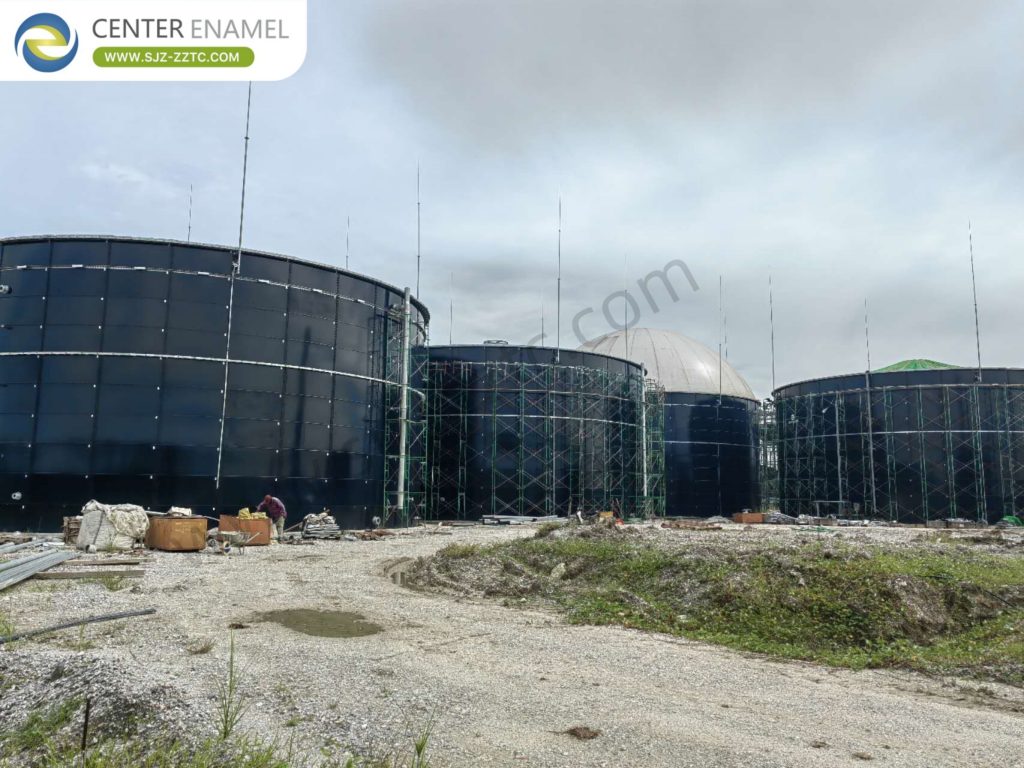
China continuously updates and tightens industrial water pollutant discharge standards, with increasingly stringent limits on total nitrogen, total phosphorus, and characteristic pollutants for industries such as chemicals, pharmaceuticals, and printing and dyeing. Some water-scarce regions and highly polluting industries are mandated to adopt zero or near-zero liquid discharge technologies. Germany has established a differentiated pretreatment technical standard system by industry, requiring industrial wastewater to meet specific quality requirements before discharge into municipal wastewater treatment plants, implementing strict source control.
These tightening regulations raise a practical question for project owners: how can compliance be achieved without unpredictable construction quality, schedule overruns, or escalating O&M costs? The answer increasingly lies in integrated Industrial Wastewater Treatment Turnkey Solution delivery-where process design, equipment manufacturing, and installation quality are controlled under a single responsible party. The sections below examine the equipment foundation, process advantages, and quality systems that make such delivery reliable.
Factory-Standardized GFS Tanks: Eliminating Construction Quality Risk
GFS tanks are fully factory-prefabricated to standardized specifications, with finished product quality stability far exceeding cast-in-place concrete tanks. All concrete tank processes are completed in the open air, with rebar tying, concrete pouring, and curing heavily influenced by worker skill, temperature, and rainfall. Wall thickness, density, and strength vary significantly between batches, with hidden defects like honeycombing, voids, and insufficient wall thickness common-quality cannot be uniformly controlled.
Center Enamel's GFS tank steel panels, seals, and reinforcement components are all mass-produced in automated factories. Steel stamping, high-temperature enameling, and dimensional cutting are all controlled by CNC equipment, with each panel's parameters and enamel thickness strictly following unified national standards. All components are uniformly packaged and transported to site, with assembly strictly following standardized construction drawings. Full-process quality inspection from raw materials to finished components ensures highly consistent product performance parameters, completely eliminating the uncontrollable quality risks of on-site concrete construction, with every tank delivering stable, consistent performance.
| Quality Factor | GFS Tanks (Factory-Prefabricated) | Concrete Tanks (Cast-in-Place) |
| Production Environment | Automated factory, CNC-controlled | Open air, weather-dependent |
| Quality Consistency | Highly uniform, standardized | Batch-to-batch variation |
| Common Defects | Minimal, controlled by inspection | Honeycombing, voids, thin walls |
| Enamel / Coating Control | Uniform thickness, national standards | Not applicable |
| On-Site Assembly | Standardized drawings, bolted | Skilled labor dependent |
| Performance Reliability | Stable and repeatable | Variable |
IC Process Advantages: Efficiency in Minimal Footprint
The IC Process delivers top-tier treatment efficiency, with a footprint only one-third that of traditional anaerobic processes for the same treatment capacity-a significant compactness advantage for space-constrained industrial sites. Its built-in gas-lift internal circulation eliminates the need for external recirculation equipment, enabling autonomous forced mixing of sludge and water. This strong hydraulic mixing ensures thorough micro-pollutant contact, greatly improving degradation efficiency while withstanding high water quality and hydraulic shock loads.
The dual-zone configuration combines high-efficiency degradation with deep polishing for stable effluent quality. The process achieves high degrees of sludge granulation, strong biological activity, and very low washout rates. Automation levels are high, operation is stable, failure rates are low, biogas production is substantial, and resource recovery benefits are outstanding. Long-term energy and O&M costs run far lower than traditional anaerobic processes, making the IC Process ideal for large-flow, high-concentration Industrial Wastewater Treatment applications-and a core component of any well-designed Turnkey Solution.
Pharmaceutical Wastewater: The Highest Toxicity and Environmental Risk
Pharmaceutical wastewater is the most toxic and highest environmental risk category among the five wastewater types, with significant biological toxicity and environmental persistence. Residual antibiotics, bacteriostats, and chemical synthesis intermediates in the wastewater can inhibit microbial activity at microgram-level concentrations, disrupting biochemical system bacterial community structure and potentially causing system failure. Large quantities of persistent refractory organics discharged into natural waters cannot be rapidly decomposed, remaining in water and soil for extended periods, inhibiting aquatic organism reproduction and disrupting aquatic ecological balance. Heavy metal ions, high salts, and toxic organics form combined synergistic pollution, causing persistent surface and groundwater contamination with long-term ecological safety risks. These characteristics make pharmaceutical wastewater the most demanding test of any Industrial Wastewater Treatment Turnkey Solution.
Full-Process Standardized Installation Quality Control
Demonstrating high-standard installation quality through long-term stable global project performance, Center Enamel has established full-chain quality control standards across four dimensions: factory protection, on-site assembly construction, completion inspection, and long-term warranty-ensuring quality control for every GFS tank. At the factory stage, all enameled panels, seals, and structural components receive rust-proof and moisture-proof independent packaging with dedicated protective supports-preventing damage during sea and land transport and avoiding enamel coating damage. On-site construction strictly follows unified assembly process specifications-panel by panel tightening and leak testing in layers, with airtightness and verticality testing after each tank section completion-dual-membrane covers and anaerobic piping undergo simultaneous pressure testing and acceptance.
| Quality Control Stage | Key Measures |
| Factory Protection | Rust-proof, moisture-proof packaging with protective supports |
| On-Site Assembly | Panel-by-panel tightening, layered leak testing |
| Section Completion | Airtightness and verticality testing per tank section |
| System Testing | Simultaneous pressure testing of covers and anaerobic piping |
| Regional Standards | CE/NSF (EU/US), enhanced sealing (SE Asia), settlement re-inspection (Africa) |
| Documentation | Inspection reports, pressure records, photo/video archives |
Differentiated quality acceptance standards are customized for different regions: EU and US projects follow stringent CE and NSF inspection criteria; Southeast Asian hot humid regions receive enhanced corrosion protection and sealing acceptance; remote African sites have additional foundation settlement re-inspection procedures. Upon project completion, complete construction inspection reports, pressure test records, and anti-corrosion appearance acceptance documents are issued, with full photo and video archives retained. Over 10,000 tanks delivered globally have operated long-term without large-scale leakage or structural deformation-preventing future O&M issues at source. This discipline is what separates a dependable Turnkey Solution from a collection of separately sourced components.
Global Benchmark Project Coverage
Center Enamel's project portfolio covers over 100 countries across Southeast Asia, Africa, Europe, and the Americas-30,000+ mature projects-accumulating complete industry solutions across palm oil, livestock, municipal, brewing, and food waste biogas-rapidly matching customized solutions for different regional climates, water quality, and regulations.
| Global Capability Metric | Achievement |
| Countries Covered | 100+ |
| Mature Projects | 30,000+ |
| Core Industries | Palm oil, livestock, municipal, brewing, food waste biogas |
| Regional Adaptation | Southeast Asia, Africa, Europe, Americas |
| Customization | Climate, water quality, and regulatory matching |
| Delivery Model | Integrated Industrial Wastewater Treatment Turnkey Solution |
Aluminum Alloy Trough Deck Roof: Economical Cover for Clean Water Storage
Aluminum Alloy Trough Deck Roof is a cost-effective economical tank cover solution for clean water and wastewater storage scenarios, primarily designed for drinking water, production wastewater, and firewater reserve tanks, balancing practicality and cost advantages. The main body is integrally formed from anti-corrosion aluminum alloy plates, paired with aluminum support trusses. Its lightweight design imposes less load on the tank foundation, reducing civil construction investment.
A naturally formed dense oxide protective layer on the surface resists rain and mild wastewater corrosion, withstands outdoor sun and rain exposure, and effectively blocks wind, rain, insects, fallen leaves, and odor volatilization, protecting water quality by preventing dust and debris from falling in and causing secondary contamination. The flat roof structure is neat and orderly, allowing installation of maintenance walkways, guardrails, vents, and level monitoring ports on top, facilitating daily inspection and equipment maintenance.
The simple sealing structure enables straightforward installation with short construction timelines, and virtually eliminates the need for anti-corrosion painting maintenance, resulting in extremely low operational costs. It is suitable for various small, medium, and large atmospheric pressure water storage tanks, and has been widely implemented in waterworks clear water tanks, industrial circulating water tanks, park firewater tanks, and domestic wastewater temporary storage facilities. It is highly compatible with water storage applications that do not require biogas collection or high-pressure sealing.
Frequently Asked Questions
What does an Industrial Wastewater Treatment Turnkey Solution cover?
A Turnkey Solution covers process design, GFS tank manufacturing, cross-border logistics, on-site installation, pressure testing, commissioning, and operator training-delivered under one EPC contract.
Why is the IC Process suited to high-strength industrial wastewater?
The IC Process uses internal gas-lift circulation for autonomous mixing, achieving a footprint one-third of traditional anaerobic systems with superior shock-load tolerance, stable effluent, and strong biogas recovery.
How does Center Enamel guarantee installation quality worldwide?
Center Enamel applies four-stage quality control-factory protection, standardized assembly, completion inspection, and long-term warranty-with regional standards for EU/US, Southeast Asia, and African projects.
Partner with Center Enamel for Your Next Industrial Wastewater Treatment Project
Share your effluent data with our engineers and receive a tailored Turnkey Solution proposal covering process selection, tank specification, and delivery schedule. Contact us today to start the conversation.
Reach out now to request a feasibility assessment and preliminary design for your Industrial Wastewater Treatment or biogas recovery project.