
Turnkey Waste Treatment Plant: Procurement And Performance Guarantees
Buying a turnkey waste treatment plant means comparing promises that are only meaningful on a common basis. Fix the waste basis - tonnes, composition, moisture - then require every bidder to guarantee output against that same basis. Compare capacity, effluent or gas performance, residue handling and the shortfall remedy side by side. A lower price with a weaker basis is not a cheaper plant; it is a different promise.
Fixing The Basis Before Tender
Most bid comparisons fail because each bidder assumes a different feed. A tender should state the design waste, its variability range and the required output, and require bids to price against it. Equalization and pre-treatment capacity depend on variability, so hiding the range produces an optimistic design. A clear basis lets the owner compare like with like. This is general guidance; the real basis follows the waste study.
| Basis item | Why it must be fixed |
| Design tonnes | Sets plant size |
| Composition / moisture | Sets process and gas |
| Variability range | Sets buffer capacity |
| Output limit | Sets polishing duty |
Writing Testable Guarantees
A guarantee should name the metric, the feed basis and the test method. 'Treats 100 tonnes/day' is not testable without stating the waste; 'meets the discharge limit at 100 tonnes/day of waste within the stated composition' is. Include the sampling method, the test duration and the remedy for a miss. Guarantees without a remedy are marketing, not procurement.
Scoring Bids On Equal Inputs
Once the basis is fixed, score each bid on the same rows: capacity, performance, residue outlet, energy use, commissioning support and price. A bid that excludes dewatering or gas use is not comparable to one that includes them. Check the exclusions as carefully as the inclusions. The lowest total cost on a common scope is the defensible choice.
| Evaluation row | Question to ask |
| Capacity | At what waste basis? |
| Performance | Which limit, which test? |
| Residue | Is the outlet included? |
| Single responsibility | Who owns the interface? |
A Turnkey Delivery Reference
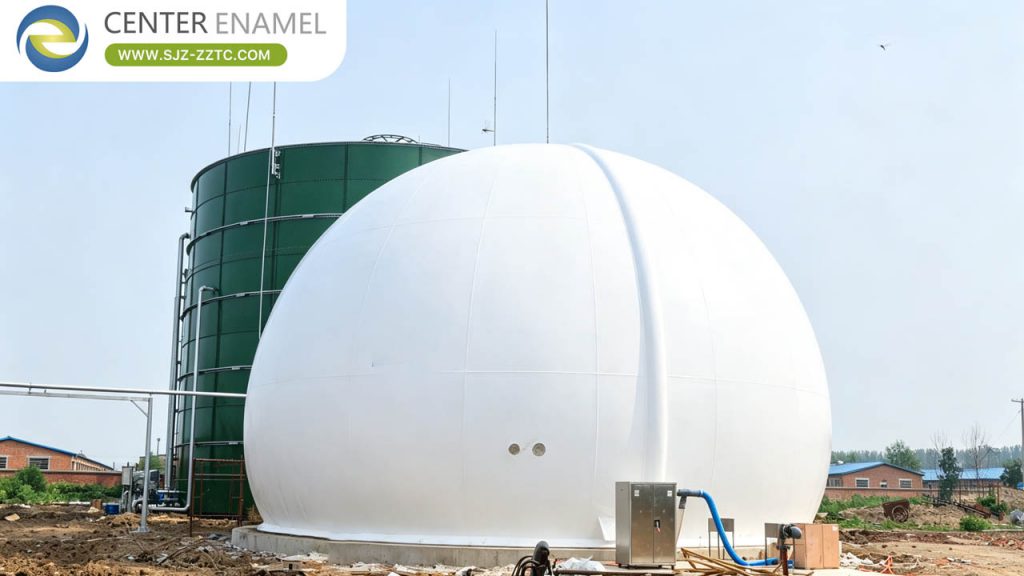
The library records the Yuanfang Farming large-scale biogas turnkey project in Jiaoling, Hubei, processing about 400 cubic metres per day of agricultural and animal-husbandry waste. It illustrates a single-responsibility delivery in the waste-treatment field. The source confirms capacity, application and turnkey nature; procurement terms, guarantees and acceptance results are Not Specified in the Available Source and are not claimed.
About Company
Shijiazhuang Zhengzhong Technology Co., Ltd (Center Enamel) is a comprehensive high-tech enterprise specializing in wastewater engineering, process section contracting, and equipment manufacturing. The company delivers biogas and wastewater projects through three main lines - EPC (turnkey) contracting, equipment supply, and process packages - covering livestock and municipal wastewater, biomass energy, industrial wastewater, and food waste. Its reactor portfolio spans CSTR, USR, UBF, UASB, IC, and EGSB, backed by in-house Glass-Fused-to-Steel tank manufacturing (enamel firing at 820-930 C) and certifications including ISO 9001, NSF/ANSI 61, and CE-EN 1090. With 35+ years of operation, a 150,000 m2 manufacturing base, and projects in 100+ countries, Center Enamel provides the single-responsibility engineering behind turnkey waste treatment plants procured on a fixed waste basis and testable, comparable performance guarantees.
Conclusion
Buy a turnkey waste treatment plant on a common waste basis and testable promises. Fix the feed before tender, write guarantees with a metric, basis and remedy, and score bids on identical scopes.
Frequently Asked Questions
Q1: Why fix the waste basis? A1: So every bidder prices and guarantees against the same feed.
Q2: What makes a guarantee testable? A2: A named metric, a feed basis, a test method and a remedy.
Q3: Why state variability? A3: It sets equalization and pre-treatment capacity.
Q4: What do exclusions do to a bid? A4: They make a cheap bid incomparable to a complete one.
Q5: What is single responsibility? A5: One contractor owning design through commissioning.
Q6: How to compare energy use? A6: Ask for consumption at the same waste basis.
Q7: Is the Hubei project's price known? A7: No - capacity/turnkey known; terms Not Specified.
Q8: What remedy should a bid state? A8: The tender should pre-state rectification, retest or remedy for a shortfall.
Suggested CTA
Ask an engineer to fix your waste basis and draft comparable guarantee rows for tender.