
Types of Biodigesters: Exploring 7 Anaerobic Digestion System Designs
Selecting the appropriate biodigester design is a critical decision in any waste-to-energy or organic waste management project. Different structural configurations are engineered to handle specific feedstock consistencies, operating scales, climatic conditions, and financial budgets.
Understanding the various types of biodigesters ensures optimal microbial activity, high methane yields, and long-term mechanical reliability.
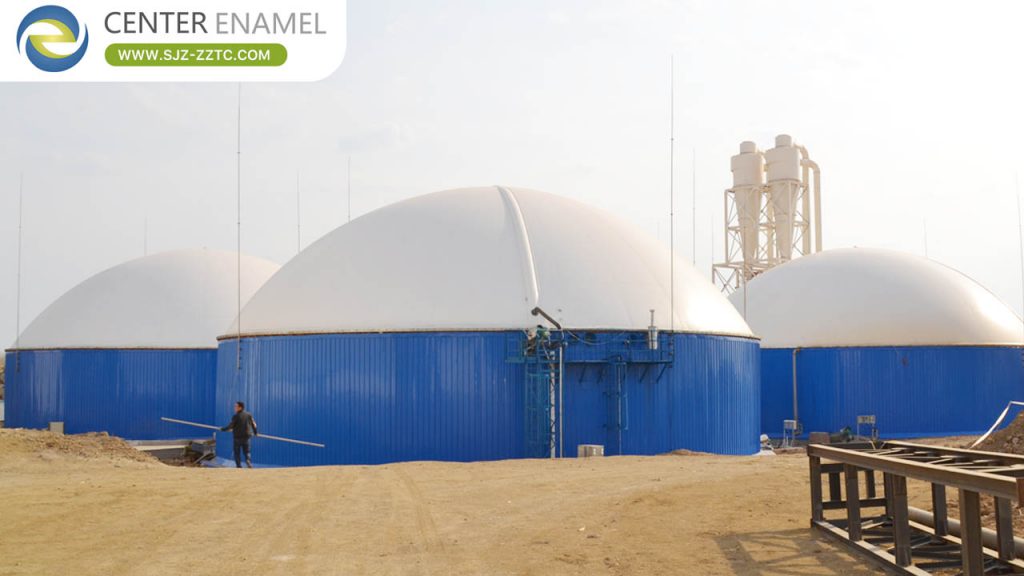
1. Floating Drum Biodigester
- Design & Mechanism: Consists of a cylindrical digester pit paired with an inverted movable drum (traditionally made of steel or fiberglass) that floats directly on top of the fermenting slurry or a water jacket.
- Key Characteristic: As biogas is produced, the drum rises, providing a clear visual indicator of gas volume while maintaining a constant operating gas pressure.
- Operational Considerations: While easy to operate and maintain, steel floating drums are susceptible to corrosion from hydrogen sulfide ($H_2S$) and require periodic repainting.
2. Fixed Dome Biodigester
- Design & Mechanism: An underground, rigid masonry or concrete structure comprising a sealed subterranean fermentation chamber and a fixed dome gas collector.
- Key Characteristic: As gas accumulates in the fixed upper dome, it displaces the liquid slurry into an adjoining expansion (displacement) chamber.
- Operational Considerations: Fixed dome systems have no moving parts and boast long operational lifespans (often 20+ years). Because they are built underground, they benefit from stable subterranean thermal insulation.
3. Bag Digester (Tubular Plastic)
- Design & Mechanism: Constructed using heavy-duty, UV-resistant tubular plastic (PVC or polyethylene) sheets sealed at both ends to form a horizontal reactor sleeve.
- Key Characteristic: Highly cost-effective, portable, and straightforward to install, making them popular in rural or developing agricultural settings.
- Operational Considerations: Bag digesters require careful handling to prevent punctures and generally have a shorter structural lifespan compared to concrete or steel tanks.
4. Plastic Digester (Prefabricated Modular Units)
- Design & Mechanism: Factory-built modular plastic tanks engineered specifically for anaerobic digestion.
- Key Characteristic: Completely pre-fabricated, highly resistant to chemical corrosion, and easily scalable by linking multiple modular units together.
- Operational Considerations: Ideal for urban settings, small commercial facilities, or sites requiring rapid installation without extensive on-site civil construction.
5. Plug Flow Digester
- Design & Mechanism: A long, narrow horizontal trench or tank where fresh feedstock is added at one end and pushes older material progressively toward the outlet in a "plug" motion.
- Key Characteristic: Designed primarily for high-solid feedstocks (such as dairy cattle manure with 11% to 14% total solids) without requiring mechanical mixing inside the trench.
- Operational Considerations: Delivers efficient volume utilization and reliable digestion for high-viscosity agricultural slurries.
6. Anaerobic Filter
- Design & Mechanism: An enclosed fixed-film reactor packed with high-surface-area inert filter media (such as plastic rings or gravel) where microbial biomass attaches as a biofilm.
- Key Characteristic: Treats dilute, high-strength liquid wastewaters containing low suspended solids, retaining dense populations of active bacteria within the filter matrix.
- Operational Considerations: Prevents washout of microbial mass during high hydraulic flow rates, ensuring stable effluent treatment.
7. UASB (Upflow Anaerobic Sludge Blanket) Digester
- Design & Mechanism: A high-rate liquid wastewater treatment reactor where influent flows upward from the bottom through a dense, suspended blanket of granulated anaerobic sludge.
- Key Characteristic: Exceptional organic loading capacity and rapid chemical oxygen demand (COD) removal without requiring physical filter packing media.
- Operational Considerations: Widely deployed for high-strength industrial wastewaters (from breweries, distilleries, and food processing plants) housed in corrosion-resistant containment like Glass-Fused-to-Steel (GFS) tanks.
Comparative Data Table: Summary of Biodigester Types
| Biodigester Type | Ideal Scale & Application | Primary Substrate | Gas Storage & Pressure | Key Structural Advantage |
| Floating Drum | Small to Medium Farm | Animal Manure & Slurry | Variable volume / Constant pressure | Easy gas volume visual monitoring |
| Fixed Dome | Rural Households & Farms | Manure & Organic Waste | Fixed volume / Variable pressure | Long lifespan, no moving parts, underground thermal stability |
| Bag Digester | Small-scale / Developing | Liquid Organic Waste | Flexible envelope / Low pressure | Low cost, high portability, fast installation |
| Plastic Digester | Modular / Commercial | Mixed Organic Slurries | Integrated envelope | High corrosion resistance, rapid deployment |
| Plug Flow | Dairy & Livestock Farms | High-solid Dairy Manure | External gasholder | Handles high-viscosity manure without internal mixing |
| Anaerobic Filter | Industrial Wastewater | Low-solid Liquid Effluent | External gasholder | High biomass retention via fixed filter media |
| UASB Digester | Large Industrial Plants | High-load Industrial Wastewater | External gasholder | Massive organic loading capacity within a compact footprint |
Frequently Asked Questions (FAQ)
Q1: What is the main difference between a fixed dome and a floating drum biodigester?
A: A fixed dome digester uses an underground masonry structure with a stationary gas chamber where gas pressure fluctuates as volume changes. A floating drum digester utilizes a movable inverted drum that rises and falls with gas production, maintaining a steady, constant operating gas pressure.
Q2: Why are plug flow digesters ideal for dairy manure?
A: Plug flow digesters feature a long, narrow channel design that accommodates high-solid slurries (like dairy manure) naturally. The incoming waste pushes older material forward sequentially without requiring mechanical mixers that could get clogged by fibrous bedding or heavy solids.
Q3: How does a UASB digester achieve high-rate wastewater treatment?
A: A UASB reactor forces liquid wastewater upward through a dense, self-immobilized blanket of anaerobic bacterial granules. This high concentration of retained biomass allows the system to process massive chemical oxygen demand (COD) loads rapidly within a very compact spatial footprint.