
Reliable UASB Bioreactor Solutions for Global Beverage Wastewater Treatment Project
The industrial wastewater sector faces mounting pressure from both regulatory bodies and operational realities. These challenges demand innovative and robust technological solutions that can deliver consistent performance under demanding conditions, especially for complex effluents.
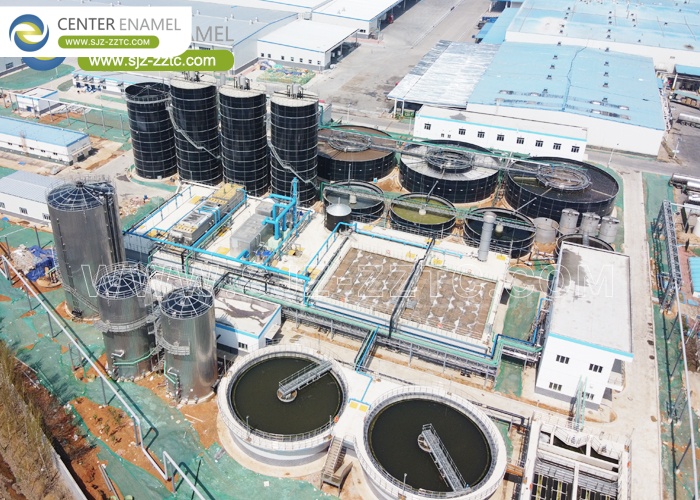
The core challenges of industrial wastewater treatment center on the "three highs"-high difficulty, high cost, and high energy consumption. Wastewater from new energy, chemical, and pharmaceutical industries is complex in composition with numerous characteristic pollutants, and traditional treatment processes are often unable to remove them effectively. While Chinese companies have significant price advantages in the mid-to-low-end equipment segment, the industry also faces continuous technological upgrade pressure from increasingly stringent emission standards. Furthermore, there are new requirements for digitalization and low-carbon transformation on operational refinement management capabilities.
To meet these multifaceted challenges, project developers and plant operators must look toward advanced technologies like the UASB bioreactor, which offers both treatment efficiency and operational flexibility. This proven anaerobic solution is particularly effective for high-strength organic wastewater, ensuring compliance and sustainability for complex projects like beverage wastewater treatment.
The UASB Bioreactor Reaction Process
A thorough understanding of the UASB bioreactor's operational process is key to appreciating its efficiency and reliability. Its unique design allows for high-rate treatment with minimal energy input, making it a cornerstone of modern industrial wastewater management.
Understanding the UASB Bioreactor Reaction Process
After pretreatment through screens and equalization tanks to remove impurities and balance water quality and flow, wastewater is uniformly fed into the reactor through the bottom distribution system. The wastewater rises at a constant rate through the high-concentration granular sludge bed at the bottom, where anaerobic microorganisms rapidly degrade most organic matter, converting it into biogas, clean water, and a small amount of sludge. Gentle hydraulic mixing maintains sludge suspension, expanding microbial contact area.
Remaining pollutants continue to degrade in the mid-section suspended sludge layer, with the mixed liquor finally entering the top three-phase separator for gas, solid, and liquid separation. Biogas is collected upward for utilization, sludge settles back to the reaction zone, treated effluent overflows from the top, and aged sludge is periodically discharged. This fully automated continuous operation is a hallmark of an effective UASB bioreactor, ensuring stable performance and low operational oversight for your beverage wastewater treatment project.
Key Water Quality Characteristics of Beverage Wastewater
The beverage industry produces a very specific type of high-strength wastewater with characteristics that make it ideally suited for anaerobic treatment. Understanding these parameters is essential for designing an effective treatment system that leverages the UASB bioreactor.
Defining Water Quality Parameters for Beverage Effluent
Beverage wastewater is characterized by high COD, high sugar content, low suspended solids, slightly acidic pH, excellent biodegradability, and significant fluctuations. COD typically ranges from 3,000-20,000 mg/L, with high-concentration CIP cleaning wastewater peaking above 50,000 mg/L. Core pollutants are soluble sugars-sucrose, fructose, glucose-which are highly degradable organics, with BOD/COD typically 0.5-0.65-industry-leading biodegradability.
The wastewater has low suspended solids, primarily consisting of fruit pulp, tea residues, and fiber impurities. The pH is slightly acidic-juice wastewater pH is typically 3-4, while carbonated beverage wastewater contains phosphoric acid. The appearance is clear to slightly turbid, with color varying by beverage type (juice has high color, tea has tea color). Temperature is moderate at 20-40°C. Importantly, water quality fluctuates intermittently with CIP cleaning cycles and product changeovers, alternating between high-concentration CIP and low-concentration filling wastewater. This variability necessitates a robust and flexible treatment system, where the UASB bioreactor provides stable performance despite influent changes.
Center Enamel's Smart Manufacturing Base
The quality and reliability of any treatment system begin with its manufacturing foundation. Center Enamel's state-of-the-art production facilities ensure that every component of your beverage wastewater treatment project meets the highest international standards.
World-Class Smart Manufacturing Infrastructure
Center Enamel's core intelligent manufacturing base is located in Hebei Province, China, covering a total area of over 150,000 m², with Phase I mature manufacturing facility and Phase II high-end environmental equipment industrial park-dual-base synergy ensures stable production capacity. The base includes dedicated R&D office buildings, proprietary material laboratories, and finished product testing centers, with full-process quality control systems meeting ISO, NSF, CE, and other international standards.
The facility operates to green manufacturing standards, certified as a Provincial Green Factory-balancing efficient production with energy conservation and emission reduction. The company has 6 marketing service centers across China, establishing a nationwide production-sales network ensuring stable global order delivery. The base is adjacent to expressway networks and major logistics hubs, with complete container shipping capabilities-supporting simultaneous large-scale tank projects globally. The base employs over 500 staff, with multiple parallel automated production lines-facility scale and production capacity firmly placing it among the global top tier of GFS tank equipment manufacturers. This manufacturing excellence ensures that every UASB bioreactor and GFS tank is produced with precision and durability.
Over a Decade of Global Installation Experience
Delivering successful projects across diverse international settings requires more than just superior equipment-it demands extensive hands-on experience. Center Enamel's long history of global installations guarantees that every beverage wastewater treatment project benefits from proven methodologies and local knowledge.
Unmatched Global Installation Expertise
Unmatched global practical experience among domestic peers-over a decade covering multiple regions and all industry sectors. In 2009, Center Enamel completed the first overseas GFS tank installation-sending a team to Niger, Africa for drinking water storage tank installation. In 2015, it broke industry ground with China's first GFS tank export and installation to the US-passing strict US acceptance standards.
All installed projects have operated stably for many years, covering livestock biogas, POME, municipal wastewater, and drinking water storage applications. Construction has covered Southeast Asia, Africa, the Americas, and other regions-accumulating specialized solutions for complex sites including mountainous terrain, coastal salt spray, tropical high temperatures, and high-standard European/American facility conditions-maturely addressing global special construction requirements. This extensive experience ensures that your beverage wastewater treatment project, featuring a UASB bioreactor, is installed correctly and performs reliably from day one.
Center Enamel's Expert Design Team
The success of any project hinges on the quality of its design. Center Enamel's experienced engineering team provides customized solutions that balance safety, economics, and local adaptation for every client.
Comprehensive Design Capabilities for Global Projects
The design team includes senior engineers registered in the Hebei Provincial Science and Technology Expert Database, with design standards aligned with strict European/American high-end equipment safety standards. The team can provide complete integrated design for differentiated overseas projects in livestock biogas, POME, municipal wastewater, hazardous waste storage, seawater desalination, etc.-covering tank structure, anti-corrosion/sealing systems, biogas piping, and anaerobic process integration.
Pre-design thoroughly investigates local seismic zone, wind pressure, soil bearing capacity, water quality corrosivity, and local environmental discharge standards-applying thickened panels, reinforced anchored bases, and optimized sealing/corrosion structures as needed. Complete customized equipment solutions can be tailored to customer plant area, wastewater load, treatment targets, and budget-balancing safety, economics, and local adaptation. This ensures compliant, stable, and highly adaptable equipment structural design support for global environmental projects, including complex beverage wastewater treatment projects requiring a reliable UASB bioreactor.
Full-Industry-Chain Integrated Delivery Capability
Delivering a turnkey project requires seamless integration of manufacturing, logistics, and construction. Center Enamel's end-to-end capability ensures that every element, from UASB bioreactor production to system installation, is executed with precision and efficiency.
Integrated EPC Delivery for Seamless Project Execution
Center Enamel is the only company globally integrating proprietary enamel frit R&D, self-manufactured tanks, and EPC general contracting. This enables full-process self-control from solution design, equipment production, cross-border logistics, overseas construction, to post-construction O&M. This integration significantly reduces client coordination and time costs, ensuring efficient project execution.
With over 30,000 environmental projects completed globally and more than 30 years of experience, Center Enamel's commitment to quality and innovation in UASB bioreactors and GFS tank technologies is unmatched. This end-to-end service model guarantees that every beverage wastewater treatment project benefits from the highest standards of engineering, manufacturing, and professional support.
Frequently Asked Questions (FAQ)
1. Why is a UASB bioreactor the preferred choice for beverage wastewater treatment?
Beverage wastewater is characterized by high concentrations of soluble sugars and excellent biodegradability. The UASB bioreactor is exceptionally efficient at converting these sugars into biogas, achieving over 80% COD removal without aeration. It handles high organic loads and intermittent flow patterns well, making it ideal for the beverage industry's batch production cycles, while producing valuable renewable energy.
2. What advantages does Center Enamel's manufacturing base offer for these projects?
Center Enamel's 150,000 m² smart manufacturing base ensures consistent production quality with ISO, NSF, and CE certifications. The facility's scale allows for simultaneous large-scale projects globally, while its green manufacturing standards and integrated logistics hub ensure efficient production and timely delivery of UASB bioreactors and GFS tanks to any international site.
3. How does Center Enamel ensure the success of international beverage wastewater treatment projects?
Center Enamel provides a complete EPC service, managing everything from design and manufacturing to logistics, on-site construction, and commissioning. With over a decade of global installation experience across diverse climates and standards, their in-house design team tailors solutions to local conditions, ensuring compliance, stability, and long-term operational reliability.