
Leading Anaerobic Technologies and UASB Process for Industrial Wastewater Treatment Projects
Industrial wastewater treatment projects worldwide are undergoing a fundamental transformation driven by escalating environmental regulations and the imperative for resource recovery. Center Enamel addresses these evolving demands through advanced anaerobic technologies, particularly the proven UASB process, housed in durable, corrosion-resistant GFS tanks. With over a decade of global installation experience and a design team aligned with strict international standards, Center Enamel delivers comprehensive solutions that enable industrial facilities to achieve compliance, reduce operational costs, and generate renewable energy from their wastewater streams.
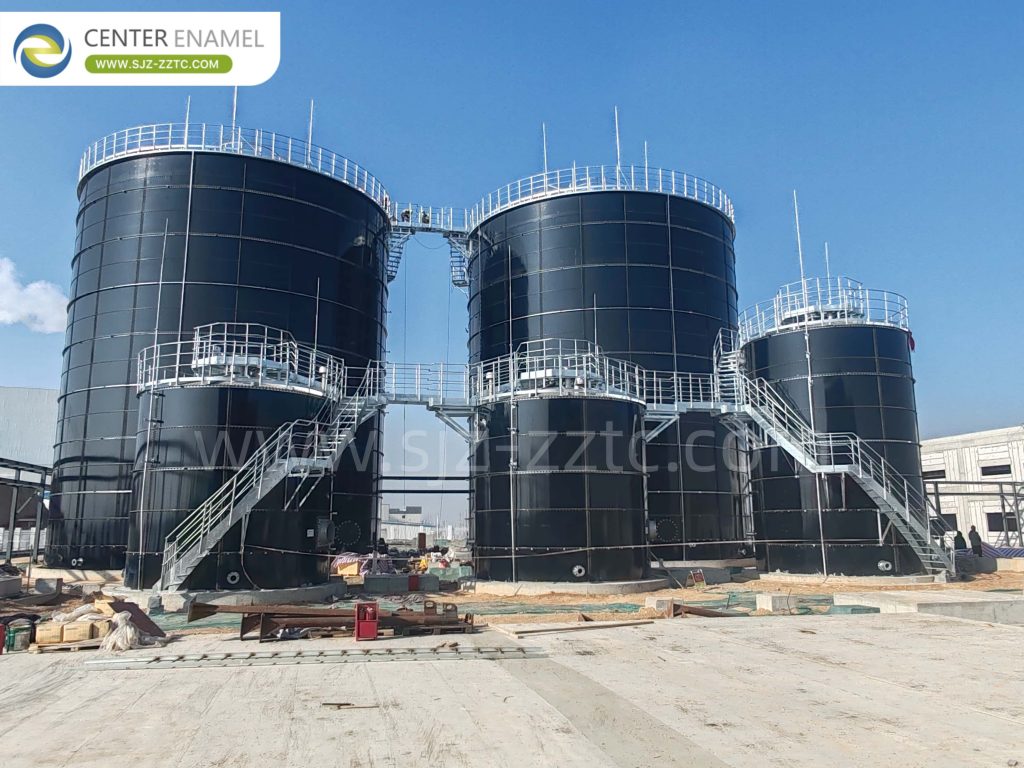
Global Policy Framework Drives Demand for Industrial Wastewater Treatment
Global industrial wastewater treatment policies are escalating from "compliance discharge" to mandatory "resource recovery" and "zero liquid discharge." The EU, through its Circular Economy Action Plan, requires member states to increase industrial wastewater reuse rates and extends carbon footprint accounting to the full life cycle of wastewater treatment. China continuously updates and tightens industrial water pollutant discharge standards, with increasingly stringent limits on total nitrogen, total phosphorus, and characteristic pollutants for industries such as chemicals, pharmaceuticals, and printing and dyeing. Some water-scarce regions and highly polluting industries are mandated to adopt zero or near-zero liquid discharge technologies. Germany has established a differentiated pretreatment technical standard system by industry, requiring industrial wastewater to meet specific quality requirements before discharge into municipal wastewater treatment plants, implementing strict source control.
These converging regulatory trends directly impact industrial wastewater treatment projects, where complex effluent streams demand robust treatment trains that can achieve high removal efficiencies while enabling resource recovery. Advanced anaerobic technologies, particularly the UASB process, align perfectly with these policy directions by converting organic pollutants into biogas-a renewable energy source that offsets operational costs and reduces carbon emissions. When integrated with durable GFS tank infrastructure, these anaerobic solutions provide the long-term reliability and performance required to meet evolving regulatory standards over decades of service.
The UASB Reaction Process: Core of Anaerobic Treatment Solutions
After pretreatment through screens and equalization tanks to remove impurities and balance water quality and flow, wastewater is uniformly fed into the reactor through the bottom distribution system. The wastewater rises at a constant rate through the high-concentration granular sludge bed at the bottom, where anaerobic microorganisms rapidly degrade most organic matter, converting it into biogas, clean water, and a small amount of sludge. Gentle hydraulic mixing maintains sludge suspension, expanding microbial contact area. Remaining pollutants continue to degrade in the mid-section suspended sludge layer, with the mixed liquor finally entering the top three-phase separator for gas, solid, and liquid separation. Biogas is collected upward for utilization, sludge settles back to the reaction zone, treated effluent overflows from the top, and aged sludge is periodically discharged-fully automated continuous operation.
This efficient reaction process makes the UASB system a cornerstone of modern industrial wastewater treatment projects. The technology's ability to handle high organic loads with minimal energy input-requiring no mechanical mixing-directly addresses the operational cost challenges faced by industrial facilities. Furthermore, the biogas produced during anaerobic digestion can be captured and utilized for heat or power generation, transforming a waste stream into a valuable energy resource. The fully automated nature of the process reduces labor requirements and ensures consistent performance, making it particularly suitable for continuous, large-flow industrial applications.
Key Water Quality Characteristics of Textile Wastewater
High color, high alkalinity, high COD, high suspended solids, and large water quality fluctuations-these represent the most prominent color pollution category in industrial wastewater. COD typically ranges from 1,000-10,000 mg/L, with desizing and scouring wastewater exceeding 10,000 mg/L. Color levels are extremely high, with dyeing wastewater color reaching hundreds to thousands of dilution multiples, containing various dyes (reactive, disperse, acid) with deep, difficult-to-decolorize colors. High pH levels are common, with mercerizing and scouring wastewater pH exceeding 12 (strongly alkaline). Discharge temperatures are elevated, with dyeing process effluent reaching 50-70°C. BOD/COD ratios approximately 0.25-0.4 indicate moderate to poor biodegradability, with dyes and sizing agents being recalcitrant organics. The wastewater also contains surfactants, sizing agents (PVA, starch), fiber impurities, dye auxiliaries, and inorganic salts (sodium sulfate, sodium chloride). Water quality varies dramatically with dye type and process changes, exhibiting distinct intermittent discharge characteristics.
These challenging characteristics demonstrate why advanced anaerobic technologies are essential for industrial wastewater treatment projects. The UASB process, with its robust granular sludge bed and ability to handle fluctuating loads, provides effective treatment even under these demanding conditions. The anaerobic environment can break down some dye molecular structures, improving downstream biodegradability and reducing the overall treatment burden. Combined with the corrosion resistance of GFS tanks, this integrated approach ensures reliable performance and long-term durability in the face of aggressive chemical conditions.
Indonesia Palm Oil Biogas Upgrade Project: Proven Performance in Aggressive Environments
Commissioned in 2013 as the core anaerobic digestion reactor for the POME treatment station, with 3 GFS tanks in two sizes: 17.58 m dia. × 8.4 m height / 16.82 m dia. × 7.2 m height. The tanks serve as the core anaerobic reaction equipment specifically for high-organic palm oil production wastewater-anaerobic digestion degrades pollutants and recovers biogas. Tanks are adapted to local palm industry wastewater needs. GFS tank assembly is convenient with corrosion resistance for Southeast Asia's hot humid high-corrosion environment-a mature biomass energy environmental benchmark project.
This long-running project demonstrates the effectiveness and durability of anaerobic technologies in challenging tropical environments, conditions similar to those found in many industrial regions. The successful recovery of biogas from high-strength organic wastewater provides a compelling model for industrial wastewater treatment projects seeking to achieve both environmental compliance and energy sustainability. The GFS tanks' corrosion resistance has proven essential in the hot, humid, high-salt-spray environment, maintaining structural integrity and process performance over more than a decade of continuous operation.
Over a Decade of Global Installation Experience Ensures Project Success
Unmatched global practical experience among domestic peers-over a decade covering multiple regions and all industry sectors. In 2009, Center Enamel completed the first overseas GFS tank installation-sending a team to Niger, Africa for drinking water storage tank installation. In 2015, it broke industry ground with China's first GFS tank export and installation to the US-passing strict US acceptance standards. All installed projects have operated stably for many years, covering livestock biogas, POME, municipal wastewater, and drinking water storage applications. Construction has covered Southeast Asia, Africa, the Americas, and other regions-accumulating specialized solutions for complex sites including mountainous terrain, coastal salt spray, tropical high temperatures, and high-standard European/American facility conditions-maturely addressing global special construction requirements.
This extensive installation experience is invaluable for industrial wastewater treatment projects, where site conditions can vary dramatically and local regulations must be carefully navigated. The practical knowledge gained from diverse projects enables Center Enamel to anticipate challenges and develop effective solutions for even the most complex installations. For clients undertaking industrial wastewater treatment projects, this proven track record provides confidence that their investment will be executed to the highest standards, ensuring reliable operation and regulatory compliance from day one.
Center Enamel's Design Team Delivers Customized, Code-Compliant Solutions
The design team includes senior engineers registered in the Hebei Provincial Science and Technology Expert Database, with design standards aligned with strict European/American high-end equipment safety standards. The team can provide complete integrated design for differentiated overseas projects in livestock biogas, POME, municipal wastewater, hazardous waste storage, seawater desalination, etc.-covering tank structure, anti-corrosion/sealing systems, biogas piping, and anaerobic process integration. This deep technical expertise ensures that industrial wastewater treatment projects receive solutions that are not only effective but also fully compliant with local and international standards.
Pre-design thoroughly investigates local seismic zone, wind pressure, soil bearing capacity, water quality corrosivity, and local environmental discharge standards-applying thickened panels, reinforced anchored bases, and optimized sealing/corrosion structures as needed. Complete customized equipment solutions can be tailored to customer plant area, wastewater load, treatment targets, and budget-balancing safety, economics, and local adaptation-providing compliant, stable, and highly adaptable equipment structural design support for global environmental projects. This meticulous approach to design ensures that each industrial wastewater treatment project is optimized for its specific conditions, maximizing performance and longevity while minimizing unnecessary costs.
Aluminum Geodesic Dome Roof: Enhancing System Integrity and Performance
Aluminum Geodesic Dome Roof independently developed by Center Enamel is manufactured using high-strength aluminum alloy plates through integral stamping. It features a triangular grid spherical self-supporting structure, enabling large-span full coverage without internal support columns. Made of aluminum alloy, the roof offers excellent weather resistance and corrosion resistance, capable of long-term protection against acid rain, salt spray, and UV radiation, suitable for various extreme outdoor climate conditions. The structural design complies with international AWWA D108 standards, with aluminum plate thickness, rib cross-sections, and joint connections all verified by finite element stress analysis, ensuring wind and snow load resistance that meets building code requirements across different global regions.
The weight of the Aluminum Geodesic Dome Roof is only one-third to one-half of a steel roof with the same span, significantly reducing the load on the tank top and allowing direct installation without tank wall reinforcement. The roof provides superior overall sealing performance, with double sealing between panels using specialized sealant strips and mechanical interlocking, enabling both airtight gas storage and enclosed odor control, suitable for biogas collection and storage, wastewater tank odor control, and drinking water contamination prevention. The support-column-free design does not interfere with the installation and operation of internal equipment such as mixers and water distributors. The aluminum material does not support microbial growth, requiring no anti-corrosion maintenance over long-term use, resulting in low total life-cycle costs.
This innovative roof system complements the anaerobic treatment infrastructure by providing superior sealing for biogas capture and odor control. For industrial wastewater treatment projects utilizing the UASB process, the Aluminum Geodesic Dome Roof maximizes biogas recovery while minimizing fugitive emissions and corrosion risks. Its lightweight design reduces foundation requirements, and its maintenance-free nature contributes to the overall lifecycle cost advantages of the integrated solution.
Frequently Asked Questions
1. Why are anaerobic technologies preferred for industrial wastewater treatment projects?
Anaerobic technologies like the UASB process offer significant advantages including low energy consumption (no mechanical mixing), reduced sludge production, biogas recovery for energy generation, and effective treatment of high-strength organic wastewater. They are particularly suitable for industrial applications where COD levels exceed 1,000 mg/L and fluctuating loads are common.
2. How does the UASB process handle challenging textile wastewater characteristics?
The UASB process effectively treats textile wastewater characterized by high COD, high alkalinity, elevated temperatures, and intermittent discharge patterns. The granular sludge bed adapts to load fluctuations, while the anaerobic environment breaks down complex dye molecules, improving biodegradability for subsequent aerobic treatment. It achieves 50-65% COD removal while producing biogas.
3. What role does the Aluminum Geodesic Dome Roof play in industrial wastewater treatment?
The aluminum dome roof provides superior sealing for biogas capture and odor control, essential for anaerobic treatment systems. Its lightweight, corrosion-resistant construction eliminates maintenance requirements and reduces structural loads. The self-supporting design with no internal columns allows unrestricted installation of internal equipment, making it ideal for UASB reactors and other anaerobic tanks.