
Why Is the UASB Process the Optimal Choice for Beverage Wastewater Treatment Project?
The industrial wastewater treatment market is evolving rapidly, with distinct competitive dynamics shaping technology choices. The competitive landscape shows divergence, with leading companies building integrated service capabilities through technical integration and capital operations, and industry concentration gradually increasing. This trend underscores the importance of selecting a partner with both technological depth and comprehensive service capacity.
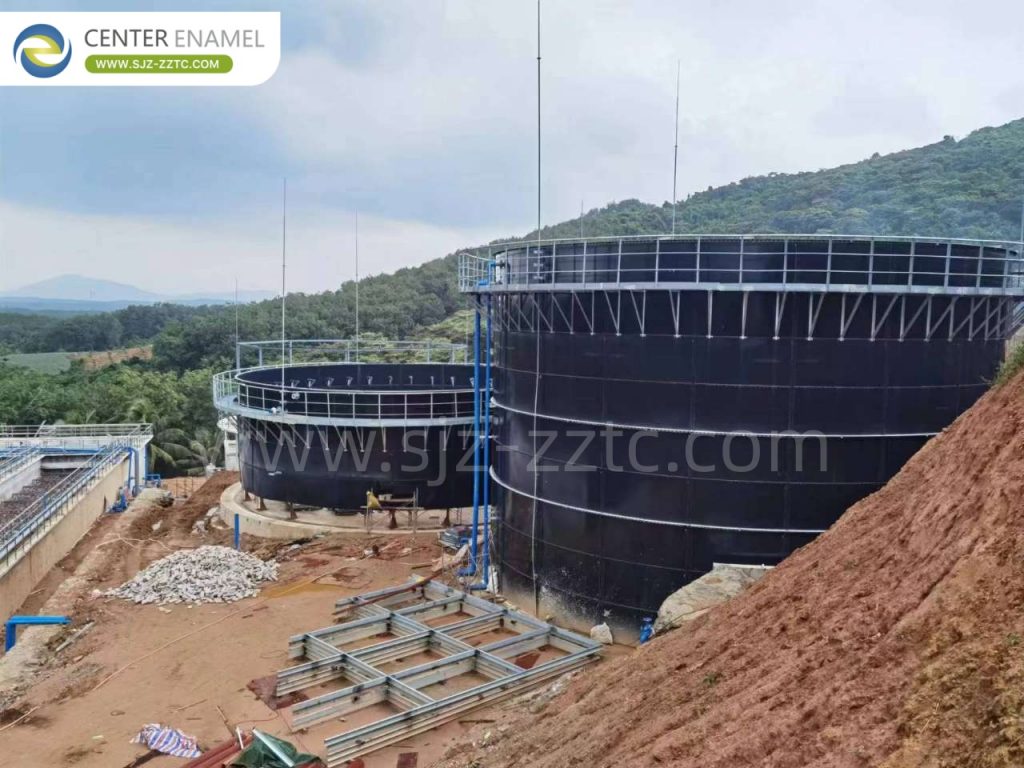
Chinese companies continue to consolidate their advantages in mid-tier equipment exports, while international giants target high-end customers and complex industrial wastewater markets. Local players occupy the mid-to-low-end and industrial park centralized treatment markets with service responsiveness and cost advantages. In the anaerobic process segment, UASB, EGSB, and IC anaerobic reactors, with advantages of high loading rates, small footprints, and stable operation, are widely used in high-concentration organic wastewater pretreatment in food processing, pharmaceutical fermentation, alcohol brewing, chemical, and other industries. These reactors use steel tank shells, and their corrosion resistance and gas-tightness directly determine long-term operational stability. The application value of glass-fused-to-steel tanks in such scenarios is increasingly prominent, making the UASB process a cornerstone technology for modern beverage wastewater treatment projects.
GFS Tanks: The Ideal Structural Foundation for the UASB Process
The performance of any anaerobic treatment system relies heavily on the integrity of its containment structure. Modern industrial plant design increasingly favors intensive, compact layouts, and this requires tank systems that are both versatile and space-efficient.
GFS Tanks: Adapting to Modern Intensive Plant Layouts
GFS tanks offer flexible customization of size and appearance, with higher land utilization rates, ideally suited for modern compact plant layouts. They present significant advantages over fixed poured concrete tanks. Concrete tanks cannot alter volume or shape after pouring, with heavy bases occupying large areas, making placement difficult on narrow or irregular plots. Their rough, uniform appearance cannot match modern facility aesthetic requirements.
GFS tank volume can be precisely customized as needed, with capacities ranging from dozens of cubic meters to 50,000 cubic meters freely selectable. Tank height and diameter can be flexibly combined to fit narrow or irregularly shaped plots, effectively saving plant land occupation. Enamel color customization is also supported, achieving visual harmony with plant buildings and environmental facilities. During later plant expansion, GFS tanks can be directly adjusted in layout and expanded; concrete tanks, being monolithic structures, must be demolished and rebuilt, offering less flexibility in land resource utilization. This aligns well with the intensive construction and aesthetic operation and maintenance needs of industrial parks, making GFS tanks the preferred structural foundation for implementing the UASB process in space-constrained beverage facilities.
Key Advantages of the UASB Process
Understanding the specific benefits of the UASB process helps clarify why it is the technology of choice for high-strength organic wastewater. Its unique design delivers significant operational and economic advantages.
Unpacking the Advantages of the UASB Process
No mechanical mixing equipment is required, with sludge suspension achieved through hydraulic action, resulting in very low overall energy consumption. High-concentration anaerobic granular sludge can be cultivated, with high sludge concentration, strong activity, excellent settleability, low sludge washout, and low sludge yield, significantly reducing sludge disposal costs. The integrated design combines reaction, sedimentation, and separation simultaneously, with small footprint and moderate capital investment.
The simple structure results in low failure rates and convenient maintenance. The UASB process offers a high volumetric loading rate with excellent organic pollutant degradation efficiency and good shock load resistance. Stable biogas production provides high resource recovery value. The process is mature and widely adopted, with well-established construction, commissioning, and O&M systems, suitable for large-scale industrial wastewater treatment. These advantages make the UASB process particularly effective for beverage wastewater treatment projects, where high-sugar, high-COD effluents require robust and efficient biological treatment.
Understanding Beverage Wastewater Environmental Toxicity
While beverage wastewater is highly biodegradable, its environmental impact is primarily related to oxygen depletion. Understanding this toxicity profile is crucial for designing an effective treatment strategy.
Beverage Wastewater: Environmental Toxicity of Pollutants
Beverage wastewater pollutants are entirely natural food components (sugars, fruit juice, tea)-no synthetic toxic chemicals-resulting in extremely low chemical toxicity and good environmental safety. Core pollutants are high-concentration soluble sugars-non-toxic to aquatic organisms, but direct discharge leads to rapid aerobic decomposition, severely depleting dissolved oxygen and causing fish suffocation-a classic oxygen-demanding pollution problem.
Fruit juice organic acids lower receiving water pH, affecting aquatic life. Tea polyphenols affect water color and taste at trace levels. High sugar content promotes rapid microbial growth, mold, and decomposition/odor. Long-term discharge causes organic pollution, algal blooms, and eutrophication. Overall pollution is primarily oxygen-demanding organic pollution-no heavy metals or persistent organic accumulation risks-pollutants are rapidly naturally degradable with short environmental recovery periods. This oxygen-depleting characteristic makes the UASB process an ideal solution, as it rapidly removes the organic load in an anaerobic environment, preventing oxygen depletion in receiving waters and generating biogas as a valuable byproduct.
Full-Process Standardized Installation Quality Control
Delivering a reliable treatment system requires stringent quality control at every stage of construction. Center Enamel has established comprehensive standards to ensure the long-term performance and safety of every project.
Ensuring Excellence: Full-Process Standardized Installation Quality Control
Demonstrating high-standard installation quality through long-term stable global project performance, Center Enamel has established full-chain quality control standards across four dimensions: factory protection, on-site assembly construction, completion inspection, and long-term warranty-ensuring quality control for every GFS tank.
At the factory stage, all enameled panels, seals, and structural components receive rust-proof and moisture-proof independent packaging with dedicated protective supports-preventing damage during sea and land transport and avoiding enamel coating damage. On-site construction strictly follows unified assembly process specifications-panel by panel tightening and leak testing in layers, with air-tightness and verticality testing after each tank section completion-dual-membrane covers and anaerobic piping undergo simultaneous pressure testing and acceptance.
Differentiated quality acceptance standards are customized for different regions: EU/US projects follow stringent CE/NSF inspection criteria; Southeast Asian hot humid regions receive enhanced corrosion protection and sealing acceptance; remote African sites have additional foundation settlement re-inspection procedures. Upon project completion, complete construction inspection reports, pressure test records, and anti-corrosion appearance acceptance documents are issued, with full photo/video archives retained. Over 10,000 tanks delivered globally have operated long-term without large-scale leakage or structural deformation-preventing future O&M issues at source. This rigorous quality framework ensures that every UASB process system and GFS tank performs reliably for decades.
Center Enamel's Global Project Experience
A proven track record across diverse regions and applications demonstrates the capability to deliver successful projects under various conditions. Center Enamel's extensive portfolio provides assurance for any beverage wastewater treatment project.
Extensive Global Benchmark Project Cases
Center Enamel's project portfolio covers over 100 countries across Southeast Asia, Africa, Europe, and the Americas-30,000+ mature projects-accumulating complete industry solutions across palm oil, livestock, municipal, brewing, and food waste biogas. This vast experience enables rapid matching of customized solutions for different regional climates, water quality, and regulations.
The company has successfully implemented numerous projects utilizing the UASB process and other advanced anaerobic technologies, consistently meeting local discharge standards and client performance expectations. This global footprint, combined with the durability and adaptability of GFS tanks, ensures that every beverage wastewater treatment project benefits from proven methodologies and best practices developed over decades of international service.
FRP Roof Cover Solution for General Storage Applications
In addition to specialized anaerobic reactor covers, Center Enamel offers versatile roofing solutions for various tank applications. The FRP roof provides a cost-effective option for non-pressurized storage needs.
FRP Roof Cover: Economical Protection for Atmospheric Tanks
The FRP Roof is a general-purpose economical roof for atmospheric pressure storage tanks without air-tightness requirements, suitable for drinking water storage, agricultural irrigation water, firewater reserve, and general production wastewater temporary storage. It is available in two styles: flat and dome, allowing flexible selection based on tank specifications and site aesthetic requirements.
The roof is integrally molded from resin and fiberglass, lightweight, with natural water resistance and mild acid/alkali corrosion resistance. It will not rust or rot in long-term humid environments, eliminating the frequent anti-corrosion maintenance required for metal roofs. The dome style features excellent drainage performance due to its curved structure, resisting water accumulation, dust buildup, snow load, and strong winds. The flat style facilitates the installation of maintenance walkways, level gauges, and vents on top, making inspection and operation convenient.
The product is fully insulated with no risk of galvanic corrosion, will not contaminate drinking water quality, and meets environmental standards for domestic water storage. The modular design with low individual component weight allows for simple on-site hoisting and assembly, offering high construction efficiency and affordable procurement and installation costs. It is only suitable for atmospheric pressure water storage tanks without biogas collection or pressurization requirements, and is not recommended for anaerobic fermentation gas-producing conditions. It is widely used in rural agricultural water storage tanks, industrial park firewater tanks, waterworks buffer tanks, and small to medium-sized domestic wastewater temporary storage facilities, making it a cost-effective general-purpose roof choice for conventional water storage applications.
Frequently Asked Questions (FAQ)
1. Why is the UASB process particularly suitable for beverage wastewater treatment?
Beverage wastewater is characterized by high concentrations of soluble sugars and excellent biodegradability. The UASB process is exceptionally efficient at converting these sugars into biogas, achieving over 80% COD removal without the need for aeration. Its ability to handle high organic loads and withstand intermittent flow patterns makes it ideal for the beverage industry's batch and seasonal production cycles.
2. How do GFS tanks enhance the performance of a UASB reactor?
Glass-Fused-to-Steel (GFS) tanks offer superior corrosion resistance, crucial for withstanding the acidic and microbial environment of anaerobic digestion. Their modular, bolted design allows for precise customization of size and volume, and they can be easily expanded or relocated. The smooth, durable enamel surface prevents biofilm growth and simplifies maintenance, ensuring long-term reactor integrity.
3. What quality control measures ensure the longevity of these treatment systems?
Center Enamel implements a four-dimensional quality control system covering factory protection, on-site construction, completion inspection, and long-term warranty. This includes rust-proof packaging, layer-by-layer leak testing, and adherence to stringent international standards (CE/NSF). All construction phases are documented with detailed reports and photo archives, ensuring traceability and long-term operational reliability.