
UASB Reactors for Starch and Sugar Industry Wastewater | Center Enamel
The starch and sugar processing industries generate high-strength wastewater rich in soluble and particulate organic matter. Without proper treatment, these effluents can cause severe environmental damage, including oxygen depletion in receiving waters and eutrophication . As environmental regulations tighten globally, manufacturers face increasing pressure to adopt efficient, cost-effective, and sustainable wastewater treatment solutions.
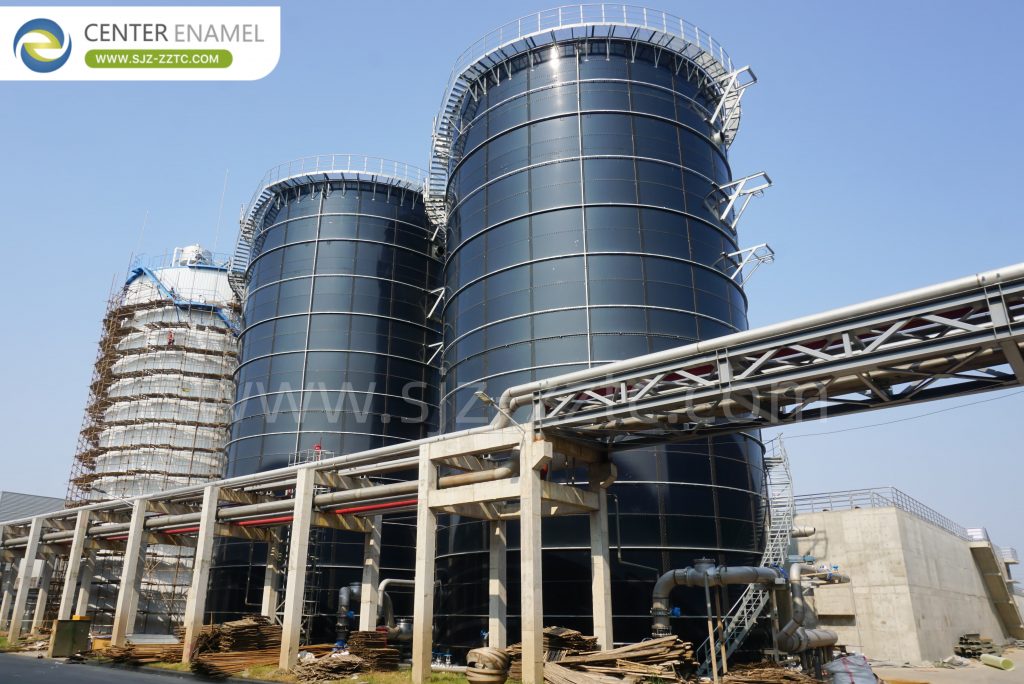
Upflow Anaerobic Sludge Blanket (UASB) reactors have emerged as the technology of choice for these challenging waste streams. By harnessing the power of anaerobic digestion, UASB systems achieve exceptional organic pollutant removal while simultaneously recovering energy in the form of biogas—a true win-win for industry and environment.
Center Enamel delivers advanced, purpose-engineered UASB reactor systems tailored to the unique demands of starch and sugar mill effluents. With decades of experience and a global footprint spanning over 100 countries, we provide complete turnkey solutions from design through commissioning .
What Is a UASB Reactor and How Does It Work?
A UASB reactor operates on the principle of anaerobic digestion, where a dense layer of microbial sludge—known as the sludge blanket—facilitates the breakdown of organic contaminants in the absence of oxygen.
The process begins as wastewater is introduced at the bottom of the reactor and flows upward through the sludge blanket. As the wastewater ascends, microorganisms convert complex organic compounds into biogas, a mixture primarily composed of methane (CH₄) and carbon dioxide (CO₂). A three-phase separator at the top of the reactor efficiently separates biogas, treated water, and sludge, allowing the sludge to settle back into the blanket while clarified effluent exits the system .
The inherent design of UASB reactors allows for high biomass retention, ensuring prolonged contact between wastewater and microorganisms. This results in improved degradation of pollutants and high treatment efficiencies, even with the fluctuating wastewater compositions typical in starch and sugar processing .
Key Advantages of UASB Reactors in Starch and Sugar Industry
High Organic Load Removal
Starch and sugar processing wastewaters are characterized by high concentrations of soluble organic matter, with COD levels often ranging from 8,000 to 40,000 mg/L . UASB reactors are particularly well-suited for such applications due to their ability to achieve significant reductions in Chemical Oxygen Demand (COD) and Biochemical Oxygen Demand (BOD).
Real-world performance data demonstrates the effectiveness of this technology. One study on a corn starch wastewater treatment facility achieved a COD removal rate of 95% with effluent COD reduced to 450–500 mg/L at a volumetric loading rate of 8 kg COD/(m³·d) . Another case treating a mixture of starch and sugar wastewater reported a COD removal efficiency of 98.2% .
This high level of treatment efficiency is critical for meeting stringent discharge standards, including China's GB 8978-1996 and international environmental regulations .
Energy Recovery and Sustainability
The anaerobic digestion process inherent in UASB reactors generates biogas that can be captured and converted into electricity or heat. This energy recovery aspect not only offsets operating costs but also contributes to reducing the carbon footprint of the treatment process.
In starch processing, biogas yield is substantial. One study reported a biogas production rate of 0.36 L per gram of COD removed . For a medium-sized starch facility, this translates to significant energy savings that can power plant operations or supplement heating requirements.
In an era of increasing environmental consciousness, integrating energy recovery into wastewater treatment represents a forward-thinking approach that aligns with circular economy principles.
Cost-Effectiveness
UASB reactors require relatively low energy inputs compared to aerobic treatment systems, as they operate without the need for continuous aeration—a major energy consumer in conventional treatment. This results in substantially lower operational costs over the reactor's lifecycle .
Additional cost advantages include:
Reduced chemical usage: The biological process requires only small amounts of flocculants and pH adjusters .
Simple, durable equipment: No high-precision wear parts, leading to low failure rates and minimal maintenance costs .
Compact design: Smaller footprint reduces capital expenditure on civil works.
Operational Stability and Flexibility
The starch and sugar industries experience significant variations in wastewater flow and composition due to production cycles, seasonal raw material availability, and cleaning-in-place (CIP) procedures. UASB reactors are designed to handle these fluctuations with inherent resilience .
Advanced control systems monitor critical parameters including pH, temperature, biogas production, and organic loading in real-time, ensuring stable performance even under challenging conditions. This operational flexibility is critical in maintaining continuous treatment and ensuring compliance with environmental regulations.
Reduced Sludge Production
One of the key benefits of anaerobic treatment in UASB reactors is the generation of significantly lower amounts of excess sludge compared to aerobic systems. This reduction in sludge production not only lowers disposal costs but also minimizes secondary treatment requirements, further enhancing the overall cost efficiency of the process.
Performance Data: UASB in Starch and Sugar Applications
The following data table summarizes performance outcomes from various starch and sugar wastewater treatment applications:
| Parameter | Starch Wastewater | Starch-Sugar Mixed Wastewater | Cassava Starch Wastewater |
| Influent COD (mg/L) | Up to 40,000 | 850–7,500 | High-strength |
| Organic Loading Rate | 8 kg COD/(m³·d) | Variable | 20–35 kg COD/(m³·d) |
| COD Removal Efficiency | Up to 95% | 98.2% | >90% |
| Effluent COD (mg/L) | 450–500 | Meeting GB 8978-1996 standard | <1,000 mg/L |
| Biogas Production | 0.36 L/g COD removed | Recoverable for energy use | 8,000–16,000 m³/day |
| Treatment Train | UASB alone | UASB-A/O | UASB with polishing |
Process Integration and System Design
Center Enamel’s UASB reactors are engineered to seamlessly integrate into existing wastewater treatment systems within starch and sugar processing plants. Our design approach considers the specific characteristics of the wastewater, including its temperature, pH, and organic loading rates .
Advanced Monitoring and Control
Advanced monitoring and control systems are incorporated into our UASB reactor designs. These systems enable real-time assessment of critical process parameters, such as:
Biogas production rates and composition
pH levels (maintained in the optimal range of 6.8–7.4)
Temperature (typically maintained at 30–38°C for mesophilic operation)
Organic load fluctuations
This level of process automation and monitoring ensures that the reactor operates at peak performance while providing early warning signals for potential operational issues .
GFS Tank Technology
Center Enamel's reactors feature Glass-Fused-to-Steel (GFS) tank technology, offering superior corrosion resistance and gas-tight integrity essential for anaerobic digestion systems. With a service life exceeding 30 years and minimal maintenance requirements, GFS tanks deliver superior lifecycle value compared to concrete alternatives .
Environmental and Regulatory Compliance
For industries operating within the starch and sugar sectors, meeting environmental regulations is paramount. UASB reactors play a vital role in reducing the release of organic pollutants into the environment. By achieving significant reductions in COD and BOD, our UASB systems help facilities comply with local, national, and international discharge standards .
Furthermore, the reduction in greenhouse gas emissions through energy recovery enhances the overall sustainability profile of the wastewater treatment process. Unlike aerobic systems that release CO₂ directly, anaerobic treatment captures methane for beneficial use, significantly reducing the facility's carbon footprint.
Client Testimonials
"Center Enamel's GFS tank assembly proved convenient with corrosion resistance performing exceptionally well in Southeast Asia's hot, humid, high-corrosion environment. This project stands as a mature biomass energy environmental benchmark."
"The UASB process offered particular advantages—achieving 90–94% COD removal while producing biogas that can offset energy costs. Center Enamel integrates this proven technology with GFS tank manufacturing to deliver complete, reliable anaerobic digestion systems."
Why Center Enamel?
Center Enamel has decades of experience in developing and implementing advanced wastewater treatment solutions. Our expertise in UASB reactor technology ensures that our systems are built to withstand the rigorous demands of industrial wastewater treatment, particularly in the starch and sugar sectors.
Key Differentiators
| Differentiator | Description |
| Customized Design | We tailor our UASB reactor solutions to match the unique wastewater characteristics and production patterns of each facility |
| Advanced Manufacturing | Our reactors are produced using state-of-the-art automated systems, ensuring consistent quality and performance |
| Comprehensive Support | From initial design and engineering through installation and after-sales support, Center Enamel is committed to ensuring the long-term success of your wastewater treatment system |
| Sustainability Focus | Our systems not only treat wastewater effectively but also recover energy, contributing to a reduction in overall operational costs and environmental impact |
| Global Experience | Over 30,000 successful projects across 100+ countries, with established long-term partnerships with Fortune 500 companies |
Frequently Asked Questions (FAQ)
Q1: What COD removal efficiency can starch factories expect from a UASB reactor?
A: Starch factories can typically achieve 85% to 95% COD removal with a properly designed and operated UASB system. One study on corn starch wastewater reported a 95% COD removal rate with effluent COD reduced to 450–500 mg/L . For starch-sugar mixed wastewater, removal rates as high as 98.2% have been documented . Actual performance depends on factors including influent characteristics, operating temperature, organic loading rate, and system design.
Q2: Can UASB reactors handle the seasonal variations typical in sugar processing?
A: Yes, UASB reactors are designed to handle variations in wastewater flow and composition that are common due to production cycles and seasonal factors . The system's inherent resilience, combined with advanced monitoring and control systems, ensures stable performance even during peak production periods. Proper design accounting for peak organic loading rates is essential for maintaining consistent treatment performance .
Q3: What biogas yield can be expected from treating starch or sugar wastewater?
A: Biogas yield depends on the organic content of the wastewater and operating conditions. For starch wastewater, a typical yield is approximately 0.36 L of biogas per gram of COD removed . This biogas, containing 55–75% methane, can be captured and used for heating, electricity generation, or as a renewable energy source to offset plant energy costs .
Q4: How does Center Enamel's UASB technology differ from other anaerobic treatment options?
A: Center Enamel's UASB systems integrate high-quality Glass-Fused-to-Steel (GFS) tanks with proven anaerobic digestion technology. Our GFS tanks offer superior corrosion resistance, gas-tight integrity, and a service life exceeding 30 years with minimal maintenance . Combined with our customized design approach, advanced manufacturing, and comprehensive EPC capabilities across 100+ countries, we deliver complete, reliable solutions tailored to each facility's specific wastewater characteristics .
Q5: What post-treatment is required after UASB treatment for starch/sugar wastewater?
A: While UASB treatment alone can achieve significant COD reduction (80–95%), many facilities incorporate a polishing step to meet stringent discharge standards. Common post-treatment options include aerobic systems such as A/O (Anoxic/Oxic) processes, SBR (Sequencing Batch Reactors), or bio-contact oxidation . These aerobic polishing steps further reduce residual COD, BOD, and nutrients (nitrogen and phosphorus) to meet regulatory requirements.