
UASB Reactors for Treating Wastewater in the Juice and Beverage Industries
As the juice and beverage industries continue to expand globally, the need for advanced wastewater treatment technologies that are both efficient and sustainable has never been greater. The Upflow Anaerobic Sludge Blanket (UASB) reactor has emerged as a leading solution for treating the high-strength, organic-rich effluent typical of these industries. At Center Enamel, we leverage decades of engineering expertise to deliver UASB reactors that not only meet stringent environmental standards but also provide significant operational benefits.
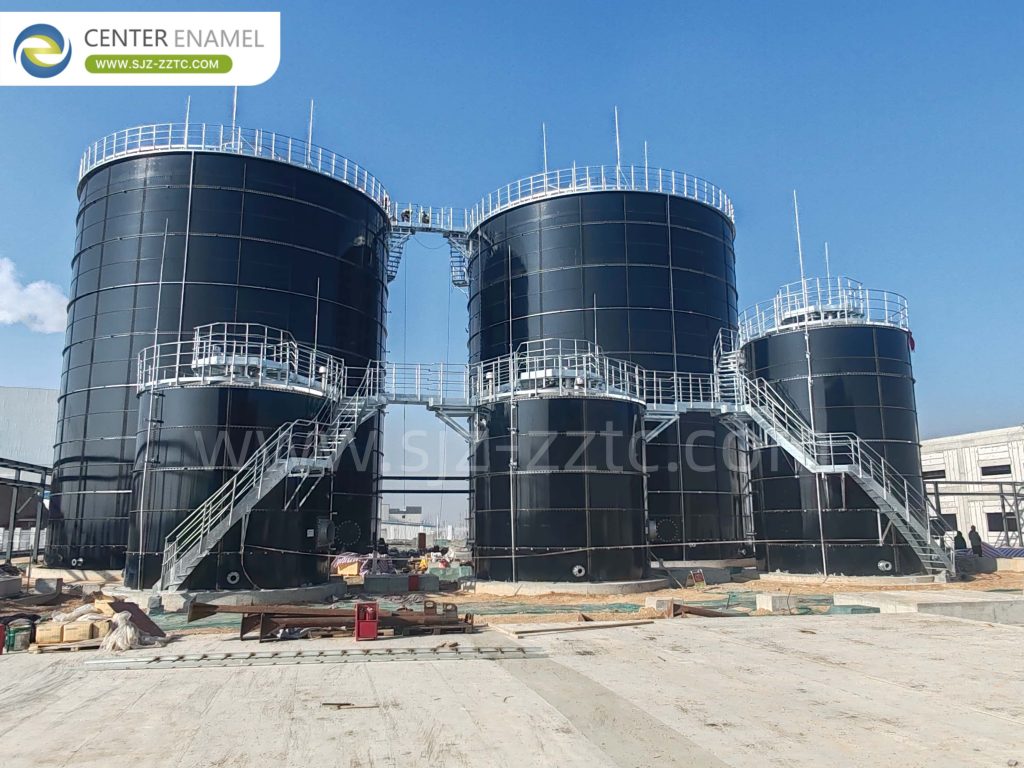
The UASB reactor is an anaerobic treatment process that utilizes a dense layer of granular sludge to degrade organic pollutants. In this system, wastewater flows upward through the sludge blanket, where microorganisms break down the organic matter in the absence of oxygen. This process produces biogas—a mixture primarily of methane and carbon dioxide—which can be captured and utilized as an energy source. The UASB technology is particularly well-suited for the juice and beverage industries, where effluent is characterized by high concentrations of sugars, suspended solids, and other biodegradable compounds.
Design and Operation of UASB Reactors
A UASB reactor consists of several key components that work together to ensure efficient treatment:
Inlet Zone: Wastewater is introduced at the base of the reactor, allowing it to mix with the anaerobic sludge. Proper distribution is critical for optimal contact between organic matter and microorganisms.
Sludge Blanket: A compact mass of microbial granules that facilitates the degradation of organic pollutants. The stability and activity of this sludge are critical for efficient treatment. Granulation occurs naturally over time, with biomass retention improving as the sludge develops.
Gas-Liquid-Solid Separator: As the wastewater moves upward, produced biogas is separated from the treated liquid and solids, ensuring that the biogas is captured effectively while allowing the treated effluent to exit the reactor. The three-phase separator enables separation under high turbulence conditions, allowing relatively high loading rates.
Effluent Zone: The clarified effluent, with significantly reduced organic load, is discharged from the top of the reactor for further polishing or safe disposal.
The operation of a UASB reactor relies on maintaining optimal environmental conditions—such as temperature, pH, and hydraulic retention time—to support microbial activity. In juice and beverage applications, careful control of these parameters ensures the efficient conversion of organic matter and minimizes the production of excess sludge.
Advantages of UASB Reactors in Juice and Beverage Wastewater Treatment
The unique characteristics of the UASB reactor make it particularly advantageous for the juice and beverage industries:
High Treatment Efficiency: UASB reactors excel at reducing high levels of organic pollutants. The biological process can achieve substantial reductions in Chemical Oxygen Demand (COD) and Biological Oxygen Demand (BOD), ensuring that the effluent meets regulatory discharge standards. Studies on fruit juice wastewater have demonstrated COD removal efficiencies consistently above 80% throughout the year, even with seasonal variations in load.
Energy Recovery: One of the most compelling benefits of the UASB process is its ability to generate biogas. In the juice and beverage industries, where energy costs are a significant operational concern, the recovered methane can be used to offset energy consumption, thereby reducing overall operating expenses. Biogas from anaerobic digestion typically contains 60–70% methane with an energy value of approximately 37 MJ/m³.
Low Operational Costs: The anaerobic process inherent to UASB reactors requires less energy compared to aerobic treatment systems. Anaerobic biomass yields only a fraction of the sludge produced by aerobic processes, resulting in up to 90% less sludge production. Reduced aeration needs, lower sludge production, and minimal chemical usage contribute to cost-effective operation over the reactor's lifetime.
Robust Performance with High Organic Loads: Effluents from juice and beverage production are typically rich in organic matter. UASB reactors are designed to handle such loads efficiently, ensuring stable performance even during periods of peak production.
Compact Footprint and Scalability: UASB reactors offer a compact design, which is ideal for facilities with limited space. Their modular nature also allows for scalability, enabling operators to adjust capacity based on changing production volumes or regulatory requirements.
Application in the Juice and Beverage Industries
In the context of the juice and beverage sectors, UASB reactors play a pivotal role in addressing several challenges:
Variable Organic Loads: Production processes in these industries often generate effluent with fluctuating organic content. UASB reactors, with their robust microbial communities, are well-equipped to manage these variations, ensuring consistent treatment performance. Research on apple juice processing wastewater has shown that UASB systems can cope with large increases in organic loading rate during processing seasons, with COD removals in the region of 85–90%.
Seasonal Production Peaks: During peak harvest seasons or promotional production runs, wastewater generation can increase dramatically. The scalable design of UASB reactors allows for quick adaptation to increased loads without compromising treatment efficiency. Full-scale experience in fruit juice factories has demonstrated that UASB reactors are suitable for campaign industries running only 2 months a year with higher concentrated wastewater, as well as for periods when wastewater concentrations are very low.
Regulatory Compliance and Environmental Stewardship: Stringent environmental regulations demand efficient treatment of wastewater before discharge. UASB reactors help facilities achieve compliance by effectively reducing pollutant levels while simultaneously recovering renewable energy from biogas.
Integration with Other Treatment Processes: UASB reactors can serve as a primary treatment step, with the treated effluent further polished by aerobic or membrane filtration systems. This integrated approach ensures that the final effluent quality is suitable for reuse or safe environmental discharge. Integrated anaerobic-aerobic designs reduce overall energy demand by 40–60% versus fully aerobic treatment.
UASB Reactor Performance Data
| Parameter | Typical Range | Best For | Notes |
| COD Loading Rate | 5 – 15 kg/m³·day | Soluble COD, moderate TSS | Higher loads possible with granulated sludge |
| COD Removal Efficiency | 75 – 90% | Juice and beverage effluent | Consistently >80% in full-scale fruit juice applications |
| Hydraulic Retention Time | 6 – 12 hours | High-rate treatment | Shorter HRT requires well-granulated sludge |
| Biogas Methane Content | 60 – 70% CH₄ | Energy recovery | Energy value ~37 MJ/m³ CH₄ |
| Sludge Production | 0.05 – 0.10 kg TSS/kg COD | Reduced disposal costs | 90% less than aerobic processes |
| Energy Savings vs. Aerobic | 80 – 95% | Power demand reduction | No aeration required |
Center Enamel's Expertise in UASB Reactor Solutions
At Center Enamel, we are committed to providing tailored wastewater treatment solutions that address the unique challenges of the juice and beverage industries. Our UASB reactors are engineered using advanced design principles and manufactured with high-quality materials to ensure reliability, longevity, and operational efficiency.
Custom-Engineered Designs: Recognizing that every facility has distinct operational parameters, we offer custom designs that cater to the specific wastewater characteristics and throughput requirements of our clients.
State-of-the-Art Manufacturing: Our facilities employ modern, automated production systems that ensure each UASB reactor is built to the highest international standards. This precision manufacturing guarantees consistent performance and durability, even under demanding conditions.
Comprehensive Technical Support: From the initial feasibility study and design phase to installation and post-commissioning support, our team of experts works closely with clients to optimize reactor performance and ensure seamless integration into existing wastewater treatment systems.
Sustainable Solutions: Our commitment to environmental sustainability is reflected in every aspect of our UASB reactor design. By enabling energy recovery and reducing sludge generation, our systems contribute to lower operational costs and a reduced environmental footprint.
Project Overview
Center Enamel successfully completed a wastewater treatment project for a food processing facility, demonstrating the effectiveness of our UASB reactor solutions for high-strength organic effluent.
Scope of Work
Center Enamel provided comprehensive design, engineering, manufacturing, and installation services for Glass-Fused-to-Steel (GFS) tanks specifically engineered for the facility's wastewater treatment requirements. The project encompassed:
Design and fabrication of a UASB reactor tank
Design and fabrication of an aerobic treatment tank
Complete tank roofing systems with gas collection capability
On-site installation and commissioning support
Technologies Used
The project utilized Center Enamel's proprietary Glass-Fused-to-Steel (GFS) tank technology, which offers exceptional durability and corrosion resistance for the demanding conditions of food processing wastewater treatment. This technology provides significant advantages over traditional concrete or epoxy-coated steel tanks, including:
Exceptional corrosion resistance against the acidic nature of food processing effluent
Minimal maintenance requirements due to the smooth, non-reactive glass surface
Extended service life with decades of reliable performance
Robust structural integrity ensuring safe containment of wastewater and biogas
Project Results
| Metric | Result |
| Project Completion | Successfully completed |
| Tank Configuration | 1 UASB reactor + 1 aerobic tank |
| Treatment Capacity | Full-scale operational |
| Corrosion Resistance | Superior range |
| Service Life | Long-term design life |
The successful completion of this project demonstrates Center Enamel's commitment to delivering high-quality wastewater treatment infrastructure that meets both performance requirements and environmental standards.
Client Testimonial
"Center Enamel's engineering team demonstrated exceptional professionalism throughout the project. The GFS tank technology has performed exactly as specified, and the collaborative approach during design and installation ensured seamless integration with our existing treatment processes. We are confident in the long-term reliability of these systems."
— Project Engineering Manager, Food Processing Facility
For professionals in the juice and beverage sectors seeking to upgrade their wastewater treatment processes, our UASB reactor solutions offer a proven pathway to operational excellence and environmental compliance. With a focus on custom-engineered solutions and precision manufacturing, Center Enamel stands ready to partner with your organization to implement state-of-the-art UASB reactors that enhance wastewater treatment performance and support sustainable operations.
Contact Center Enamel today to discuss how our innovative treatment systems can be integrated into your facility and help you achieve your sustainability goals.
Frequently Asked Questions (FAQ)
What is a UASB reactor and how does it work?
A UASB (Upflow Anaerobic Sludge Blanket) reactor is an anaerobic treatment system that uses a dense layer of granular sludge to degrade organic pollutants in wastewater. Wastewater flows upward through the sludge blanket, where microorganisms break down organic matter in the absence of oxygen, producing biogas as a byproduct.
Why is UASB technology suitable for juice and beverage wastewater?
Juice and beverage wastewater is characterized by high concentrations of sugars, suspended solids, and other biodegradable compounds. UASB reactors are specifically designed to handle these high-strength organic loads efficiently. Studies show COD removal efficiencies of 80–90% for fruit juice and beverage processing wastewater.
How much biogas can a UASB reactor produce?
Biogas production depends on the COD load and removal efficiency. In practice, biogas from UASB systems treating beverage wastewater typically contains 60–70% methane, with an energy value of approximately 37 MJ/m³.
What are the key advantages of UASB over aerobic treatment for juice wastewater?
UASB reactors offer several advantages: 80–95% lower energy demand (no aeration required), up to 90% less sludge production, biogas energy recovery, and compact footprint. Integrated anaerobic-aerobic designs reduce overall energy demand by 40–60% compared to fully aerobic treatment.
Can UASB reactors handle seasonal production variations in juice and beverage industries?
Yes. Full-scale experience in fruit juice factories has demonstrated that UASB reactors are suitable for campaign industries running only 2 months a year with higher concentrated wastewater, as well as for periods when wastewater concentrations are very low. COD removal efficiency consistently exceeds 80% throughout the year.
How long does it take for UASB sludge to granulate?
Granulation time varies depending on seed sludge characteristics, wastewater composition, and operating conditions. Studies indicate that biomass retention improves significantly once granulation has taken place, with sludge overflow issues diminishing as the microbial granules develop and increase in density.