
UASB vs. CSTR: Key Differences Between Two Anaerobic Digestion Technologies
Anaerobic digestion is a cornerstone of modern waste and wastewater treatment, but the reactor configuration chosen for a given project profoundly influences its performance, cost, and operational complexity. Among the most widely deployed technologies, the Upflow Anaerobic Sludge Blanket (UASB) reactor and the Continuous Stirred Tank Reactor (CSTR) represent two fundamentally different design philosophies.
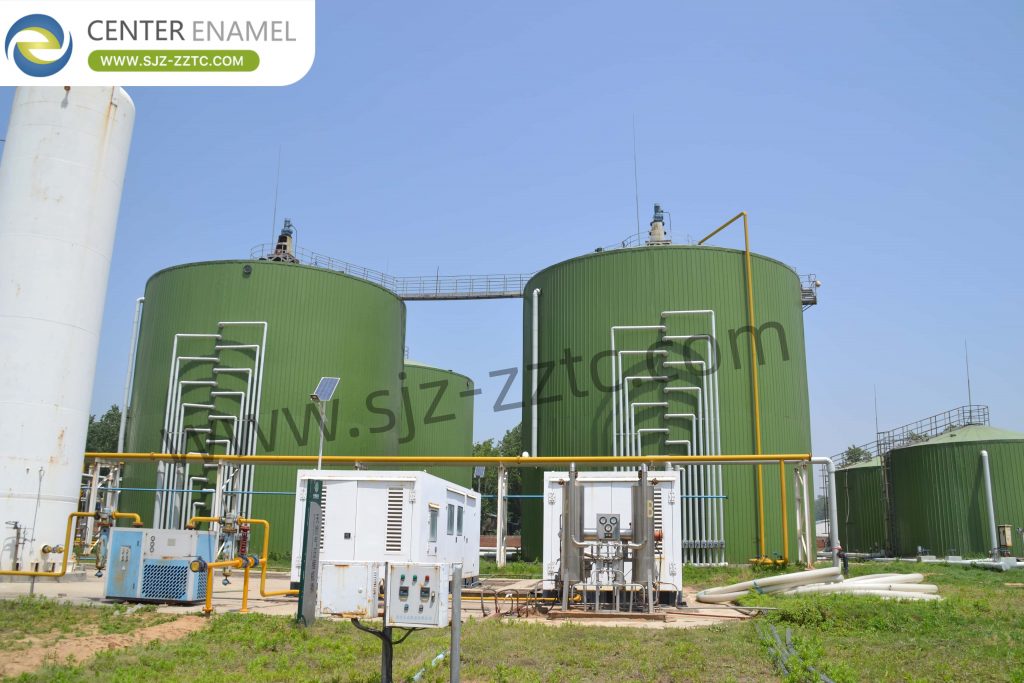
One relies on gravity and microbial self-immobilization to retain biomass; the other depends on mechanical mixing to ensure uniform contact. Understanding the differences between UASB and CSTR is essential for engineers, project developers, and operators seeking to match the technology to their specific feedstock and objectives.
Defining UASB and CSTR: Two Distinct Reactor Concepts
The UASB reactor is a high-rate anaerobic system in which wastewater flows upward through a dense bed of granular or flocculent sludge. The key to its operation is the natural formation of microbial granules with excellent settling properties, which allows the reactor to retain a high concentration of active biomass without any external mixing device . A three-phase separator at the top of the reactor separates biogas, sludge, and treated effluent, with settled solids falling back into the sludge blanket. This design enables the UASB to operate at short hydraulic retention times while maintaining long solids retention times, a crucial advantage for treating dilute waste streams .
The CSTR, by contrast, is the simplest and most classical anaerobic digester configuration. It consists of a completely mixed tank where influent is continuously fed and effluent continuously withdrawn, with the hydraulic retention time and solids retention time being essentially identical because there is no liquid-solid separation within the reactor . Mechanical agitation, hydraulic recirculation, or gas injection keeps the contents uniform, ensuring contact between microorganisms and substrate while preventing stratification and short-circuiting . The CSTR is typically applied to slurries and semi-solid feedstocks rather than dilute wastewaters.
Feedstock Suitability: Liquid Effluents vs. Solid Slurries
The most practical distinction between the two technologies lies in the type of material they are designed to process. The UASB reactor is specifically suited to liquid feedstocks with relatively low solids content. According to a comparative technology assessment, UASB is the preferred choice for liquid substrates such as landfill leachate, coffee pulp effluent, cheese whey, vinasse, slaughterhouse wastewater, and nejayote, where it generally proves more efficient and affordable than the CSTR . The reactor's reliance on granular sludge settling means that excessive suspended solids can interfere with granule formation and biomass retention.
The CSTR, on the other hand, is recommended for the remaining categories of feedstock, including those with higher solids content and for co-digestion applications . Its robust mixing system can handle slurries, manure, sewage sludge, and organic fraction of municipal solid waste without the risk of clogging or biomass washout that would impair a UASB. The CSTR's tolerance for variable and high-solids feedstocks makes it the workhorse of agricultural biogas plants and wastewater treatment plant sludge digesters.
| Criterion | UASB Reactor | CSTR |
| Ideal feedstock | Liquid effluents, low suspended solids | Slurries, manure, sludge, high-solids waste |
| Biomass retention | Gravity settling of granules; no external mixer | No retention; biomass leaves with effluent |
| Mixing mechanism | Upflow hydraulic flow and biogas production | Mechanical agitation, gas injection, or recirculation |
| Typical HRT | Short (hours) due to high biomass concentration | Longer (days) to prevent washout |
Mixing and Biomass Retention: Gravity vs. Mechanical Agitation
The operational heart of each reactor reveals another critical divergence. In a UASB, mixing is achieved entirely through the upward flow of influent and the turbulence created by rising biogas bubbles . There is no mechanical stirrer, which means energy consumption for mixing is essentially zero apart from pumping . This low-energy operation is a major economic advantage, particularly in regions where electricity costs are high or reliability is uncertain.
The CSTR depends on continuous or intermittent mechanical mixing to maintain homogeneity. This mixing consumes a significant portion of the digester's energy budget, and optimizing the mixing regime is an active area of research and engineering . While the CSTR's complete mixing ensures uniform pH, temperature, and substrate distribution, it also means that active biomass is continuously lost in the effluent. Without a separate solids separation and return system, the CSTR cannot decouple hydraulic retention time from solids retention time, limiting its volumetric efficiency compared to high-rate systems like the UASB.
Performance and Efficiency: Loading Rates and Removal Rates
Performance comparisons between UASB and CSTR depend heavily on the feedstock and operating conditions. For liquid industrial effluents, UASB reactors have demonstrated the ability to operate at organic loading rates up to 20 kg COD/m³·day while achieving methane yields approaching theoretical values . COD removal efficiencies in the range of 70 to 85 percent are commonly reported for UASB treating high-strength industrial wastewater such as vinasse . The reactor's high biomass concentration and efficient sludge retention underpin this performance.
For solid and semi-solid wastes, the CSTR remains the benchmark. A comparative study using organic municipal waste as substrate found that a CSTR achieved 80.8 percent COD removal over a ten-day hydraulic retention time, while a UASB under the same conditions achieved 79.0 percent . This result illustrates that when the feedstock is not ideally suited to UASB granulation, the CSTR's robust mixing can deliver comparable or superior performance. The study also noted that reactors with enhanced mixing capacity produced effluent more suitable for agricultural use as organic fertilizer .
| Performance Metric | UASB | CSTR |
| Typical OLR (liquid waste) | Up to 20 kg COD/m³·day | 2–6 kg COD/m³·day (variable) |
| COD removal (liquid effluent) | 70–85% typical | 60–80% typical |
| COD removal (organic waste, comparative test) | 79.0% | 80.8% |
| Energy for mixing | Negligible | Significant |
Applications Across Industries and Scales
The application profiles of the two technologies reflect their design strengths. UASB reactors are the most widely implemented anaerobic process for industrial effluent treatment worldwide, with notable concentration in the beverage, brewery, food, tannery, and distillery sectors . Country-level data shows significant installed capacity in Brazil (59 UASB plants, primarily for brewery effluent), India (47 plants for distillery and tannery wastewater), and China (37 plants for beverage and food processing) . The technology has also been extensively deployed for municipal sewage treatment in tropical and subtropical regions, with over 640 full-scale UASB reactors in Brazil alone for this purpose .
CSTR technology dominates in agricultural biogas production, wastewater treatment plant sludge digestion, and the processing of organic fraction of municipal solid waste. Its ability to handle high-solids feedstocks and co-digestion mixtures makes it the default choice for farm-scale and centralized biogas plants. The CSTR is also widely used in industrial wastewater treatment plants for stabilizing excess biological sludge, where its complete mixing ensures uniform digestion and consistent biogas production .
Operational Considerations and Limitations
Each reactor type carries distinct operational challenges. UASB reactors require a lengthy start-up period to establish granulation, and biomass washout can occur until stable granules form . The technology is sensitive to feed composition, with high protein content or excessive sulfate concentrations potentially causing process instability through ammonia or sulfide accumulation . Temperature is another constraint: while UASB performs well under mesophilic and thermophilic conditions, low-temperature operation below 20°C significantly reduces COD removal efficiency and methane production .
CSTR systems face different but equally manageable challenges. The complete mixing means that biomass concentration in the reactor is relatively low, necessitating longer hydraulic retention times to achieve adequate treatment. This translates to larger reactor volumes and higher capital costs per unit of organic loading compared to high-rate systems. Mixing energy consumption is a continuous operating cost, and short-circuiting or dead zones can develop if the mixing system is poorly designed or maintained .
Selecting the Right Technology for Your Project
The choice between UASB and CSTR should be guided by a systematic assessment of feedstock characteristics, project scale, energy availability, and product objectives. For liquid industrial effluents with low suspended solids, the UASB offers superior volumetric efficiency, lower energy demand, and a smaller footprint. For slurries, manures, and mixed organic wastes, the CSTR provides the robustness and feedstock flexibility that UASB cannot match. Co-digestion projects, which combine multiple waste streams of varying consistency, almost invariably favor CSTR technology . In some cases, a hybrid approach—such as using a UASB for liquid pretreatment before a CSTR or anaerobic lagoon—may offer the best of both configurations.
Conclusion
UASB and CSTR represent two mature and well-understood pathways for anaerobic digestion, each optimized for different feedstock realities. The UASB excels at extracting energy and reducing pollution from liquid waste streams with minimal energy input, relying on the remarkable self-aggregating properties of anaerobic microorganisms. The CSTR delivers reliable performance on the slurries and solid wastes that dominate agricultural and municipal organic waste management, using mechanical mixing to ensure uniform digestion. Neither technology is universally superior; the right choice emerges from a careful matching of reactor characteristics to the specific waste, site, and operational context of each project.
Frequently Asked Questions
What is the main difference between UASB and CSTR?
The main difference is biomass retention and mixing. UASB retains biomass through gravity settling of granules and uses no mechanical mixer, making it suitable for liquid effluents. CSTR uses mechanical mixing and has no biomass retention, making it suitable for slurries and solid wastes .
Which reactor is better for treating food waste?
CSTR is generally preferred for food waste and other high-solids organic streams because its mixing system handles thick slurries without clogging, and it is recommended for co-digestion applications. UASB is better suited to liquid food processing effluents with low suspended solids .
Can UASB and CSTR be used together?
Yes. A common configuration uses UASB for liquid pretreatment or primary treatment, followed by aerobic or anaerobic post-treatment. In some integrated facilities, CSTR handles solid residuals while UASB processes liquid streams, allowing each technology to operate within its optimal feedstock range.
Unsure which anaerobic technology fits your wastewater or waste stream? Contact our engineering team for a feedstock assessment and reactor selection consultation tailored to your project.