
Understanding the Process: The Difference Between Aerobic and Anaerobic Digestion for Wastewater Treatment Projects
In the modern era of water resource management, the selection of the correct biological treatment pathway is the most critical decision in the engineering lifecycle of any facility. As global standards for effluent quality become increasingly stringent, the ability to effectively stabilize organic matter—measured as Chemical Oxygen Demand (COD) and Biological Oxygen Demand (BOD)—requires a deep understanding of microbial kinetics. Within professional Wastewater Treatment Projects, two primary biological methodologies dominate the landscape: Aerobic and Anaerobic Digestion. While both rely on specialized bacterial communities to decompose pollutants, their mechanical requirements, energy profiles, and byproduct outputs are fundamentally different. Selecting the right system—or an integrated hybrid of both—is essential for achieving operational efficiency and long-term environmental compliance.
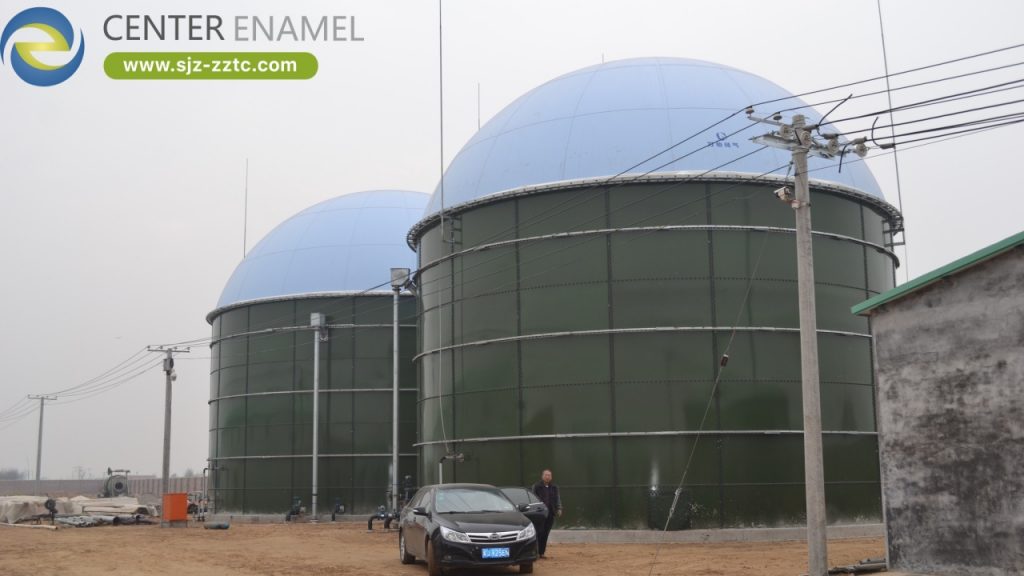
Shijiazhuang Zhengzhong Technology Co., Ltd, operating under the world-renowned brand Center Enamel, stands as a global leader in providing the specialized engineering infrastructure necessary for these advanced biological systems. With over thirty years of innovation and a project footprint extending to more than one hundred countries, we provide the turnkey containment and processing solutions that make high-efficiency water treatment a reality. Our expertise lies in the integration of Glass-Fused-to-Steel technology, high-performance Epoxy Coated Tanks, and advanced internal components, creating a cohesive platform designed to maximize the reliability of both Aerobic and Anaerobic Digestion systems.
Technical Foundations: The Biological Divergence
The primary distinction between these two processes lies in the presence or absence of dissolved oxygen, which dictates the type of microorganisms that drive the treatment.
1. Aerobic Digestion: High-Intensity Oxidation
Aerobic digestion occurs in the presence of oxygen. In this process, aerobic bacteria consume organic matter and convert it into carbon dioxide, water, and new microbial biomass (activated sludge).
High Reaction Speed: Because oxygen is a powerful electron acceptor, aerobic processes are generally faster at removing BOD from low-to-medium strength wastewater.
Effluent Quality: Aerobic systems are known for producing a very high-quality effluent, making them the standard choice for "polishing" water before it is discharged into natural watercourses.
Oxygen Demand: The primary operational cost in aerobic systems is the energy required for mechanical aeration—pumping air into the tanks to maintain the dissolved oxygen levels necessary for bacterial survival.
2. Anaerobic Digestion: Resource Recovery in the Absence of Air
In contrast, anaerobic digestion takes place in a sealed environment completely devoid of oxygen. Specialized anaerobic microorganisms (methanogens) break down organic compounds through a multi-stage process: hydrolysis, acidogenesis, acetogenesis, and methanogenesis.
Energy Generation: The primary byproduct of anaerobic digestion is biogas (methane and carbon dioxide), which can be captured and utilized for power or heat.
Sludge Minimization: Anaerobic bacteria grow much slower than aerobic bacteria, resulting in significantly less residual sludge—often a major cost-saving factor in Wastewater Treatment Projects.
Organic Loading: These systems are exceptionally effective at treating high-strength industrial effluents (such as food processing or distillery waste) that would overwhelm an aerobic system.
Core Infrastructure: GFS and Epoxy Coated Tank Solutions
A high-performance treatment plant requires containment that can handle the aggressive nature of mixed liquor and the mechanical stresses of continuous industrial operation.
1. Glass-Fused-to-Steel (GFS) Technology
Our flagship GFS tanks are the global benchmark for both anaerobic reactors and aerobic aeration basins. By fusing high-tech glass enamel to specialized steel at high temperatures, we create a material that combines the structural strength of steel with the chemical inertness of glass. These tanks offer unparalleled resistance to the organic acids common in anaerobic phases and the corrosive, humid environment of aerobic aeration. Their modular bolted design allows for rapid site assembly, ensuring that Wastewater Treatment Projects can be completed on schedule regardless of local weather conditions.
2. Epoxy Coated Tanks: High-Performance Industrial Storage
As a critical part of our infrastructure portfolio, Center Enamel’s Epoxy Coated Tanks provide an excellent solution for various auxiliary and storage stages within the treatment train.
Advanced Coating Technology: Our epoxy tanks utilize a high-specification electrostatic powder coating process. This results in a smooth, durable finish that provides excellent resistance against a wide range of industrial chemicals and cleaning agents.
Versatile Application: These tanks are ideal for equalization, storage of treated effluent, or as sludge thickening vessels. They offer a cost-effective yet highly durable alternative where high corrosion resistance is essential, ensuring the entire facility maintains a consistent standard of quality.
Precision Manufacturing: Every tank is manufactured under strict factory-controlled conditions to ensure consistent coating thickness and superior bond strength, providing a reliable long-term storage solution.
3. Aluminum Dome Roofs: Maintenance-Free Protection
For aeration basins or secondary clarifiers where odor control is paramount, Center Enamel provides specialized Aluminum Dome Roofs . These self-supporting geodesic structures are a vital component of modern Wastewater Treatment Projects.
Corrosion Resistance: Constructed from high-strength aluminum alloy, these roofs are naturally resistant to the humid and corrosive atmosphere of a wastewater plant.
Maintenance-Free Durability: Unlike steel covers, aluminum does not rust and requires no painting, providing a clear-span solution that eliminates the need for internal support columns, allowing internal equipment to operate without interference.
Hybrid Systems: The Strategic Engineering Choice
Many modern Wastewater Treatment Projects achieve the best results by utilizing both Aerobic and Anaerobic Digestion in a two-stage process.
(Anaerobic): The high-strength organic load is first reduced anaerobically, capturing biogas for energy recovery and minimizing initial sludge production.
(Aerobic): The partially treated water then enters an aerobic stage for "polishing," where the remaining BOD and nutrients (nitrogen and phosphorus) are removed to meet strict discharge limits.
This hybrid approach maximizes the economic ROI by reducing total energy consumption while ensuring the highest level of environmental protection.
Global Project Excellence: Center Enamel Project Cases
Our expertise in providing comprehensive solutions for biological wastewater treatment is proven through successful installations
Shandong Heze Biogas Project This major initiative utilized 3 units of our high-performance GFS tanks. The project successfully demonstrates the reliability of our integrated containment systems in a high-capacity anaerobic environment.
Inner Mongolia Hinggan League Bio-Natural Gas Project In a region characterized by extreme temperature fluctuations, this installation integrated 4 units of our bolted steel tanks. These vessels provide the stable environment necessary for high-efficiency biological processing, even under heavy environmental stress.
Jiangsu Xuzhou Biogas Project This project involved the deployment of 4 units of our advanced containment technology. It serves as a model for how professional EPC services can be used to rapidly build the essential infrastructure needed for industrial water and energy recovery.
Engineering the Future of Biological Treatment
The successful execution of modern Wastewater Treatment Projects relies on the precise application of Aerobic and Anaerobic Digestion. By mastering the synergy between biology and infrastructure, facilities can protect their local water resources while securing their operational future.
At Shijiazhuang Zhengzhong Technology Co., Ltd (Center Enamel), we are dedicated to providing the innovation and engineering excellence that make these projects a success. From our premier GFS tanks and high-performance Epoxy Coated Tanks to our specialized gas management systems and Aluminum Dome Roofs, we offer a total containment solution designed for the future of industrial sustainability. Our commitment to quality and modular efficiency ensures that every project we undertake is built to perform and engineered to last.