
Upflow Solids Reactor (USR) for Palm Oil Mill Effluent Treatment: High-Efficiency Anaerobic Digestion
The rapid expansion of the global palm oil industry has generated tremendous economic benefits across Southeast Asia, Latin America, and Africa, but it also presents significant environmental challenges. Processing fresh fruit bunches (FFB) generates massive volumes of Palm Oil Mill Effluent (POME)—a high-strength, acidic colloidal wastewater characterized by extremely high Chemical Oxygen Demand (COD), Biochemical Oxygen Demand (BOD), and suspended solids.
As environmental regulations tighten and land availability shrinks, conventional open-pond systems are rapidly becoming obsolete due to their massive land footprints and fugitive greenhouse gas emissions. To address these challenges, the Upflow Solids Reactor (USR)—often referred to as an Upflow Sludge Bed Reactor—has emerged as a premier, high-efficiency anaerobic digestion technology for sustainable POME treatment.
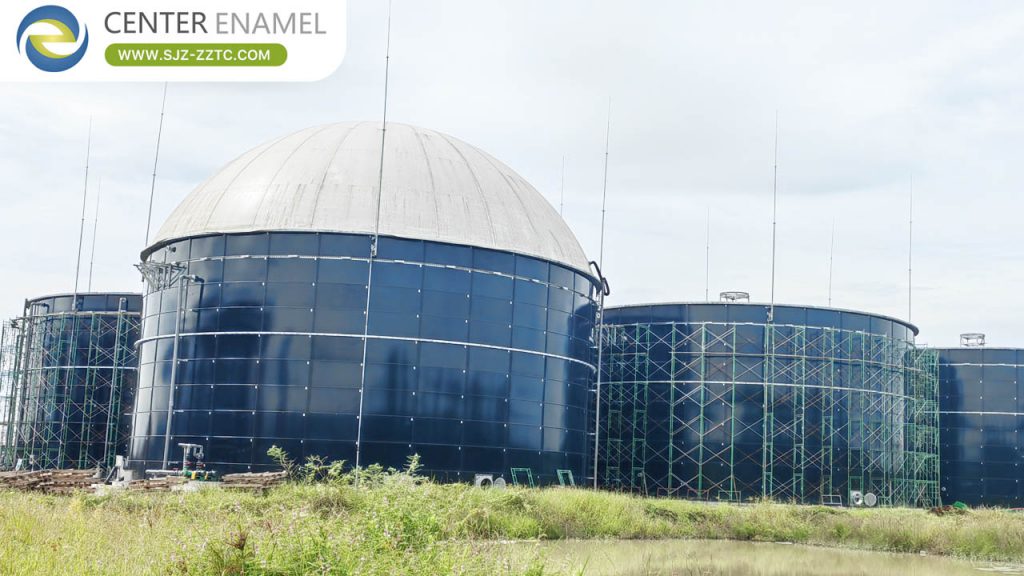
How the USR Reactor Works for POME Treatment
The Upflow Solids Reactor (USR) is engineered specifically to process high-load organic industrial wastewater under oxygen-free (anaerobic) conditions. The operational workflow is structured around key biological and hydrodynamic principles:
- Upward Flow Dynamics: Raw POME is introduced at the bottom of the vertically designed reactor vessel and forced to flow uniformly upward through a dense, highly active bed of anaerobic microorganisms (sludge bed).
- Intimate Biomass Contact: As the wastewater percolates upward, the suspended organic pollutants come into close contact with specialized anaerobic bacteria, maximizing mass transfer and reaction kinetics without requiring intensive mechanical mixing.
- Biological Breakdown & Biogas Generation: Microorganisms break down complex carbohydrates, proteins, and lipids, converting organic matter into biogas (primarily methane and carbon dioxide) and a stabilized liquid effluent.
- Gas-Solid Separation: At the top of the reactor, a specialized three-phase separator (gas-liquid-solid) captures the generated biogas, allows treated water to overflow as clear supernatant, and retains active biological sludge inside the system.
Key Advantages of USR Systems in Palm Oil Processing
- Superior Organic Removal Efficiency: USR reactors achieve remarkable COD and BOD removal rates (often exceeding 85% to 90%), helping palm oil mills safely meet strict national environmental discharge limits.
- Renewable Energy Recovery: The anaerobic digestion process yields methane-rich biogas. This gas can be captured, scrubbed, and utilized as a clean fuel source for factory boilers or combined heat and power (CHP) generators, turning a waste treatment liability into a net energy asset.
- Compact, Vertical Footprint: Unlike land-intensive open lagoons that require vast hectares of property, the vertical architecture of USR reactors requires a fraction of the space, making them ideal for space-constrained industrial sites.
- Odor and Environmental Control: Fully enclosed USR systems eliminate open-air foul odors and prevent the uncontrolled release of fugitive methane emissions into the atmosphere.
- Enhanced Tolerance to High Temperatures: POME typically exits extraction lines at elevated temperatures (80°C to 90°C). Advanced USR designs accommodate these thermal parameters or integrate heat exchangers to maintain optimal mesophilic or thermophilic digestion zones.
Comparative Data Table: USR Technology vs. Conventional Open Ponds
| Evaluation Parameter | Upflow Solids Reactor (USR) | Conventional Open Anaerobic Ponds |
| Spatial Footprint | Compact, vertical modular design | Massive land area requirement |
| COD Removal Efficiency | High (85% to 90%+) | Moderate (50% to 70%) |
| Biogas & Energy Recovery | Fully captured and utilized for power/heat | Uncontrolled fugitive release (greenhouse gas risk) |
| Odor & Environmental Control | 100% enclosed and odorless system | High odor emissions and risk of groundwater seepage |
| Hydraulic Retention Time (HRT) | Short retention time (days) | Extremely long retention time (weeks to months) |
Engineering Excellence: Integration with Glass-Fused-to-Steel (GFS) Tanks
Modern industrial USR deployments frequently utilize advanced containment engineering, such as Glass-Fused-to-Steel (GFS) tanks. Because raw POME contains organic acids and corrosive chemical components, traditional concrete tanks are vulnerable to structural degradation.
GFS tanks combine the structural strength of steel with the inert chemical resistance of high-temperature fused glass coating. Offering a pH resistance range of 1 to 14 and a service life exceeding 30 years, bolted GFS tanks allow for rapid, modular on-site assembly—reducing construction timelines by up to 50% compared to poured concrete structures.
Frequently Asked Questions (FAQ)
Q1: What is an Upflow Solids Reactor (USR) and how does it treat POME?
A: A USR reactor is an advanced anaerobic digestion vessel where palm oil mill effluent flows upward through a dense sludge bed of microorganisms. These microbes break down high-strength organic pollutants without oxygen, reducing COD/BOD levels and generating renewable biogas.
Q2: Why are USR reactors preferred over traditional open ponds in modern palm oil mills?
- A: USR reactors offer a compact vertical footprint, vastly superior COD removal, complete odor containment, and active biogas capture for energy generation. In contrast, open ponds require huge tracts of land and emit uncontrolled greenhouse gases.
Q3: Can USR treated POME be discharged directly into rivers?
- A: While USR systems remove the vast majority of organic pollution (85%–90%+), the effluent typically requires secondary aerobic polishing or membrane filtration steps to meet local regulatory standards for direct water body discharge or industrial reuse.