
Upgrading Biogas Projects: Technology Selection and Execution Playbook
Upgrading is where a biogas project stops selling low-value gas to a single engine and starts selling fungible fuel to an entire market. An upgrading biogas project removes CO2, H2S, water, and trace contaminants from raw biogas to produce biomethane at 95-99% methane—chemically identical to natural gas, injectable into pipelines, compressible into CBG, and eligible for the strongest renewable energy premiums available.
The decision to upgrade reshapes project economics. Upgrading adds $1.5-25 million of CAPEX depending on scale, but converts gas worth $3-12 per MMBtu (electricity-equivalent) into biomethane worth $10-60+ per MMBtu where transport mandates and low-carbon fuel standards apply. For most new biogas developments in 2026, upgrading is the default feasibility case, not the exception.
This playbook covers the complete upgrading biogas project lifecycle: performance targets, the four mainstream technologies compared on real parameters, cost structures at different scales, the five project phases from feasibility to commissioning, and the integration decisions—with existing digestion, gas grid, or CBG logistics—that determine success.
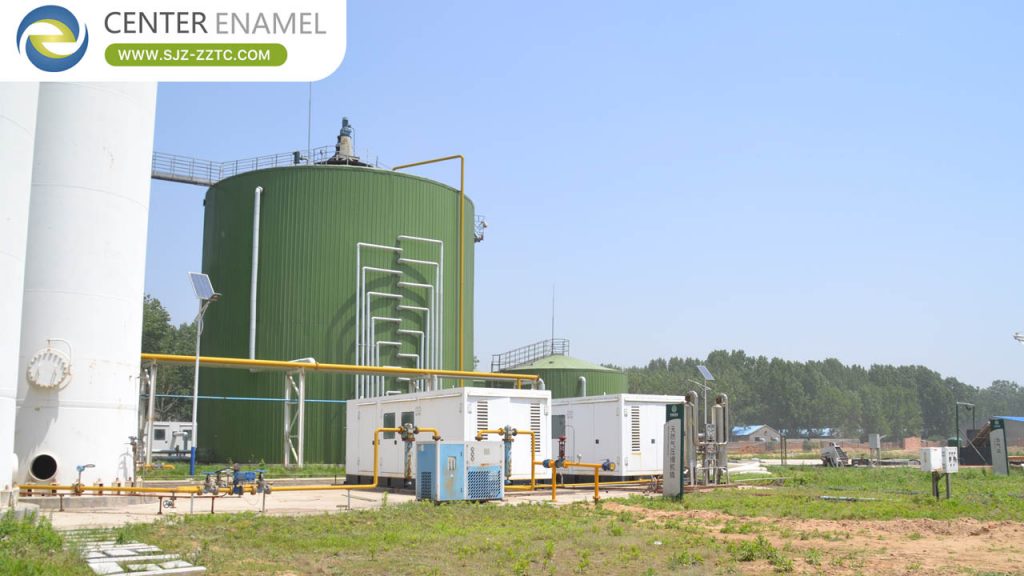
What an Upgrading Biogas Project Must Deliver
An upgrading biogas project must deliver biomethane meeting its offtake specification at high methane recovery and low specific energy. Typical pipeline specs require 95-99% CH4, CO2 below 2-3%, oxygen below 0.5-1%, water dew point adjusted to pipeline class, total sulfur below 5-10 mg/m3, and siloxanes below 1-5 mg/m3 for engine-protection markets. Methane recovery—the share of inlet CH4 ending in the product—should exceed 99% for large plants; methane slip is both lost revenue and a potent GHG liability.
The Four Upgrading Technologies Compared
Technology selection for upgrading biogas projects balances methane recovery, energy consumption, turndown behavior, footprint, and tolerance to feed gas variability. Membrane systems dominate current installations for their modularity and simplicity; water wash suits large stable gas flows; PSA handles smaller plants and varying loads; amine scrubbing achieves the deepest CO2 removal (to 99%+ CH4) at the cost of heat demand.
1. Membrane Upgrading: Polymer membranes separate CO2 selectively; 3-stage configurations reach 99%+ recovery with 0.15-0.25 kWh/m3 biogas. Best fit: 300-5,000 m3/h, modular growth.
2. Water Wash (Physical Scrubbing): CO2 dissolves under 6-10 bar pressure; recovery 97-99.5%, 0.25-0.35 kWh/m3, water treatment duty. Best fit: large single-train plants.
3. Pressure Swing Adsorption (PSA): Zeolite beds adsorb CO2 at 4-7 bar; recovery 96-98% (multi-bed), 0.2-0.3 kWh/m3. Best fit: small-medium plants, intermittent operation.
4. Amine Scrubbing (Chemical Absorption): CO2 reacts with amine solution, regenerated by heat (0.4-0.9 kWh thermal/m3); CH4 purity to 99.5%, near-zero slip. Best fit: high-spec gas, CHP heat available.
Comparative Data Table: Biogas Upgrading Technologies
| Parameter | Membrane (3-stage) | Water Wash | PSA | Amine Scrubbing |
| CH4 purity achievable | 96-99% | 97-99% | 96-98% | 99-99.5% |
| Methane recovery | 99%+ | 97-99.5% | 96-98% | 99.5%+ |
| Specific energy (kWh/m3 biogas) | 0.15-0.25 | 0.25-0.35 | 0.20-0.30 | 0.10-0.25 el. + 0.4-0.9 th. |
| H2S pre-treatment needed | Yes (below 50-100 ppm) | Partial (removes some H2S) | Yes | Yes (amine protection) |
| Turndown / load flexibility | Good (module staging) | Moderate | Good | Moderate |
| Typical scale range (m3/h biogas) | 300-5,000 | 1,000-10,000 | 200-2,000 | 500-5,000 |
| CAPEX intensity | Medium | Medium-high (large scale) | Medium | Medium-high |
Project Execution: Five Phases from Feasibility to Gas
A well-run upgrading biogas project moves through five phases over roughly 12-24 months: (1) feasibility—feedstock gas forecast, offtake specification, grid or CBG route study, and preliminary economics; (2) permitting—gas grid connection agreements, planning consent, and gas quality compliance filings; (3) engineering and procurement—technology selection, H2S pre-cleaning integration, compression and metering design, OEM contracting; (4) construction—typically 8-14 months including grid injection station; and (5) commissioning and performance testing—guaranteed recovery, purity, and specific energy verified over 30-90 days before acceptance. The most common failure point is phase 1 optimism about raw gas composition, which surfaces as oversized or undersized upgrading capacity at phase 5.
Frequently Asked Questions (FAQ)
Q1: Is it better to upgrade biogas or generate electricity with CHP?
A: Upgrading wins where transport-fuel or pipeline premiums exceed electricity value—common in Europe, North America, and India today. CHP remains preferable with strong local heat demand, high industrial power prices, or no gas grid within economic distance. Feasibility studies should model both pathways against 10-15 year energy price scenarios rather than spot prices.
Q2: How much does a biogas upgrading unit cost?
A: Installed upgrading plants run roughly $1.5-3 million for a 500 m3/h system, $3-6 million at 1,500 m3/h, and $10-25 million for 5,000 m3/h multi-train facilities—before compression, injection station, and grid works. Operating costs add $0.01-0.03 per m3 of biomethane for energy, consumables, and membrane or media replacement cycles.
Q3: What methane slip is acceptable in upgrading?
A: Best available technology achieves below 0.5-1% slip; regulatory pressure is pushing permits toward below 1% in several jurisdictions. Every 1% of slip on a 1,000 m3/h plant wastes roughly 50 m3 of pure methane daily—a combined revenue and emissions problem. Tail-gas treatment (thermal oxidation or catalytic oxidation) is now standard on new large plants.
Q4: Can an existing CHP biogas plant be retrofitted with upgrading?
A: Yes, and it is a common evolution. The digester island needs no change; the project adds gas cleaning, the upgrading skid, compression, and either a grid connection or CBG dispatch. The CHP unit is typically retained at reduced load—covering plant electricity and heat—which conveniently supplies the amine scrubbing heat demand if that technology is chosen.