
Advanced USBF System for Starch Wastewater Treatment Project - Center Enamel
The global starch production industry, a vital component of the food and industrial sectors, faces a significant environmental challenge: the effective management of its wastewater. Starch wastewater is characterized by a very high concentration of organic matter, a low pH, and high temperatures, making it a particularly difficult effluent to treat using conventional methods. If discharged without adequate purification, it can severely impact water bodies, leading to oxygen depletion, pollution, and widespread ecological damage. In the face of increasingly stringent environmental regulations and a global push for sustainable industrial practices, there is a clear and urgent need for an advanced, reliable, and resource-efficient solution.
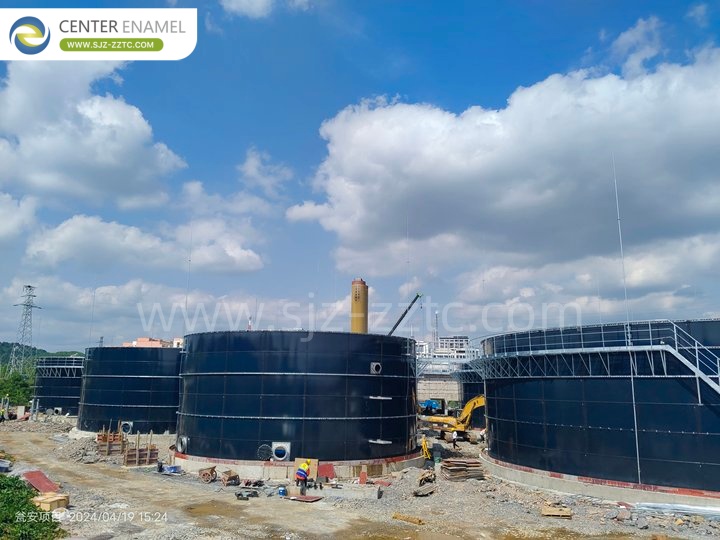
USBF System for Starch Wastewater Treatment
Among the most effective technologies for high-concentration organic wastewater is the Upflow Sludge Blanket Filtration (USBF) system. Known for its robust performance and ability to recover valuable resources from waste, USBF has emerged as a cornerstone of modern anaerobic treatment. At Shijiazhuang Zhengzhong Technology Co., Ltd. (Center Enamel), we are at the forefront of providing comprehensive Upflow Sludge Blanket Filtration solutions, expertly designed and engineered to meet the specific demands of a Starch Wastewater Treatment Project, transforming environmental liabilities into sustainable, profitable assets.
Understanding the Unique Challenge of Starch Wastewater
To appreciate the power of the USBF system, it is crucial to understand the unique characteristics of starch wastewater that make its treatment so challenging. This effluent is fundamentally different from typical municipal or industrial wastewater due to several key factors:
Extremely High Organic Load (COD & BOD): The wastewater is rich in soluble carbohydrates and proteins, leading to exceptionally high levels of Chemical Oxygen Demand (COD) and Biochemical Oxygen Demand (BOD). This concentrated organic matter is the source of both pollution and renewable energy recovery.
High Suspended Solids: The production process generates a significant amount of suspended solids, which can clog pipes and reduce reactor efficiency.
Low pH: The decomposition of organic matter in the absence of oxygen produces organic acids, dropping the pH and inhibiting many microbial communities.
High Temperature: High-temperature processing means wastewater is discharged hot, requiring specialized reactor materials and strict thermal control.
These characteristics render traditional aerobic wastewater treatment costly and energy-intensive. Aerobic systems require massive aeration, consuming high electricity volumes and producing large quantities of sludge. Anaerobic technologies like USBF provide a superior alternative.
The USBF System: A Technical Deep Dive into High-Efficiency Anaerobic Digestion
The Upflow Sludge Blanket Filtration (USBF) system is an advanced anaerobic digestion technology operating on a unique principle of upward wastewater flow and biological filtration.
The core of the USBF system is the "sludge blanket," a dense, suspended layer of active granular sludge composed of anaerobic microorganisms. As starch wastewater is fed into the bottom of the reactor, it flows upwards through this layer, driving two simultaneous processes:
Anaerobic Digestion: Microorganisms consume organic pollutants, converting them into methane and carbon dioxide (biogas).
Filtration: The sludge blanket physically traps suspended solids, ensuring complete biological purification and separation.
The system relies on strict parameter control, including optimal temperature and pH regulation, backed by Center Enamel's specialized heating systems and robust engineering.
Center Enamel's USBF Solution: Integrated Excellence
At Center Enamel, we deliver complete, integrated solutions centered around our proprietary Glass-Fused-to-Steel (GFS) tanks. These tanks are ideal containment vessels for USBF reactors due to:
Superior Corrosion Resistance: Vitrified glass coatings provide an impermeable barrier against organic acids and hydrogen sulfide.
Exceptional Gas-Tightness: Precision engineering prevents methane leaks and maximizes biogas capture.
Hygiene and Easy Maintenance: Smooth, non-porous surfaces prevent bio-fouling.
Modular and Rapid Construction: Bolted panel design allows swift on-site installation.
We offer a full-service EPC (Engineering, Procurement, and Construction) model, providing a single point of responsibility from initial design to commissioning and support.
Project Overview & Technical Data
Project Overview Matrix
| Parameter | Project Specification |
| Industry Sector | Starch Production & Food Processing Industrial Wastewater |
| Core Technology | USBF Anaerobic Reactor + GFS Containment Tanks |
| Primary Objective | High COD/BOD Removal, Biogas Energy Recovery, Compliance |
| Scope of Work | Process Design, GFS Tank Manufacturing, EPC Delivery, Commissioning |
| Key Performance Metric | Up to 85–90% COD reduction and stable energy generation |
Scope of Work
Engineering & Process Design: Custom hydraulic-load modeling, organic loading rate calculations, and temperature regulation planning.
Manufacturing & Supply: Production of high-durability Glass-Fused-to-Steel (GFS) reactor tanks and gas-collection roofs.
Construction & Integration: On-site bolted erection, piping installation, integration of heating systems, and biogas flare/recovery setups.
Commissioning & Training: System inoculation, startup monitoring, and operator training for long-term optimization.
Technologies Used
Upflow Sludge Blanket Filtration (USBF): High-rate anaerobic granular sludge bed technology.
Glass-Fused-to-Steel (GFS) Tanks: Industrial bolted steel panels fused with molten glass at 850°C–940°C for ultimate chemical inertness.
Biogas Upgrading & Safety Equipment: Pressure-vacuum relief valves, flame arresters, and desulfurization units.
Environmental and Economic Advantages
High Treatment Efficiency: Outstanding removal of BOD, COD, and suspended solids to meet strict environmental regulations.
Biogas Production & Energy Recovery: Converts waste streams into renewable fuel for heat and power generation.
Reduced Sludge Volume: Minimal excess sludge production lowers dewatering and disposal expenses.
Lower Operational Costs: Passive anaerobic functions reduce electrical demand and overall operational expenditures.
Project Results & Data
| Metric / Indicator | Before Treatment | After USBF Treatment | Efficiency / Recovery |
| Chemical Oxygen Demand (COD) | 30,000 – 50,000 mg/L | < 1,500 mg/L | 90% – 95% Reduction |
| Biochemical Oxygen Demand (BOD) | 18,000 – 30,000 mg/L | < 800 mg/L | 92% – 96% Reduction |
| Suspended Solids (SS) | 8,000 – 15,000 mg/L | < 400 mg/L | 95% Removal |
| Biogas Generation Yield | 0 m³/day | High methane output | ~0.35 – 0.5 m² per kg COD removed |
Representative Project Cases
Starch Wastewater Treatment Project (Europe): 2 GFS tanks with a total capacity of 2,249 m³, ensuring regulatory compliance and green energy generation.
Biogas Engineering Project (China): 1 tank with a capacity of 1,210 m³ dedicated to sustainable waste management and energy recovery.
Industrial Wastewater Project (Middle East): 1 tank with a capacity of 1,200 m³ focused on environmental compliance and operational efficiency.
Food Waste Treatment Project (North America): 1 tank with a capacity of 1,210 m³ for robust waste conversion.
Client Testimonials
"Partnering with Center Enamel for our starch wastewater treatment upgrade was a game-changer. Their USBF system effortlessly handles our high organic loads, and the GFS tanks show zero signs of corrosion despite the harsh acidic environment. The energy recovered from the biogas has noticeably cut our utility expenses."
— Director of Operations, European Starch Manufacturing Facility
"The modular delivery and expert EPC support from Center Enamel ensured our project was completed ahead of schedule. We achieved full environmental compliance immediately upon commissioning."
— Project Engineering Manager, Industrial Biogas Facility
Frequently Asked Questions (FAQ)
What makes starch wastewater difficult to treat using conventional methods?
Starch wastewater contains extremely high concentrations of soluble organic matter (high COD and BOD), high suspended solids, low pH due to organic acid formation, and elevated discharge temperatures. Conventional aerobic systems struggle with these parameters due to excessive energy requirements for aeration and massive sludge generation.
How does the USBF system handle high organic loads?
The USBF system utilizes a dense blanket of granular anaerobic sludge. As wastewater flows upwards, microorganisms quickly break down complex carbohydrates and proteins into biogas without requiring energy-intensive aeration.
Why are Glass-Fused-to-Steel (GFS) tanks preferred for USBF reactors?
GFS tanks combine the structural strength of steel with the chemical inertness of glass. They offer superior resistance to acidic byproducts and hydrogen sulfide, excellent gas-tightness for methane containment, and rapid modular construction.
Can the biogas produced from starch wastewater be reused?
Yes. The biogas generated during the anaerobic digestion process is rich in methane and can be scrubbed and utilized on-site to generate electricity and thermal energy, significantly reducing plant energy costs.