
How We Use GFS Tanks and Anaerobic Solutions to Treat Poultry Farm Wastewater
The global livestock manure treatment policy system, with the US and EU as typical representatives, is shifting from end-of-pipe treatment to full-process nutrient management. This regulatory evolution directly shapes how poultry farms must handle their wastewater. The US establishes a manure management framework covering the entire livestock production process through Comprehensive Nutrient Management Plans.
The EU, through the Nitrates Directive, strictly limits manure application amounts, with Germany and the Netherlands using tax instruments to mandate nitrogen and phosphorus recovery rates, and Denmark demonstrating distinctive features in livestock regulation and ecological compensation. The Netherlands uses a management mechanism linking manure treatment with phosphate quotas. China has issued a series of environmental regulations, with the current legal system providing comprehensive regulation of pollution from large-scale livestock operations. Meeting these standards requires reliable equipment and proven process design-which is where GFS Tanks and tailored Anaerobic Solutions come into play.
GFS Tanks: Bolted Assembly Construction Advantages
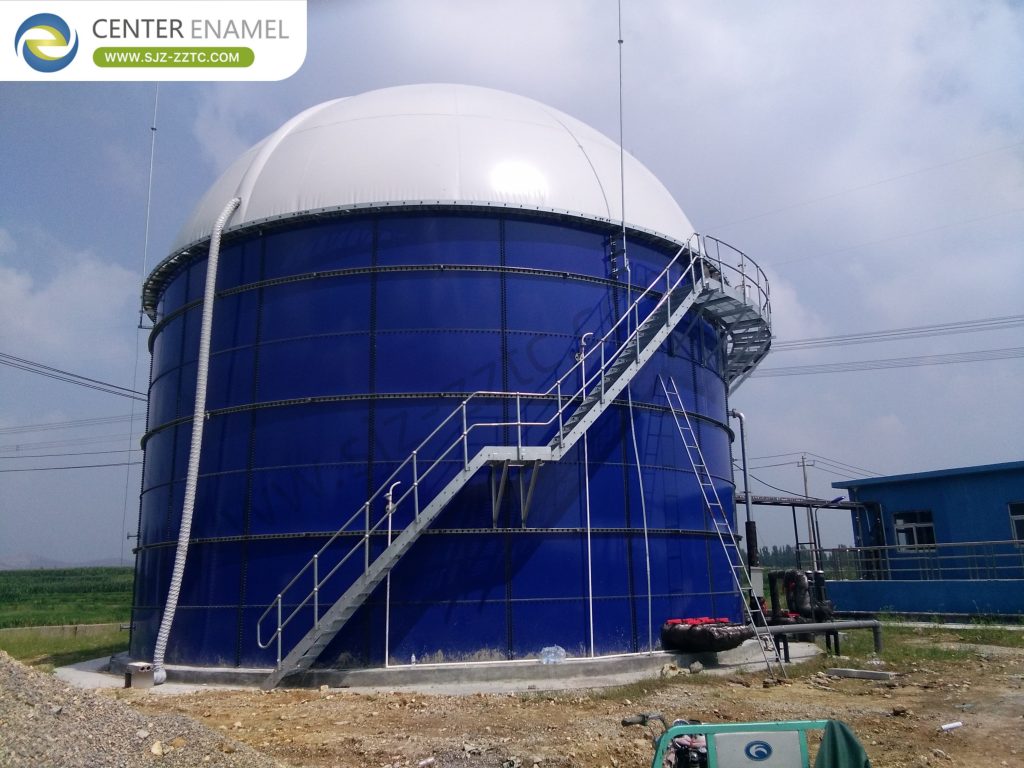
GFS tanks are assembled on-site from prefabricated panels, with short construction periods and support for expansion, relocation, and reuse-advantages distinctly different from immovable concrete tanks. Concrete tank pouring requires formwork, rebar tying, pouring, and long curing periods, with a single tank construction taking months. Rain, snow, and low temperatures force work stoppages and delays. Once poured, they are permanent fixed structures that cannot be dismantled, expanded, or relocated-project relocation means complete abandonment.
GFS tank panels are all factory-prefabricated, transported to site, and directly assembled in panels with simple procedures. Construction can proceed even in low-temperature, light-rain conditions, with installation time only one-third that of concrete tanks-construction schedules are controllable. For expansion, additional steel panels can be installed to increase volume; for plant relocation, tanks can be fully disassembled with panels transported to new sites for reassembly and reuse, significantly reducing material and construction costs for new construction and reconstruction. This is ideally suited for short-term environmental projects, phased expansion projects, and relocated construction projects.
Table 1: GFS Tanks vs. Concrete Tanks
| Comparison Item | GFS Tanks | Concrete Tanks |
| Construction period | One-third of concrete tanks | Months per tank |
| Weather impact | Works in low temperature, light rain | Rain, snow, low temperature cause stoppage |
| Expansion | Add panels to increase volume | Difficult, permanent structure |
| Relocation | Fully disassembled and reused | Abandoned |
| Best suited for | Short-term, phased, relocated projects | Permanent fixed sites |
What Is the USR Process?
USR, or Upflow Solids Reactor, is an upflow anaerobic process modified for high-suspended-solids, high-solids organic wastewater, specifically designed to solve problems of clogging, sludge washout, and uneven reaction common in traditional anaerobic processes for high-solids wastewater. The process eliminates complex three-phase separators, simplifies internal structure, and relies on upflow hydraulics to promote thorough mixing of solid materials and anaerobic sludge. No strict granular sludge formation conditions are required-flocculent sludge can operate stably. The key feature is high solids tolerance and impurity resistance, with very high influent suspended solids tolerance. It is a dedicated high-efficiency anaerobic process for livestock manure, agricultural organic waste, and high-solids livestock wastewater, specifically developed for agricultural and environmental applications. When paired with GFS Tanks, the USR process forms the backbone of our Anaerobic Solutions for poultry farm wastewater.
Where Livestock Wastewater Comes From
Livestock wastewater is the core agricultural pollution wastewater from large-scale poultry, livestock, and aquaculture operations, generated primarily during farming operations and facility cleaning. Poultry and livestock wastewater is the main component, including wash water from pig, cattle, and poultry housing, manure and urine seepage, and facility washdown-rich in livestock metabolic residues. Aquaculture wastewater comes from periodic pond water exchange and pond cleaning, with feed residues and metabolic waste as pollutants. Wastewater is primarily generated in peri-urban and rural farming areas. Small-scale farmers lack adequate collection facilities, with wastewater discharged directly to land and water. Large-scale farms have collection systems for centralized treatment, with water production varying with production cycles and cleaning frequency.
Bangladesh Large-Scale Poultry Farm Manure Resource Recovery Project
Targeting local poultry farm manure resource recovery with daily treatment of 47 tons. Influent COD, BOD, SS as high as 50,000 mg/L, 25,000 mg/L, 50,000 mg/L-after CSTR + UASB anaerobic treatment, all three parameters reduced to below 200 mg/L, 100 mg/L, and 100 mg/L-effluent compliant with local environmental discharge standards. Project produces approximately 4,900 m³ biogas daily-each m³ biogas can generate 2 kWh of electricity, with daily power generation of 9,800 kWh-simultaneously achieving pollutant reduction and clean energy recovery. This is a benchmark project for livestock waste recycling in Southeast Asia.
Table 2: Bangladesh Poultry Farm Manure Treatment Performance
| Parameter | Influent (mg/L) | Effluent (mg/L) | Removal Rate |
| COD | 50,000 | <200 | >99.6% |
| BOD | 25,000 | <100 | >99.6% |
| SS | 50,000 | <100 | >99.8% |
| Biogas Production | - | 4,900 m³/day | - |
| Power Generation | - | 9,800 kWh/day | - |
Center Enamel Development History
Center Enamel has been deeply engaged in the environmental bolted storage equipment field for over 30 years. Starting with proprietary enamel anti-corrosion material technology, the company has gradually completed the full-industry-chain upgrade from a single tank manufacturer to a comprehensive environmental EPC service provider. Throughout its 30+ year history, the company has been recognized as a National High-Tech Enterprise, National Specialized and Sophisticated "Little Giant," Manufacturing Single Champion, and Provincial Green Factory. It has successfully delivered over 30,000 environmental projects globally, establishing itself as a leading enterprise in the global GFS tank storage industry. The company has fully integrated the entire chain from enamel frit R&D, intelligent environmental equipment manufacturing, to EPC project contracting-every business breakthrough has been achieved through proprietary core anti-corrosion technology.
Professional Construction Team Manpower Reserve
Center Enamel has established its own domestic and international certified construction teams, with regular practical training on GFS tank installation and overseas construction standards for various countries. Domestically, regional construction teams cover multiple zones, capable of simultaneously deploying multiple teams for large tank farm projects. Internationally, cross-border professional installation teams are equipped to various country construction standards-sufficient manpower reserves ensure uninterrupted construction delivery for remote African sites, high-standard European/American facilities, and other projects.
Ready to upgrade your poultry farm wastewater treatment with proven GFS Tanks and Anaerobic Solutions?
Contact Center Enamel today for a customized design and a free project consultation tailored to your farm's needs.
Let's turn your poultry manure into biogas and clean energy-reach out to our team and start your project with confidence.
FAQ
1. Why are GFS Tanks preferred for poultry farm wastewater projects?
GFS Tanks offer factory-prefabricated panels, one-third the construction time of concrete tanks, and full support for expansion, relocation, and reuse. Their corrosion resistance handles the high ammonia and sulfide conditions typical of poultry wastewater.
2. How do Anaerobic Solutions like USR handle high-solids poultry manure?
The USR process tolerates high suspended solids without requiring granular sludge. It resists clogging, operates stably with flocculent sludge, and pairs with GFS Tanks to deliver reliable biogas recovery and effluent compliance.
3. What results has Center Enamel achieved in poultry farm projects?
In Bangladesh, our system treats 47 tons daily, reduces COD, BOD, and SS to below 200/100/100 mg/L, and produces 4,900 m³ biogas and 9,800 kWh of electricity per day.