
How We Use Anaerobic Technologies to Treat High-Strength Brewery Wastewater?
Brewing-whether beer, liquor, or wine-ranks among the most water-intensive segments of the food industry. For every batch produced, breweries discharge large volumes of concentrated organic effluent through soaking, mashing, fermentation, distillation, and bottling. Treating this wastewater efficiently is no longer just a compliance task; it is an opportunity to recover biogas, cut energy bills, and protect receiving waters. This is precisely where Anaerobic Technologies shine, and where a mature EPC Solution Provider can turn a regulatory burden into a long-term asset.
Where Brewery Wastewater Actually Comes From
To design the right treatment train, engineers must first understand the source. Brewery effluent is generated across the entire production chain: raw material soaking and washing, saccharification and fermentation, distillation and purification, and filling and packaging. The major streams include still bottoms, fermentation yellow water, spent mash, and raw-material soaking wastewater, supplemented by equipment and pipeline washing, floor cleaning, maintenance runoff, and cooling water.
Discharge patterns are highly intermittent and seasonal-volumes surge in peak production seasons and drop during off-seasons. Large breweries usually operate unified collection systems, while small and medium facilities face dispersed collection and frequent uncontrolled discharge concentrated around the brewhouse. A robust treatment system must therefore tolerate wide swings in flow and concentration, a requirement that favors flexible, shock-load-resistant Anaerobic Technologies over rigid, over-designed conventional plants.
Why Anaerobic Technologies Match Brewery Effluent
The competitive landscape already points in this direction. Across food processing, pharmaceutical fermentation, alcohol brewing, and chemical industries, UASB, EGSB, and IC anaerobic reactors are widely adopted as the pretreatment backbone for high-concentration organic wastewater. Their appeal lies in high loading rates, compact footprints, and stable operation-exactly the traits that brewers need when site space is limited and production schedules leave no room for extended shutdowns.
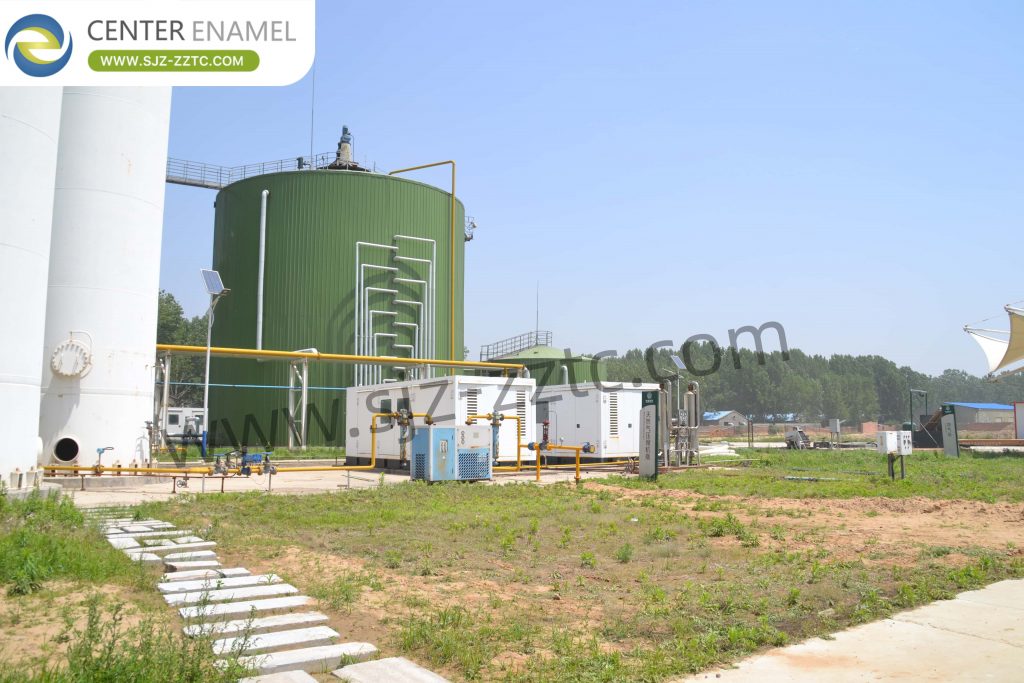
Because these reactors sit inside steel tank shells, corrosion resistance and gas-tightness directly determine long-term operational stability. This is why glass-fused-to-steel (GFS) tanks have become the preferred envelope for anaerobic digesters: they outlast concrete and ordinary steel in the hot, humid, corrosive environment of brewery effluent, ensuring the Anaerobic Technologies inside perform as designed for decades rather than years.
The IC Reactor as a Third-Generation Core
Among anaerobic systems, the Internal Circulation (IC) reactor represents the third generation of high-efficiency anaerobic treatment, built upon the proven UASB foundation. Its defining innovation is the built-in gas-lift internal circulation system, which recirculates wastewater autonomously without external return pumps.
The reactor is configured in two zones: a lower main reaction zone and an upper polishing zone. Biogas-driven gas lift creates hydraulic internal circulation that sharply raises upflow velocity and intensifies contact between sludge and pollutants. The result is exceptional compactness combined with high-rate degradation-engineered specifically for high-concentration, high-flow industrial organic wastewater. For modern brewery treatment trains, the IC reactor has become the core process, delivering energy savings, minimal footprint, and stable effluent in a single vessel.
From Tank Manufacturer to Integrated EPC Solution Provider
Technology alone is not enough. Delivering an anaerobic treatment plant that actually performs requires process design, tank supply, reactor installation, electrical and automation work, commissioning, and long-term O&M support under one accountable roof. Over 30+ years, Center Enamel has evolved precisely along this path.
Starting with proprietary enamel anti-corrosion material technology, the company has built a full-industry-chain upgrade from a single tank manufacturer into a comprehensive EPC Solution Provider. Every milestone-enamel frit R&D, intelligent environmental equipment manufacturing, and EPC project contracting-has been driven by proprietary core anti-corrosion technology. Today, Center Enamel is recognized as a National High-Tech Enterprise, a National Specialized and Sophisticated "Little Giant," a Manufacturing Single Champion, and a Provincial Green Factory, with more than 30,000 environmental projects delivered globally.
Material Technology That Outlasts the Field
At the heart of Center Enamel's advantage is what happens inside the tank. The company has independently developed over 200 anti-corrosion enamel formulations and proprietary double-sided double-layer enameling technology, giving GFS tanks an anti-corrosion service life exceeding 30 years-far beyond concrete and ordinary equipment. This durability makes the tanks suitable for the most demanding global conditions, including high-corrosion brewery wastewater and biogas fermentation environments.
That material edge is reinforced by a full-chain professional team covering R&D, design, marketing, installation, and after-sales. The R&D group is led by national-level materials technology experts specializing in enamel frit and tank anti-corrosion, supplemented by external senior environmental engineering and mechanical structure engineers. Operating through proprietary laboratories with ongoing university collaboration, the team runs year-round durability pilot tests and long-term corrosion simulation, iterating specialized formulations for high-salinity wastewater, strong acid/alkali POME, and high-organic livestock manure.
Delivering Worldwide, from Africa to Europe
Technology and team mean little without execution. Center Enamel maintains its own domestic and internationally certified construction crews, with regular practical training on GFS tank installation and country-specific overseas standards. Domestic regional teams can deploy simultaneously across multiple zones for large tank farms, while cross-border installation teams are equipped to various national building codes-ensuring uninterrupted construction delivery for remote African sites and high-standard European and American facilities alike.
| Capability / Project Dimension | Detail |
| Industry tenure | 30+ years in bolted storage and environmental equipment |
| Global project delivery | 30,000+ environmental projects across 100+ countries |
| Core anaerobic processes | UASB, EGSB, IC internal circulation reactors |
| Enamel formulations | 200+ proprietary anti-corrosion formulas |
| Tank service life | 30+ years with double-sided double-layer enameling |
| Construction coverage | Domestic multi-zone teams + certified international crews |
| Key honors | National High-Tech Enterprise, "Little Giant," Manufacturing Single Champion, Provincial Green Factory |
The table below summarizes how these dimensions come together across the sectors Center Enamel serves, giving brewery owners confidence that the same engineered system has already proven itself in adjacent high-organic effluents.
| Served Sector | Typical Effluent Characteristic | Anaerobic Technology Deployed |
| Brewery & distillery | Still bottoms, fermentation yellow water, spent mash | IC / UASB anaerobic + aerobic polishing |
| Palm oil mill (POME) | Strong acid/alkali, high organic load | CSTR / UASB with GFS digesters |
| Livestock & manure | High suspended solids, high nitrogen | USR anaerobic digestion |
| Food processing | Seasonal, intermittent high-strength discharge | EGSB / IC shock-load tolerant reactors |
| Municipal wastewater | Steady, diluted flow with nutrient recovery | A2O / MBR treatment trains |
Frequently Asked Questions
What makes Center Enamel an EPC Solution Provider rather than a tank supplier?
Center Enamel owns the full chain-enamel frit R&D, GFS tank manufacturing, anaerobic reactor engineering, on-site installation by certified crews, and after-sales support. Brewery owners deal with one accountable partner from process design through commissioning, rather than coordinating multiple vendors.
Which Anaerobic Technologies are best for brewery wastewater?
UASB, EGSB, and IC reactors are all widely used for high-strength brewery effluent. The IC reactor is preferred for high-volume, high-concentration flows because its internal circulation needs no external recirculation pump and handles seasonal shock loads with a compact footprint.
How long do Center Enamel GFS tanks last in brewery service?
With 200+ proprietary enamel formulations and double-sided double-layer enameling, GFS tanks deliver an anti-corrosion service life exceeding 30 years in the hot, humid, corrosive conditions of brewery wastewater and biogas fermentation.
Planning a new brewery wastewater plant or retrofitting an aging digester? Share your daily brew volumes and local discharge limits, and our engineers will recommend the right anaerobic process and tank configuration within days. Contact Center Enamel today-let us design, build, and support a treatment system that turns your brewery effluent into recovered biogas and compliant water.