
How We Apply USR Anaerobic Technologies to Treat Biogas Plant Digestate with GFS Tanks
Global biogas policy has evolved from a purely waste treatment orientation to a core component of energy strategy and climate action. This shift is accelerating demand for advanced anaerobic technologies and reliable GFS tanks across the biogas industry.
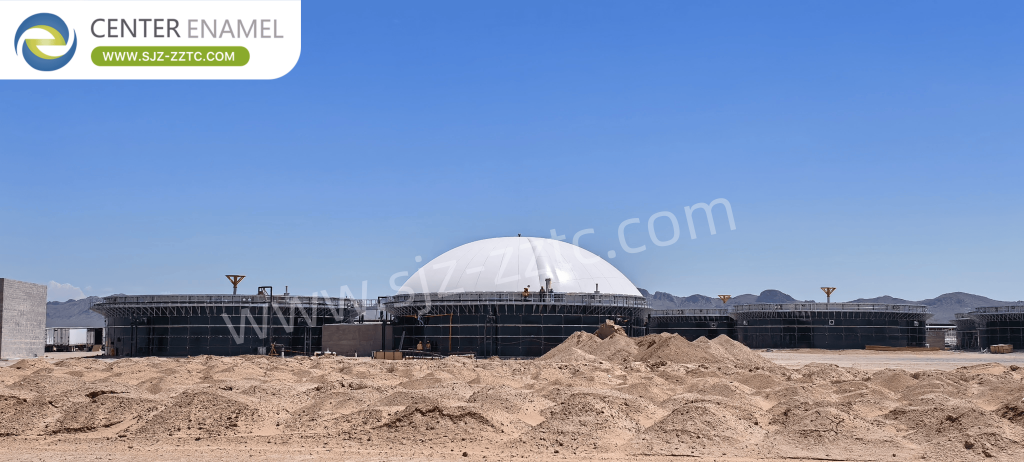
The European Union, through the Renewable Gas Directive and REPowerEU Plan, has set mandatory targets for biomethane production growth. The Carbon Border Adjustment Mechanism incentivizes member states to improve organic waste treatment rates, incorporating biogas into the green hydrogen certification system. The United States, under relevant energy legislation, provides multiple incentives-production tax credits and investment tax credits-for biogas and biomethane projects, and includes biogas in the Renewable Fuel Standard system. China has incorporated biogas into its rural revitalization strategy and the “Rural Energy Revolution” priority development catalog, updated national standards for automotive biomethane, and promotes biomethane integration into urban gas pipeline networks.
The global policy framework is shifting from fiscal subsidy-driven to carbon market-driven and quota-mandatory approaches, with more countries incorporating biogas into their Nationally Determined Contributions. This policy momentum creates unprecedented opportunities for anaerobic technologies and GFS tanks in biogas plant digestate treatment.
Why GFS Tanks Outperform Concrete in Complex Operating Conditions
Center Enamel has independently developed over 200 specialized enamel frit formulations and supporting patents, capable of customizing anti-corrosion enamel based on customer storage media. The adaptability of GFS tanks is comprehensively superior to concrete tanks.
Concrete tanks use a single material, only suitable for neutral clean water storage. When storing corrosive materials such as livestock manure, palm oil mill effluent, chemical wastewater, food waste digestate, or high-salinity wastewater, additional anti-corrosion linings must be applied. These linings are prone to failure, preventing long-term stable operation and cannot adapt to alternating high/low concentration storage conditions.
GFS tanks can be specifically formulated with specialized enamels resistant to strong acids, strong alkalis, high organic content, and high salinity. A single tank can switch between multiple wastewater and fermentation feedstock storage requirements. They are universally applicable across biogas anaerobic digestion, municipal wastewater, livestock farming, food processing, and industrial water treatment scenarios-eliminating the need to rebuild tanks for media changes and perfectly meeting the needs of diversified, multi-condition environmental protection projects.
The following comparison illustrates the fundamental differences:
| Comparison Factor | Traditional Concrete Tanks | Center Enamel GFS Tanks |
| Anti-corrosion service life | 5–8 years before major degradation | Exceeding 30 years |
| Surface structure | Highly porous; prone to penetration | Dense, non-porous enamel finish |
| Maintenance requirement | Frequent lining repairs | No internal lining repairs needed |
| Chemical resistance | Limited; degrades with acids/alkalis | Resists acids, alkalis, salts, microbial corrosion |
| Leakage risk | High after 5–8 years | Negligible |
| Adaptability | Poor for high-salinity/high-corrosion media | Excellent for POME, manure, chemical wastewater |
USR Reaction Process: How Anaerobic Technologies Handle High-Solids Wastewater
Within the anaerobic technologies toolkit, the USR (Upflow Solids Reactor) process represents a significant innovation for challenging waste streams. High-solids organic wastewater, after simple pretreatment to remove large debris, is uniformly fed into the reactor through the bottom distribution system.
The upward flow drives solid substrates and anaerobic sludge to slowly rise and thoroughly mix. In the sealed anaerobic environment, microorganisms sequentially hydrolyze/acidify and then methanogenically ferment, degrading macromolecular organic pollutants and generating biogas and treated water. Without complex separation structures, gentle hydraulic disturbance prevents clogging.
The mixed liquor rises to the upper portion of the reactor where natural gas-liquid-solid separation occurs. Biogas is collected, effluent overflows, and solid sludge and unreacted substrate settle back to the lower reaction zone for continued reaction. A small amount of aged sludge is periodically discharged, ensuring continuous stable operation. This is how anaerobic technologies deliver reliable performance for high-solids organic wastewater treatment.
Biogas Plant Digestate Standardized Treatment Solutions
Treatment of biogas plant digestate focuses on nitrogen and phosphorus removal, desalination, and polishing-suitable for the unique water quality of low organics and high nutrients. The mainstream approach is “pretreatment + biological nitrogen removal + advanced polishing.”
Pretreatment is minimal, requiring only simple filtration to remove trace suspended solids-no complex solid-liquid separation or organic degradation steps required. The main stage uses AO or A²O multistage biological nitrogen removal processes to target high ammonia nitrogen, total nitrogen, and total phosphorus-addressing the core eutrophication issue.
For high-salinity digestate, coagulation/sedimentation and membrane treatment for desalination ensure effluent compliance. The entire process requires no high-intensity organic degradation units, with simplified flow, stable operation, strong shock load resistance, convenient O&M, and suitability for the stable single-component digestate. Combined with GFS tanks for storage and anaerobic technologies for treatment, biogas plants achieve complete digestate management.
Case Study: Bangladesh Large-Scale Poultry Farm Manure Resource Recovery Project
This project demonstrates how GFS tanks and anaerobic technologies combine to deliver measurable results. Targeting local poultry farm manure resource recovery with daily treatment of 47 tons:
| Parameter | Influent | Effluent |
| COD | 50,000 mg/L | Below 200 mg/L |
| BOD | 25,000 mg/L | Below 100 mg/L |
| SS | 50,000 mg/L | Below 100 mg/L |
Process: CSTR + UASB anaerobic treatment
Biogas production: Approximately 4,900 m³ daily
Power generation: 9,800 kWh daily (2 kWh per m³ biogas)
Outcome: Full compliance with local environmental discharge standards
This benchmark project for livestock waste recycling in Southeast Asia demonstrates simultaneous pollutant reduction and clean energy recovery using GFS tanks and anaerobic technologies.
Engineering Design Excellence for Global Biogas Projects
The design team at Center Enamel includes senior engineers registered in the Hebei Provincial Science and Technology Expert Database, with design standards aligned with strict European/American high-end equipment safety standards. The team provides complete integrated design for differentiated overseas projects in livestock biogas, POME, municipal wastewater, hazardous waste storage, seawater desalination, and more-covering tank structure, anti-corrosion/sealing systems, biogas piping, and anaerobic process integration.
Pre-design thoroughly investigates local seismic zone, wind pressure, soil bearing capacity, water quality corrosivity, and local environmental discharge standards-applying thickened panels, reinforced anchored bases, and optimized sealing/corrosion structures as needed. Complete customized equipment solutions can be tailored to customer plant area, wastewater load, treatment targets, and budget-balancing safety, economics, and local adaptation-providing compliant, stable, and highly adaptable equipment structural design support for global environmental projects.
Full-Industry-Chain Integrated Delivery Capability
Center Enamel is the only company globally integrating proprietary enamel frit R&D, self-manufactured tanks, and EPC general contracting-full-process self-control from solution design, equipment production, cross-border logistics, overseas construction, to post-construction O&M-significantly reducing client coordination and time costs.
This integrated approach ensures that every GFS tank and anaerobic technologies solution is delivered with consistent quality, optimized performance, and seamless project execution.
Frequently Asked Questions
What makes GFS tanks suitable for biogas plant digestate storage?
GFS tanks feature a dense, non-porous enamel coating that resists acids, alkalis, salts, and microbial corrosion. With a service life exceeding 30 years and modular design, they provide reliable sealing for digestate storage and are fully compatible with anaerobic technologies.
How do anaerobic technologies like USR handle high-solids wastewater?
The USR process uses upflow hydraulics to mix solid substrates and anaerobic sludge without complex separation structures. This prevents clogging, eliminates the need for granular sludge formation, and enables stable operation with high suspended solids tolerance-ideal for livestock manure and agricultural organic waste.
Can Center Enamel provide complete biogas plant solutions?
Yes. Center Enamel integrates enamel frit R&D, tank manufacturing, and EPC contracting. We deliver complete solutions covering design, equipment production, logistics, construction, and O&M-ensuring seamless project execution for biogas plants worldwide.
Ready to Optimize Your Biogas Plant Digestate Treatment?
Center Enamel combines 30+ years of engineering expertise with proven anaerobic technologies and durable GFS tanks to deliver complete biogas solutions. Contact us to discuss your project requirements and receive a customized proposal.
Get your tailored biogas solution today-our engineers are ready to help.