
USR Process for Livestock Wastewater Treatment Project: Cost-Effective Manure Resource Recovery
The global livestock manure treatment policy system, with the US and EU as typical representatives, is shifting from end-of-pipe treatment to full-process nutrient management. The US establishes a manure management framework covering the entire livestock production process through Comprehensive Nutrient Management Plans. The EU, through the Nitrates Directive, strictly limits manure application amounts, with Germany and the Netherlands using tax instruments to mandate nitrogen and phosphorus recovery rates, and Denmark demonstrating distinctive features in livestock regulation and ecological compensation. The Netherlands uses a management mechanism linking manure treatment with phosphate quotas. China has issued a series of environmental regulations, with the current legal system providing comprehensive regulation of pollution from large-scale livestock operations.
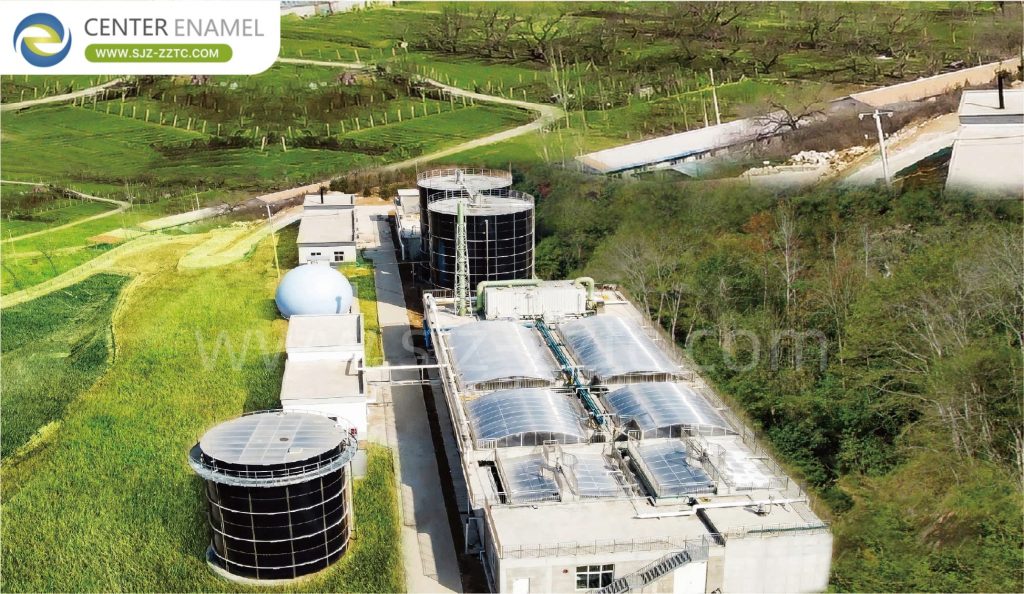
These regulatory shifts have created urgent demand for advanced treatment technologies that can recover resources while meeting strict discharge standards. The USR Process has emerged as a leading solution for Livestock Wastewater Treatment Project applications, particularly for high-solids agricultural wastewater that conventional anaerobic processes struggle to handle.
Where the USR Process Excels
Dedicated process for agricultural high-solids wastewater, primarily suitable for large-scale livestock manure, livestock soaking water, agricultural straw leachate, and livestock slaughterhouse high-solids wastewater. For high-suspended-solids, high-organics, high-impurity wastewater conditions, it is the core process for rural livestock pollution treatment and agricultural organic waste resource utilization. Suitable for township decentralized wastewater treatment and small to medium-sized agricultural enterprise wastewater treatment. Can serve as the primary process for large livestock base manure resource recovery, combining wastewater treatment with biogas recovery. Also suitable for various high-solids, easily clogged, difficult-to-treat organic wastewater pretreatment, with superior suitability in agricultural environmental applications compared to other anaerobic processes.
Cost Advantages of Livestock Wastewater Treatment
O&M costs are relatively low with excellent input-output ratio-the highest cost-effectiveness among the five wastewater types. Core treatment units are primarily physical separation, anaerobic digestion, and ecological polishing-no high-end precision equipment or expensive chemicals. Equipment is simple with low failure rates and low maintenance costs. Anaerobic digestion produces stable biogas for plant heating and power generation, offsetting energy costs. Ecological treatment units have virtually no ongoing O&M costs. Only periodic cleaning of sedimentation tanks and polishing ponds is required, with low labor costs. Manure solids, sludge, and digestate can be sold as resources, further reducing net treatment costs.
Proven Success: Bangladesh Large-Scale Poultry Farm Manure Resource Recovery Project
Targeting local poultry farm manure resource recovery with daily treatment of 47 tons. Influent COD, BOD, SS as high as 50,000 mg/L, 25,000 mg/L, 50,000 mg/L-after CSTR + UASB anaerobic treatment, all three parameters reduced to below 200 mg/L, 100 mg/L, and 100 mg/L-effluent compliant with local environmental discharge standards. Project produces approximately 4,900 m³ biogas daily-each m³ biogas can generate 2 kWh of electricity, with daily power generation of 9,800 kWh-simultaneously achieving pollutant reduction and clean energy recovery. This is a benchmark project for livestock waste recycling in Southeast Asia.
Table 1: Bangladesh Poultry Farm Project Performance Data
| Parameter | Influent (mg/L) | Effluent (mg/L) | Removal Rate |
| COD | 50,000 | <200 | >99.6% |
| BOD | 25,000 | <100 | >99.6% |
| SS | 50,000 | <100 | >99.8% |
Table 2: Biogas and Energy Recovery Output
| Metric | Value |
| Daily Treatment Capacity | 47 tons |
| Daily Biogas Production | 4,900 m³ |
| Electricity per m³ Biogas | 2 kWh |
| Daily Power Generation | 9,800 kWh |
Center Enamel's Global Market Presence
Center Enamel's global business covers over 100 countries and regions, with 30,000+ successful overseas projects. Products are exported to all major regions including Europe, the Americas, the Middle East, Africa, Southeast Asia, and Latin America, with a well-established global localized service network.
Domestically, the company is organized into North, South, Central, East, and Southwest marketing regions, covering environmental, water utility, livestock, and petrochemical customers nationwide. Internationally, the company adopts a "standardized products + localized adaptation" model-adjusting tank corrosion protection, sealing, and pressure standards for different national water quality and environmental regulations-with multiple global landmark projects: large-volume GFS tanks in Italy, 20 m tower water supply tanks in Colombia, coastal seawater treatment tanks in Costa Rica, large municipal wastewater aluminum dome projects in Saudi Arabia, etc. The company has established long-term stable strategic partnerships with many Fortune 500 companies.
Flexible and Efficient Service Delivery System
Center Enamel's own cross-border construction teams + global localized agent network-modular GFS tank assembly with short construction periods and dismantlable/reusable capability-suitable for overseas short-term projects, phased expansions, and relocation needs-full-lifecycle after-sales O&M support ensuring long-term stable client operations.
Single and Double Membrane Roof for Biogas Storage Projects
Single and Double Membrane Roofs are proprietary airtight tank cover systems for anaerobic digestion and biogas storage projects, specifically developed for biogas collection and odor containment, representing a benchmark lightweight sealing solution for fermentation tanks. The single-layer membrane roof features a simple structure with economical cost, meeting basic biogas containment needs. The double-layer membrane roof consists of inner and outer corrosion-resistant membrane materials, with pressurized air in the interlayer forming rigid support, providing outstanding thermal insulation that reduces biogas condensate formation inside the tank, with enhanced wind and snow load resistance suitable for high-altitude and windy outdoor sites.
The membrane material is specialized aging-resistant and biogas-slurry-corrosion-resistant PVDF membrane, which will not leak or degrade from long-term contact with biogas or hydrogen sulfide. The flexible structure accommodates tank settlement and slight deformation without cracking or gas leakage. The lightweight design eliminates heavy steel support trusses, significantly reducing the load on the tank and foundation, saving construction costs. The roof integrates biogas outlets, safety pressure relief valves, and access channels, fully enabling closed gas collection for anaerobic fermentation tanks, recovering biogas for power generation and heating while blocking odor diffusion to meet environmental odor control requirements. It is widely used in large-scale livestock biogas projects, municipal sludge anaerobic digestion, and food waste fermentation projects, compatible with large-volume glass-fused-to-steel anaerobic tanks, with fast construction and simple maintenance requiring only periodic membrane seal integrity checks, offering significant overall engineering advantages.
Ready to upgrade your livestock waste management with the USR Process? Contact Center Enamel today for a customized solution tailored to your project scale and regional regulations.
Let our engineering team help you turn manure into value-reach out now to discuss your livestock wastewater treatment project requirements.
Frequently Asked Questions
What is the USR Process used for?
The USR Process is designed for agricultural high-solids wastewater, including livestock manure, soaking water, straw leachate, and slaughterhouse wastewater. It excels in high-suspended-solids, high-organics conditions.
How cost-effective is livestock wastewater treatment?
O&M costs are low with excellent input-output ratio. Anaerobic digestion produces biogas for heating and power, offsetting energy costs, while manure solids and digestate can be sold as resources.
Can Center Enamel handle overseas projects?
Yes. Center Enamel covers 100+ countries with 30,000+ overseas projects, offering modular GFS tank assembly, localized adaptation, and full-lifecycle after-sales support.