
Vietnam Biogas Project: GFS Tanks + Double Membrane Roof for Livestock Waste Management
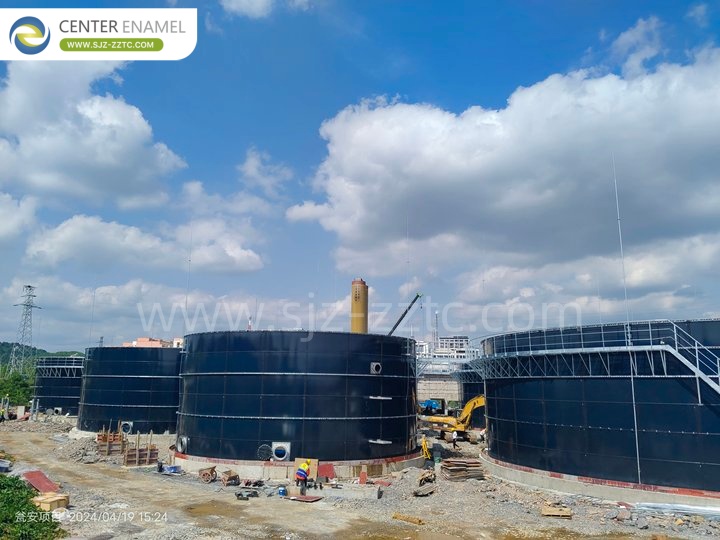
Vietnam has experienced remarkable economic growth over the past two decades, but its energy infrastructure has struggled to keep pace. Rapid industrialization and rising household consumption have led to frequent electricity shortages, particularly in rural regions of the Mekong Delta, Central Highlands, and northern provinces. Many livestock farms rely on an unstable grid or expensive diesel generators to power essential operations like water pumping, ventilation, and feed processing. At the same time, Vietnam is home to one of Southeast Asia’s largest livestock sectors, with millions of pigs, poultry, and cattle producing vast amounts of manure daily. Instead of allowing this waste to pollute waterways and emit greenhouse gases, farmers can invest in a Biogas Project to transform manure into a reliable, on-farm energy source that operates independently of the national grid.
Advantages of Converting Animal Manure to Biogas on Vietnamese Farms
Vietnam’s pig population alone exceeds 25 million head, with major farming clusters in Dong Nai, Hanoi’s outskirts, and the Mekong Delta. Without proper treatment, manure runoff has become a leading cause of surface water contamination. A well-executed Biogas Project addresses both environmental and economic challenges. Key benefits include:
Energy self-sufficiency: Biogas can power generators for lighting, feed mixers, water pumps, and egg incubators.
Reduced diesel and grid dependence: Farms cut monthly electricity bills and eliminate fuel transport costs.
Methane emission reduction: Capturing biogas prevents the release of a potent greenhouse gas.
Improved farm hygiene: Closed digestion systems reduce flies, odors, and pathogen risks.
High-quality organic fertilizer: The post-digestion slurry is rich in nitrogen and phosphorus, reducing the need for chemical fertilizers.
Compliance with Vietnamese regulations: The government is tightening environmental standards for livestock operations; biogas helps farms stay ahead.
For Vietnamese pig farms, chicken hatcheries, and dairy cooperatives, a Biogas Project is both an environmental responsibility and a smart business investment.
Center Enamel: Professional Biogas Project Design and EPC Services
With over 36 years of industry leadership, Center Enamel has become Asia’s largest manufacturer of Glass-Fused-to-Steel (GFS) tanks and a comprehensive provider of Biogas Project systems. The company’s journey began with enamel frit production and has since expanded into full EPC (Engineering, Procurement, and Construction) delivery, including process packages and complete equipment supply.
Center Enamel holds internationally recognized certifications such as CE/EN1090, ISO9001, NSF61, WARS, and EN28765, and designs in accordance with AWWA D103, OSHA, and EuroCode standards. Their services cover site evaluation, process design, equipment fabrication, installation supervision, and in-depth operator training. For Vietnam’s diverse agricultural landscape-from the Red River Delta to the Mekong basin-Center Enamel delivers robust, climate-adapted biogas solutions.
Pretreatment Stage + CSTR Process: Core of Anaerobic Digestion
A successful Biogas Project starts with thorough feedstock preparation. Center Enamel’s pretreatment stage is engineered for the typical composition of Vietnamese farm waste:
Screening: Removes large debris such as plastic sheeting, stones, rice husks, and rope that could block pipes or damage pumps.
Crushing: Reduces organic particle size, creating more surface area for anaerobic bacteria to colonize and digest.
Sand settling: Extracts heavy particles like sand and soil that would otherwise accumulate at the bottom of the digester, reducing usable volume.
Homogenization tank: Collects and blends incoming waste to balance flow rates and organic load, ensuring a stable, consistent feed to the main reactor.
Once pretreatment is complete, the heart of the system is the CSTR Process. CSTR stands for Continuous Stirred-Tank Reactor, an anaerobic digestion technology where fermenting material and microorganisms remain in a continuously agitated, uniform mixture inside a sealed tank. A mechanical stirring system operates either non-stop or at set intervals while the temperature is maintained at a steady mesophilic range (typically 35–37°C).
This constant mixing delivers four critical benefits: it keeps solid particles in suspension, prevents the formation of a floating scum layer, eliminates temperature stratification, and maximizes contact between bacteria and fresh organic matter. The result is highly consistent Biogas Project performance with superior volatile solids reduction-even when processing challenging feedstocks like duck manure with high bedding content or thick pig slurry.
Biogas naturally rises to the top of the reactor and is collected through the roof system. The remaining digestate exits the tank for solid-liquid separation and subsequent agricultural use.
GFS Tanks and Double Membrane Roof: Two Major Products for Biogas Projects
Center Enamel supplies two primary products for Biogas Project infrastructure: GFS Tanks and two roof configurations-Glass-Fused-to-Steel (GFS) roof and double membrane roof.
GFS Tanks (Glass-Fused-to-Steel) have become a preferred choice for anaerobic digesters and biogas storage across Vietnam. The glass coating is fired onto steel at extremely high temperatures, creating a vitreous, non-porous, and chemically resistant surface. This coating withstands the aggressive environment inside digesters-including hydrogen sulfide, volatile fatty acids, and fluctuating pH levels. With an annual production capacity of 250,000 sheets, Center Enamel manufactures bolted GFS tanks that are shipped in standardized containers and assembled on site. This modular approach is particularly valuable for Vietnamese farms where local construction resources may be inconsistent.
Roof selection depends on local weather patterns, site constraints, and project economics:
GFS roof is recommended for locations exposed to typhoons, heavy monsoon rains, or coastal areas with high wind speeds. It is also suitable when a separate ground-mounted gas holder is desired for easier maintenance access. This roof type is practical for tank diameters below 23 meters.
Double membrane roof is the standard choice for typical Vietnamese conditions. Its key advantages include lower material costs and a reduced land footprint-the roof integrates gas storage directly above the digester, eliminating the need for a separate ground-mounted gas holder. This saves valuable land and reduces foundation construction expenses, which is especially beneficial for farms with limited space in densely populated areas like the Red River Delta.
Both roof designs are fully compatible with the CSTR Process, maintaining an airtight anaerobic seal while enabling efficient biogas collection and temporary storage.
Supporting Equipment for a Complete Biogas System
A fully functional Biogas Project requires more than just a digester. Center Enamel supplies a complete range of auxiliary equipment:
Gas Holder: Provides storage capacity to balance biogas production with generator or boiler demand.
Black Membrane: Used for lined treatment ponds, emergency overflow containment, or secondary effluent storage.
Solid-liquid Separator: Splits digestate into a solid fraction (for composting, animal bedding, or sale) and a liquid fertilizer fraction.
Torch System: Safely burns surplus biogas when energy recovery is not required, preventing uncontrolled methane release.
Lifting Pump: Transfers raw manure, slurry, or digestate between different treatment stages as needed.
Dehydration and Desulfurization Tank: Removes moisture and corrosive hydrogen sulfide (H₂S) from raw biogas, protecting generators, boilers, and piping.
Screw Sludge Dewatering Machine: Reduces the volume of sludge generated from pretreatment or post-digestion handling, lowering disposal costs.
This complete equipment package ensures that Biogas Project systems operate reliably, safely, and with minimal daily labor intervention.
Efficient Installation Capabilities of Center Enamel
Construction speed is a critical factor for Vietnamese projects, especially given the country’s distinct wet and dry seasons. Center Enamel’s bolted GFS Tanks are prefabricated inside a 150,000 m² production facility and delivered in standardized sea-freight containers. On-site assembly requires no welding or hot work-only bolting, sealing, and basic mechanical fastening-which dramatically reduces installation time compared to traditional cast-in-place or welded structures. A complete digestion system can typically be erected in weeks rather than months, allowing farms to start benefiting from their Biogas Project much sooner.
All components are designed for straightforward assembly by local crews under remote or on-site guidance from Center Enamel’s experienced technical supervisors. The company also provides commissioning support and structured, hands-on training for farm operators and maintenance staff. For projects in Vietnam’s key agricultural regions-Dong Nai, Long An, Binh Duong, or the Mekong Delta provinces-this efficient installation approach minimizes weather-related delays and keeps capital expenditure predictable.
Center Enamel: A One-Stop Biogas Project Solution Provider for Vietnam
Center Enamel is not simply a tank manufacturer-it is a one-stop solution provider for complete Biogas Project systems. From initial feasibility assessments and process engineering to equipment manufacturing, on-site erection, and final commissioning, Center Enamel delivers turnkey solutions tailored to Vietnam’s agricultural and industrial environment. Their business scope includes EPC contracts, process packages, and individual equipment supply, all backed by international certifications and decades of practical field experience.
Consider a Vietnamese pig farm in Dong Nai province with 5,000 head. Center Enamel can engineer a CSTR Process system using GFS Tanks fitted with a double membrane roof, plus all auxiliary equipment (pumps, desulfurization, torch, solid-liquid separator). The generated biogas can fuel a generator set that supplies electricity for water aeration, lighting, feed preparation, and staff housing-replacing expensive grid power or diesel. The separated digestate solids can be sold as organic fertilizer to nearby fruit orchards or rice paddies, creating an additional revenue stream. Any excess biogas can be flared safely via the torch system.
Center Enamel manages the entire delivery process: site evaluation, permit assistance, civil works coordination, tank assembly, piping integration, generator connection, and staff training. This integrated approach reduces project risk, compresses delivery schedules, and guarantees a system that meets Vietnamese safety and environmental standards.
With exports to over 100 countries and more than 500 employees dedicated to water, wastewater, and biogas projects, Center Enamel has the capacity and expertise to support Vietnam’s renewable energy goals under the national Power Development Plan. Whether for a small family farm or a large industrial livestock operation, Center Enamel delivers durable, efficient, and long-lasting Biogas Project solutions.
Conclusion
Vietnam’s combination of rising energy demand, grid instability in rural areas, and abundant livestock waste makes Biogas Project investment highly attractive. By converting animal manure into biogas using the CSTR Process inside durable GFS Tanks with efficient double membrane roofs, farms can lower energy costs, manage waste responsibly, and generate additional revenue from digestate. Center Enamel provides everything from feedstock pretreatment to power generation-as a single, accountable partner. For Vietnamese farmers, agricultural cooperatives, and project investors, choosing Center Enamel means choosing a certified, proven, and dependable biogas partner.
FAQ
Q1: How does the CSTR Process handle the high water content typical of Vietnamese pig farm wastewater?
A1: The CSTR Process is highly adaptable to varying total solids levels. For Vietnamese farms where manure is often mixed with large volumes of wash water (resulting in 2–6% total solids), the continuous stirring ensures even distribution of microorganisms throughout the liquid. No additional thickening is required. Center Enamel’s design includes adjustable mixing speeds and hydraulic retention times optimized for dilute feedstocks.
Q2: Can the Biogas Project be expanded later if my farm grows?
A2: Yes. Center Enamel’s bolted GFS Tanks are modular by design. Additional tanks can be installed in parallel as herd size increases. The CSTR Process control system can be scaled to manage multiple reactors. Center Enamel provides expansion planning during the initial design phase, ensuring future growth does not require scrapping existing equipment.
Q3: What safety features are included in the double membrane roof for Vietnam’s typhoon season?
A3: The double membrane roof includes automatic overpressure and vacuum relief valves, flame arrestors, and lightning protection. For typhoon-prone areas, Center Enamel offers reinforced anchoring systems and can recommend the GFS roof option for extreme conditions. All roof systems are tested to withstand wind loads per international standards, and Center Enamel provides site-specific engineering for Vietnamese weather patterns.