
Vietnam Pig Manure Biogas Solutions: EPC Contractor with GFS Tanks+CSTR Process Solution
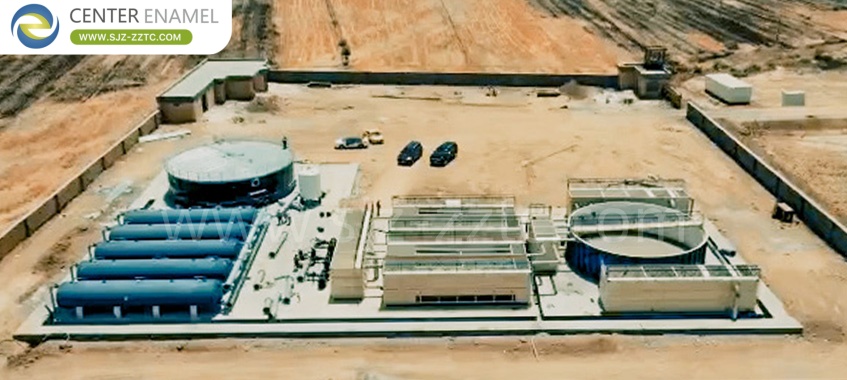
As Vietnam’s pig farming sector expands to meet domestic and export demand, the challenge of managing millions of tons of pig manure has become increasingly pressing. Converting this waste into renewable biogas offers a sustainable solution, reducing environmental pollution while generating clean energy. This article explores how advanced technologies, including the CSTR Process and durable GFS Tanks, are transforming pig manure into a valuable resource across Vietnam, with comprehensive services provided by a professional EPC Contractor.
The Growing Challenge of Pig Manure in Vietnam
Vietnam ranks among the world’s leading pork producers, with a pig herd of tens of millions. The rapid intensification of pig farming has led to massive concentrations of manure, which, if untreated, poses severe environmental risks, including water contamination, air pollution from methane emissions, and soil degradation . Traditional waste management methods often prove inadequate for large-scale operations. The urgent need for sustainable waste treatment is driving the adoption of biogas technology, which converts this environmental liability into a source of renewable energy . This shift is supported by both government and international initiatives aiming to reduce greenhouse gas emissions and promote a circular agricultural economy .
How Pig Manure Transforms into Biogas
Biogas production from pig manure is a natural biological process that occurs in an oxygen-free environment. The organic matter in the manure is broken down by anaerobic microorganisms over several stages—hydrolysis, acidogenesis, acetogenesis, and methanogenesis—to produce a gas mixture primarily composed of methane (55–70%) and carbon dioxide . This biogas can be captured and utilized for various energy needs, such as generating electricity for farm operations, heating, or upgrading to biomethane for injection into the national grid . The process not only creates renewable energy but also produces a nutrient-rich digestate that can be used as a biofertilizer, closing the nutrient loop . The captured biogas is a clean energy source that can significantly reduce a farm's dependence on grid electricity and lower operational costs .
The CSTR Process: A Core Technology
The CSTR Process (Continuous Stirred-Tank Reactor) is a highly effective anaerobic treatment technology for high-solids waste like pig manure . In a CSTR system, the manure and anaerobic microorganisms are continuously mixed within a sealed tank using a mechanical stirring device . This constant agitation ensures a uniform environment, preventing the formation of scum layers and sediment accumulation, which are common issues when treating suspended solids. By maintaining a constant temperature, the CSTR creates optimal conditions for microbial activity, resulting in stable and efficient biogas production . This technology is particularly suitable for Vietnam's tropical climate, ensuring consistent operation throughout the year.
Professional Biogas Project Design
Center Enamel provides professional Biogas Project design services as a leading EPC Contractor. Their expertise lies in tailoring comprehensive solutions to the specific conditions of Vietnam's pig farming industry. By integrating proven technologies like the CSTR Process with high-quality infrastructure, they engineer systems that are optimized for maximum biogas yield and long-term operational reliability. Their team conducts thorough evaluations of site-specific factors, including waste composition and daily volume, to ensure each project meets stringent environmental regulations and the client's energy goals .
GFS Tanks and Double Membrane Roof for Biogas Projects
GFS Tanks (Glass-Fused-to-Steel) and the Double Membrane Roof are the preferred solution for biogas projects in Vietnam. GFS Tanks are manufactured by fusing glass to steel at high temperatures (820°C–930°C), creating an inert, corrosion-resistant coating that can withstand the aggressive acids, ammonia, and hydrogen sulfide generated during the digestion process . This durability ensures a long service life of over 30 years with minimal maintenance. The Double Membrane Roof provides excellent airtightness for safe biogas collection and storage while optimizing costs by eliminating the need for a separate, ground-mounted gas holder .
Diverse Storage Tank and Cover Solutions
Center Enamel offers a variety of storage tanks and roof solutions to meet the specific requirements of different applications:
Glass-Fused-to-Steel (GFS) Tanks
The premier choice for biogas applications, offering outstanding corrosion resistance and durability .
Fusion Bonded Epoxy (FBE) Tanks
Engineered with a coating from AkzoNobel, they provide superior chemical resistance .
Stainless Steel Tanks
High-quality AISI 304/316 tanks designed for stringent requirements and harsh environments .
Roof Solutions
Aluminum Geodesic Dome: Provides advanced corrosion resistance and cost-effective construction .
Glass-Fused-to-Steel Roof: Offers airtightness for pressurized structures .
Aluminum Alloy Trough Deck: An economical option for odor control without airtightness .
FRP Roof: A suitable option for applications where airtightness is not required .
Comprehensive Biogas Supporting Equipment
A complete biogas plant requires a suite of auxiliary systems to ensure stable and efficient operation. These include:
Gas Holder: For variable-volume storage of the produced biogas .
Solid-Liquid Separator: To separate digestate into solid and liquid fractions .
Torch System: A critical safety component for burning off excess biogas .
Dehydration and Desulfurization Tank: For purifying raw biogas by removing moisture and corrosive hydrogen sulfide .
Screw Sludge Dewatering Machine: For efficient volume reduction of digested sludge .
Efficient Installation of GFS Tanks
Center Enamel's GFS Tanks are engineered for rapid and straightforward on-site assembly:
No large cranes required: The hydraulic jacking method allows installation without scaffolding or heavy lifting equipment .
Zero on-site welding: All components are factory-prefabricated and bolted, avoiding welding failures common in tropical climates .
Rapid commissioning: The bolted system eliminates long curing periods, shortening construction cycles .
Why Choose Center Enamel as Your EPC Contractor
Center Enamel is a leading one-stop solution supplier for biogas projects in Vietnam:
Proven Global Expertise: Committed to water, wastewater, and biogas projects for over three decades .
Advanced Manufacturing: Asia's largest manufacturer of GFS Tanks with a 150,000 m² production base .
Strict Quality Standards: All products meet international certifications, including ISO 28765 and AWWA D103 .
Full EPC Service: Provides a complete turnkey solution from design and procurement to installation and after-sales support .
Rich ASEAN Experience: Deep understanding of Vietnam's environmental regulations and tropical challenges .
Successful Project Case Studies
Malaysia Biogas Project
Tank dimensions: φ22.93m x 12.325m (H) (1 unit)
Total volume: 5,087 m³ (1 unit)
Completion year: 2025
Sweden Biogas Project
Tank dimensions: φ19.11m x 19.2m (H) (1 unit)
Total volume: 5,510 m³
Completion year: 2024
Conclusion
The conversion of pig manure into biogas presents a significant opportunity for Vietnam to address environmental pollution while enhancing its energy security. By utilizing the powerful CSTR Process and durable GFS Tanks, pig farms can turn waste into a valuable asset. With world-class manufacturing and comprehensive EPC Contractor services, Center Enamel is a reliable partner for Vietnam's sustainable agricultural future.
FAQs
1. What makes the CSTR Process suitable for treating pig manure in Vietnam?
The CSTR Process is ideal for pig manure due to its mechanical stirring, which prevents scum formation, and its stable performance under varying organic loads, making it perfect for continuous operation in tropical climates .
2. How do GFS Tanks withstand the corrosive biogas environment from pig waste?
GFS Tanks are fused at over 820°C, creating a glass coating with pH 1–14 corrosion resistance. This protects the steel from acids and hydrogen sulfide, ensuring a long service life .
3. What is the role of an EPC Contractor in a biogas project?
An EPC Contractor like Center Enamel provides a comprehensive, turnkey solution, handling the entire project lifecycle from design and engineering to procurement, construction, and commissioning, ensuring single-point accountability