
Vietnam’s Livestock Manure Biogas Project: Durable GFS Tanks & Efficient Anaerobic Solutions
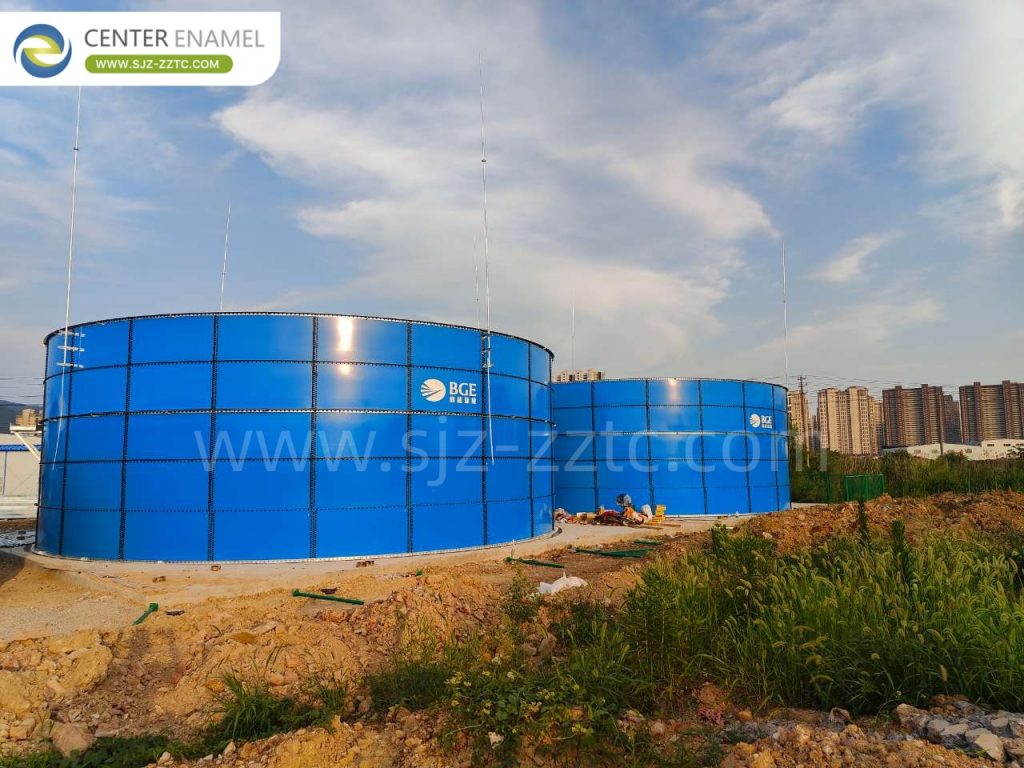
As a pivotal livestock breeding nation in Southeast Asia, Vietnam yields massive livestock manure from multiple breeding sectors. Large-scale intensive pig and poultry farms cluster around the Red River Delta (Hanoi, Bac Ninh) and Mekong Delta, generating massive daily dung and urine from confined indoor breeding. Free-range cattle, buffalo and goat raising spreads across Northern mountainous highlands and Central Highlands, producing scattered solid manure during grazing and barn feeding.
Countless smallholder family farms dominating remote countryside create decentralized mixed manure lacking unified collection networks. In addition, local slaughterhouses and feed processing factories discharge high-moisture organic residues, serving as stable raw feedstock for the local Livestock Manure Biogas Project supported by complete Anaerobic Solutions.
Prevailing Livestock Manure Disposal Challenges in Vietnam
Booming pig, poultry and ruminant breeding in Vietnam brings severe manure governance troubles worsened by tropical humid monsoon climate. Most untreated manure is stacked randomly alongside farmlands, river banks and rural roads, releasing foul ammonia and hydrogen sulfide to cause pervasive odor pollution. Rainfall washes antibiotics and organic pollutants into underground water and Mekong river systems, triggering water eutrophication and soil degradation. Excess manure is transported to overfilled landfills, triggering uncontrolled methane leakage and hindering Vietnam’s carbon reduction targets.
Local farmers burn manure openly in dry seasons, aggravating seasonal air haze. Limited government investment results in insufficient centralized disposal facilities, while traditional composting has low efficiency under high temperature and humidity. Therefore, Livestock Manure Biogas Project equipped with reliable GFS Tanks and professional Anaerobic Solutions becomes the optimal disposal approach.
How Livestock Manure Turns into Biogas via Anaerobic Fermentation
The full conversion process occurs inside airtight anti-corrosion GFS Tanks and matched anaerobic reactors under oxygen-free conditions, consisting of four core biochemical phases which form the core of standardized Anaerobic Solutions:
- Hydrolysis Stage: Anaerobic microbes secrete enzymes to split large organic substances including crude fiber, animal protein and residual feed starch into soluble small organic acids and monosaccharides.
- Acidification Stage: Acid-forming bacteria ferment soluble organics into volatile fatty acids and alcohols, accumulating acidic intermediates inside fermentation GFS Tanks.
- Acetogenesis Stage: Acetogenic microbes further degrade fatty acid compounds into acetic acid, hydrogen and carbon dioxide for subsequent methane production.
- Methanation Stage: Strictly anaerobic methanogens convert acetic acid and mixed hydrogen-carbon dioxide into raw biogas with 55%–70% methane content.
After desulfurization, dehydration and compression, purified biogas can be used for on-site power generation, barn heating and domestic gas supply. Post-fermentation digestate is processed into high-grade organic fertilizer for Vietnam’s rice, coffee and fruit planting, realizing full resource recycling of the whole Livestock Manure Biogas Project.
Multiple Benefits of Livestock Manure Biogas Project for Vietnam
Promoting the Livestock Manure Biogas Project with sturdy GFS Tanks and mature Anaerobic Solutions delivers prominent environmental, energy, economic and social benefits nationwide. Environmentally, it reduces random manure dumping and landfill occupancy, restrains soil and water contamination, cuts uncontrolled methane emission and haze from open incineration to help Vietnam reach carbon neutrality goals. In energy aspect, self-produced clean biogas lessens Vietnam’s reliance on imported fossil fuels, easing frequent power shortages in remote mountainous rural areas.
Economically, it forms a closed circular industrial chain from breeding and manure fermentation to biogas utilization and organic fertilizer returning farmland, cutting farmers’ waste disposal costs and improving the competitiveness of domestic green livestock industry. Socially, the project creates abundant local jobs in manure collection, plant operation, equipment maintenance and fertilizer production, lifting rural household income and narrowing urban-rural development gaps.
Four Advanced Anaerobic Processes for Vietnam’s Diverse Manure
Center Enamel develops four differentiated anaerobic technologies, core parts of full-set Anaerobic Solutions, all compatible with standard GFS Tanks for varied scales of Vietnam’s Livestock Manure Biogas Project:
CSTR (Continuously Stirred Tank Reactor): Fitted with internal stirring devices inside matched GFS Tanks, realizing full mixing of high-moisture pig and poultry manure to avoid crust and layering with strong anti-load capacity, suitable for large centralized biogas plants in Vietnam’s delta intensive breeding belts.
UASB (Upflow Anaerobic Sludge Blanket): Counts on high-activity granular sludge for efficient COD removal with low power cost, applicable for liquid manure after solid-liquid separation treatment.
USR (Upflow Solid Reactor): Features compact layout, low construction cost and anti-blocking property, allowing direct fermentation of high-solid raw manure without complex pre-treatment, ideal for scattered small household biogas stations across remote Vietnamese villages.
IC (Internal Circulation Reactor): High-efficiency anaerobic equipment with 3–5 times higher processing capacity than conventional reactors, customized for super-large cross-regional manure disposal hubs in major agricultural provinces of Vietnam.
Complete Core Equipment of Vietnam’s Livestock Manure Biogas Project
All supporting equipment adapts to Vietnam’s tropical high temperature, heavy rainfall and coastal salt corrosion climate, centered on GFS Tanks and systematic Anaerobic Solutions:
GFS Tanks: Core fermentation and storage equipment with anti-corrosion enamel coating boasting over 30-year service life against acid and salt erosion; modular bolt construction enables quick installation and flexible volume adjustment for manure fermentation and digestate storage.
Double Membrane Gas Holder: Stores crude biogas from GFS Tanks and balances fluctuating gas output via automatic pressure control; UV-resistant outer membrane suits intense sunlight and changeable tropical rainfall.
Black Membrane: Low-cost lagoon fermentation equipment for small family farms; impermeable HDPE film locks biogas and prevents manure seepage into soil and rivers.
Solid-liquid Separator: Separates solid and liquid manure before feeding into GFS Tanks, reducing tank crust risk and boosting digestion efficiency of the whole Livestock Manure Biogas Project.
Lifting Pump: Anti-corrosion submersible pump delivers pretreated liquid manure into tanks and circulates digestate within the biogas system.
Dehydration and Desulfurization Tank: Eliminates moisture and toxic hydrogen sulfide from raw biogas to protect downstream gas-consuming devices from corrosion.
Torch System: Safety device to fully combust redundant biogas automatically, lowering methane escape and odor to satisfy Vietnam’s environmental emission standards.
Screw Sludge Dewatering Machine: Dewaters tank residues into dry organic fertilizer to realize full recycling of fermentation byproducts for crop cultivation.
Reasons to Choose Center Enamel as Professional EPC Contractor
Qualified patented GFS tanks: 200+ patents, ISO & AWWA certification, suitable for Vietnam’s tropical environment.
Full turnkey EPC service: Complete one-stop work from design, manufacturing, shipment, installation to training and aftercare.
Customized anaerobic process: Adjust technical parameters locally to raise biogas yield and project profit.
Local compliance capability: Mature SEA experience to meet Vietnam’s construction, agriculture and environmental laws.
Cost-saving layout design: Lower equipment faults and operating costs to guarantee clients’ steady revenue.
Global after-sales support: Quick remote and on-site maintenance for biogas projects across Vietnam.
Professional GFS Tanks Installation Service from Center Enamel
Hydraulic Jacking Installation: Top-down construction eliminates high-altitude scaffolds, safer for narrow rural farms and breeding zones.
Full bolted assembly, no field welding: Prevent tank corrosion caused by Vietnam’s rainy, humid tropical climate.
Whole-process on-site technical supervision: Global engineers team up with local constructors to shorten construction cycle.
Multi-item strict post-installation tests: Air tightness, pressure and anti-corrosion checks ensure tanks fit anaerobic fermentation requirements.
Center Enamel’s Real Global Biogas Project Cases
Case 1: Biogas Project in Singapore
Process stage: CSTR
Tank dimensions:
φ18.34m x 8.4m (H) (1 unit)
φ8.41m x 9.0m (H) (1 unit)
φ11.46m x 7.2m (H) (1 unit)
Total volume: 3,458 m³
Completion year: 2021
Case 2: Biogas Project in France
Process stage: CSTR
Tank dimensions: φ18.33m x 8.4m (H) (1 unit)
Total volume: 2,215 m³ (1 unit)
Completion year: 2021
Vietnam’s abundant livestock manure is both a prominent environmental problem and untapped renewable energy resource, making widespread rollout of Livestock Manure Biogas Project equipped with corrosion-resistant long-life GFS Tanks and proven Anaerobic Solutions an indispensable green path for local livestock industry upgrade. With extensive Southeast Asian engineering experience, Center Enamel’s localized customized biogas solutions perfectly fit Vietnam’s tropical climate and regional manure characteristics. Such biogas projects effectively eliminate manure pollution, boost domestic clean energy supply to reduce fossil fuel import dependency, foster circular agriculture and assist Vietnam in fulfilling carbon reduction targets, consolidating solid green infrastructure for sustainable development of Vietnam’s agriculture and breeding sectors.