
Waste-to-Energy Biogas Plants: Converting Organic Waste into Clean Power
A waste-to-energy biogas plant is an integrated industrial facility that converts organic waste materials into usable energy—electricity, heat, or biomethane—through the biological process of anaerobic digestion. Unlike incineration, which burns waste at high temperatures and generates significant air emissions, anaerobic digestion operates at ambient-to-moderate temperatures in sealed vessels, producing biogas and nutrient-rich digestate with minimal environmental impact.
The global waste-to-energy biogas plant market is expanding rapidly as nations seek alternatives to landfilling and incineration. The European Biogas Association reports over 20,000 anaerobic digestion facilities operating across Europe, with combined electrical capacity exceeding 20 GW. Asia-Pacific is the fastest-growing region, driven by India's SATAT program (targeting 5,000 CBG plants) and China's rural biogas village programs. Waste-to-energy biogas plants now process over 200 million tonnes of organic waste annually worldwide.
This guide provides a comprehensive overview of waste-to-energy biogas plants—covering plant configuration, energy output calculation, feedstock flexibility, environmental impact assessment, and the comparative advantages of biological waste-to-energy over thermal treatment alternatives.
Understanding Waste-to-Energy Biogas Plant Configuration
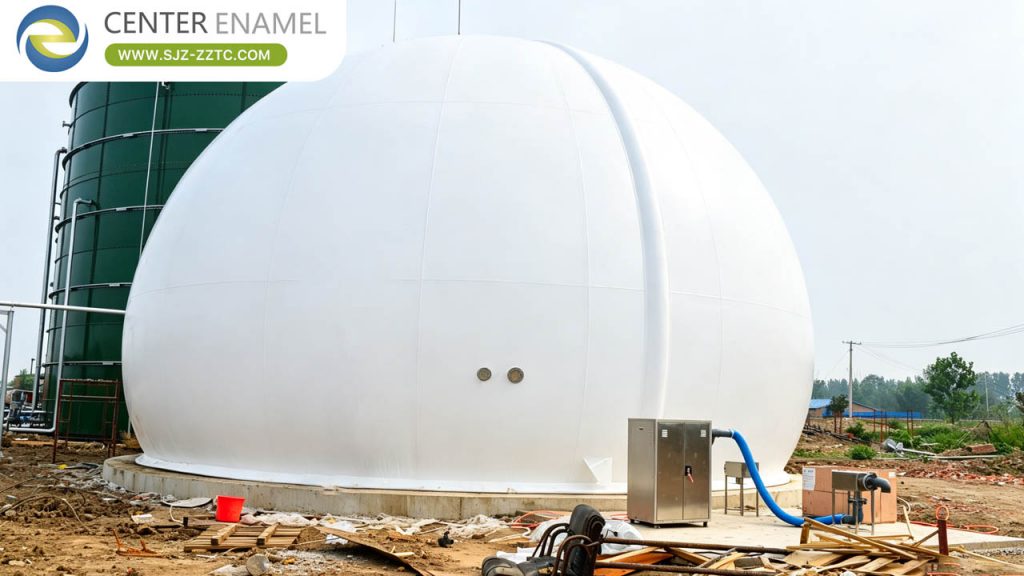
A waste-to-energy biogas plant consists of five major process areas: (1) Waste Reception and Pre-Treatment—weighing, sorting, shredding, and pasteurization of incoming organic waste to achieve uniform feedstock characteristics and pathogen control; (2) Anaerobic Digestion Reactors—sealed GFS or steel tanks where microorganisms convert organic matter to biogas at 35-55 degrees C over 15-30 days; (3) Biogas Conditioning and Utilization—desulfurization, moisture removal, and conversion via CHP engines (electricity + heat), boilers, or upgrading to biomethane; (4) Digestate Processing—solid-liquid separation, composting of solids, and liquid fertilizer storage/distribution; (5) Energy Export Infrastructure—grid interconnection, gas grid injection station, or CBG compression and loading. Plant capacities range from 30 kW (farm-scale) to 10+ MW (municipal/utility-scale).
The standard energy output calculation for a waste-to-energy biogas plant follows a four-step formula: Step 1—Determine daily volatile solids (VS) load: Daily feedstock (t/day) x VS fraction (typically 0.70-0.90 for organic waste). Step 2—Calculate biogas production: VS load (kg/day) x methane yield (m3 CH4/kg VS, from feedstock table). Step 3—Convert to electrical output: Biogas (m3/day) x CH4 fraction x engine efficiency (35-42%) x energy density (9.97 kWh/m3 CH4). Step 4—Apply capacity factor (80-90%) for annual output.
Comparative Data Table: Waste-to-Energy Biogas Plant vs Incineration
| Parameter | Anaerobic Digestion Biogas Plant | Mass Burn Incineration | Comparison Notes |
| Process Type | Biological (35-55 degrees C) | Thermal (850-1,200 degrees C) | AD: low-energy; Incineration: energy-intensive |
| Energy Output | Electricity + heat + biomethane | Electricity + heat only | AD: 3 output options; Incineration: 2 |
| Net Energy Efficiency | 60-85% (with CHP + upgrading) | 20-35% (steam cycle losses) | AD: 2-3x higher |
| Air Emissions | Minimal (sealed process) | Particulates, NOx, dioxins, CO2 | AD: far lower air impact |
| Residual Waste | Digestate (fertilizer value) | Bottom ash + fly ash (hazardous) | AD: valuable byproduct; Incineration: disposal cost |
| CO2 Profile | Biogenic (carbon neutral) | Fossil + biogenic CO2 | AD: net-negative with waste credit |
| Feedstock Flexibility | Organic/wet waste only | Mixed waste (including non-organic) | Incineration: broader input |
| CAPEX ($/t annual capacity) | $200-500 | $400-800 | AD: 40-50% lower |
| Public Acceptance | High (green technology) | Low (NIMBY opposition) | AD: easier permitting |
Energy Output, Environmental Impact, and Sustainability
A representative waste-to-energy biogas plant processing 150 tonnes per day of mixed organic waste (food waste + manure + crop residue blend) achieves the following output: approximately 7,500-9,000 m3 of biogas per day (containing 4,500-5,400 m3 of methane), generating 1.5-2.0 MW of electrical output via CHP, plus 2.0-2.8 MW of recoverable thermal energy. This powers approximately 3,000-5,000 households while avoiding 4,000-6,000 tonnes of CO2-equivalent emissions annually through methane capture and fossil energy displacement.
Environmental impact assessment demonstrates significant advantages over landfilling: a 150 t/day biogas plant prevents approximately 5,000-8,000 tonnes of CO2-e per year by capturing methane that would have been generated in landfill, plus additional 3,000-5,000 tonnes by displacing fossil electricity. Digestate produced (approximately 120-135 t/day) replaces synthetic fertilizer, reducing further 0.5-1.0 tonnes CO2-e from fertilizer manufacturing. The plant's total net carbon impact is strongly negative.
Sustainability performance is further enhanced when the plant achieves zero-waste-to-landfill operation—directing all digestate solids to composting and all liquid fraction to agricultural land application. Properly designed waste-to-energy biogas plants represent one of the most environmentally beneficial waste management technologies available, combining waste treatment, renewable energy, soil nutrient recovery, and greenhouse gas mitigation in a single facility.
Frequently Asked Questions (FAQ)
Q1: How is a waste-to-energy biogas plant different from incineration?
A: Anaerobic digestion uses biological processes at 35-55 degrees C to decompose organic waste in sealed, oxygen-free tanks, producing biogas and digestate. Incineration burns mixed waste at 850-1,200 degrees C to generate steam and electricity. Key differences: AD achieves 2-3x higher net energy efficiency, produces valuable digestate fertilizer instead of hazardous ash, emits far less air pollution, has lower CAPEX, and achieves strongly negative carbon intensity. AD is limited to organic waste; incineration accepts mixed waste including plastics and non-organics.
Q2: How much electricity does a waste-to-energy biogas plant generate per tonne of waste?
A: A typical mixed-organic-waste biogas plant generates 120-200 kWh of electricity per tonne of feedstock processed (assuming CHP configuration with 38-42% electrical efficiency). A plant processing 100 t/day of mixed food waste and manure produces 12,000-20,000 kWh/day—enough to power approximately 400-700 households. Including thermal recovery, total energy efficiency reaches 80-90% versus 20-35% for incineration.
Q3: What types of waste cannot be processed in a biogas plant?
A: Biogas plants accept only biodegradable organic materials: food waste, manure, crop residues, food processing waste, and municipal source-separated organics. Materials that cannot be processed include: plastics, glass, metals, construction debris, chemicals, pharmaceuticals, and high-toxicity industrial waste. Pre-treatment sorting removes physical contaminants before feedstock enters the digester. Mixed municipal waste requires extensive mechanical-biological pre-treatment before the organic fraction is digestible.
Q4: Is a waste-to-energy biogas plant profitable?
A: Yes, when properly designed and operated. Revenue sources include: electricity/heat sales ($0.08-0.15/kWh), waste tipping fees ($30-80/tonne), digestate fertilizer sales ($10-30/tonne), and carbon/emission credits ($15-50/tonne CO2-e). A 150 t/day plant with CHP configuration achieves annual revenue of $1.5-3 million, with 35-50% EBITDA margins. Payback periods of 4-7 years are achievable with current incentive structures. Plants without tipping fees or carbon credits struggle to achieve profitability.