
Waste Treatment Projects: EPC And Turnkey Delivery For Treatment Plants
A waste treatment project is the scoped delivery of a treatment plant - municipal, industrial, or biogas - under one responsible party. The main delivery models are equipment supply, process package, and EPC (turnkey), where a single contractor owns design, manufacturing, construction, and commissioning. Turnkey shifts performance risk (flow, load, availability) to the contractor and is preferred when the owner wants one throat to choke and a guaranteed outcome.
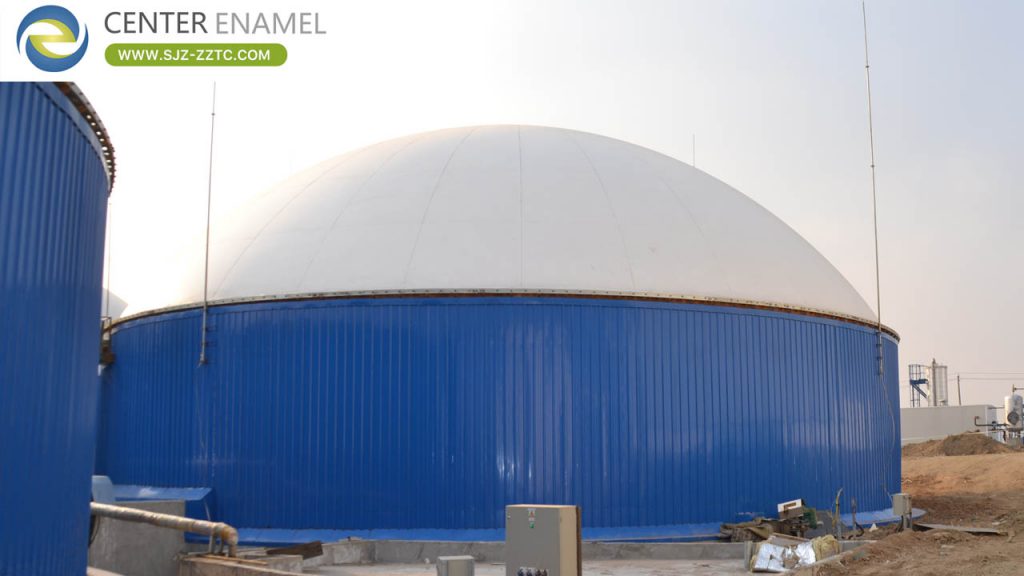
The Delivery Models, Compared
Equipment supply hands over tanks and reactors for the owner to integrate. A process package adds the engineering and controls around them. EPC (turnkey) wraps the whole scope - civil, mechanical, electrical, commissioning - so the owner receives a running plant. The right model depends on the owner's in-house capability and appetite for interface risk.
| Model | Scope | Risk | Best for |
| Equipment supply | Tanks / reactors only | Owner integrates | Capable EPC owners |
| Process package | Process + controls | Shared | Partial in-house |
| EPC / turnkey | Full design-build-run | Contractor | Single-point need |
What A Turnkey Scope Must Pin Down
A defensible turnkey scope states the guaranteed influent envelope, the effluent limit, the availability target, and the testing protocol up front. Without those, the contractor cannot price or guarantee the plant. Single-point responsibility also means one party owns the interfaces between civil works, the Glass-Fused-to-Steel tanks, the reactors, and the controls.
| Contract Item | Why It Matters |
| Influent envelope | Sets reactor sizing |
| Effluent limit | Sets process selection |
| Availability target | Sets spares / O&M |
| Performance test | Triggers acceptance |
Project Case Study: Malaysia Biogas Project
Project / Application: Large-scale biogas, Malaysia. Industry: Waste-to-energy / biogas. Equipment: 5 Glass-Fused-to-Steel tanks. Key Requirements: 27,000 m3 total volume, 22,000 m3/day biogas, ~80% digestibility, delivered as a coordinated tank supply.
| Field | Value | Source / Evidence |
| Single Tank Volume | 5,400 m3 (O24.46 x 12 m) | Company project reference |
| Total Effective Volume | 27,000 m3 (5 tanks) | Company project reference |
| Daily Biogas Production | 22,000 m3 total | Company project reference |
| Digestibility | approx 80% | Company project reference |
| Gas Production Rate | 0.45 m3 / kg COD removed | Company project reference |
| Tank Type | Glass-Fused-to-Steel (GFS) | Company project reference |
About Company
Shijiazhuang Zhengzhong Technology Co., Ltd (Center Enamel) is a comprehensive high-tech enterprise specializing in wastewater engineering, process section contracting, and equipment manufacturing. The company delivers biogas and wastewater projects through three main lines - EPC (turnkey) contracting, equipment supply, and process packages - covering livestock and municipal wastewater, biomass energy, industrial wastewater, and food waste. Its reactor portfolio spans CSTR, USR, UBF, UASB, IC, and EGSB, backed by in-house Glass-Fused-to-Steel tank manufacturing (enamel firing at 820-930 C) and certifications including ISO 9001, NSF/ANSI 61, and CE-EN 1090. With 35+ years of operation, a 150,000 m2 manufacturing base, and projects in 100+ countries, Center Enamel provides the single-responsibility engineering behind the Malaysia biogas project where five Glass-Fused-to-Steel digester tanks were delivered as a coordinated, single-responsibility equipment scope - the kind of coordinated delivery an EPC or process-package owner relies on.
Comparison: Single-Point Vs Multi-Vendor
| Element | Single-point (EPC) | Multi-vendor |
| Interfaces | One owner | Owner coordinates |
| Guarantee | Plant-level | Equipment-level |
| Blame risk | Low | High |
Waste treatment projects succeed when scope, guarantees, and risk are fixed up front; EPC or turnkey delivery concentrates responsibility in one party and is the pragmatic choice when the owner wants a guaranteed plant rather than a box of components.
Frequently Asked Questions
Q1: What does EPC include? A1: Design, manufacturing, construction, and commissioning of the whole plant under one contractor.
Q2: Turnkey vs equipment supply? A2: Equipment supply delivers parts; turnkey delivers a running, guaranteed plant.
Q3: What guarantees matter? A3: Influent envelope, effluent limit, and availability - tested at acceptance.
Q4: How is risk allocated? A4: Turnkey puts interface and performance risk on the contractor.
Q5: Which model suits a small owner? A5: EPC, because the owner lacks in-house integration capability.
Q6: What tanks are used? A6: Glass-Fused-to-Steel tanks bolt together on site and resist corrosion.
Q7: How long does delivery take? A7: Bolted GFS tanks deploy in weeks, not months, on a prepared pad.
Q8: Who owns the interfaces? A8: Under EPC, the contractor owns every interface between disciplines.
Suggested CTA
Send your project scope, influent envelope, and effluent limit to an engineer, or request an EPC / turnkey pre-proposal.