
Waste Treatment Solution: Bundled Tankage And Process For Industry
A waste treatment solution bundles the reactor tankage and the treatment process for industrial and agro-industrial waste under one scope and one responsible party. Bundling removes the tank-to-process interface gap and lets the supplier guarantee retention time, loading rate, and effluent or gas output on a single performance basis.
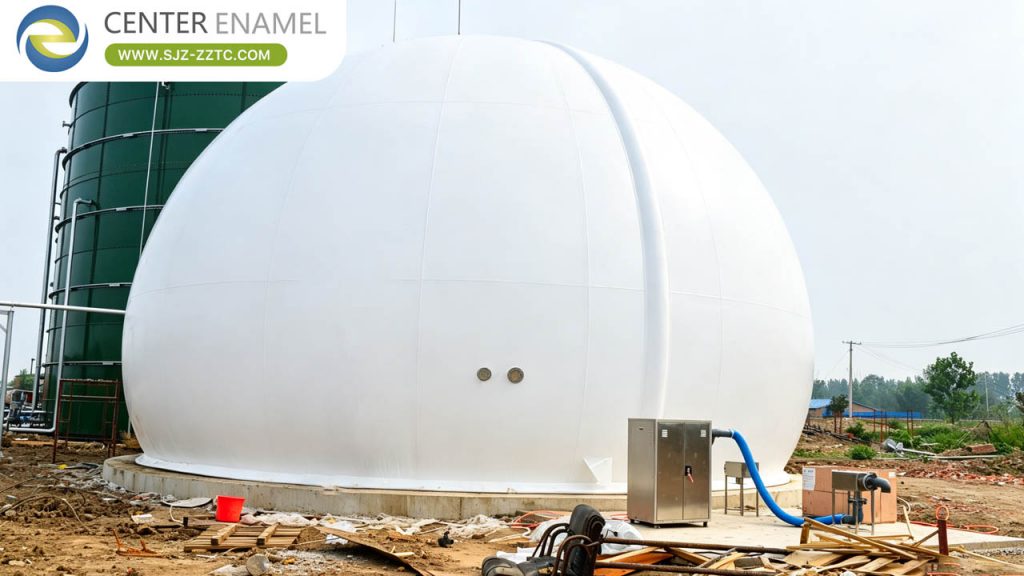
What A Waste Treatment Solution Includes
Integration covers the intake, the biological or physico-chemical train, the tankage, and the controls. For organic industrial waste this usually means an anaerobic stage for energy recovery followed by aerobic polishing, with the Glass-Fused-to-Steel reactors and process skids engineered as a matched set.
| Scope Item | What Is Supplied | Why It Matters |
| Reactor tank | GFS or welded sealed reactor | Holds retention time and boundary |
| Treatment process | Anaerobic and aerobic train | Sets removal or recovery |
| Controls | Level, temperature, dosing | Protects tank and biology |
| Guarantee | Single performance basis | One accountable party |
Why Bundle Tankage And Process
When the tank and the process are supplied separately, the boundary between them is where delays and disputes land. A bolted GFS reactor arrives factory-coated, so the vessel and the process can be specified together with a consistent organic loading and retention-time guarantee.
Which Waste Streams Suit Anaerobic Treatment
Agro-industrial effluents such as palm-oil mill wastewater, food processing streams, and livestock manure are high in volatile solids and suit anaerobic digestion for energy recovery. Lower-strength or variable streams lean on the aerobic polishing stage instead.
Project Case Study: Indonesia Biogas Project Anaerobic Reactors
Project / Application: Anaerobic reactors at a palm oil wastewater treatment plant, Indonesia. Industry: Palm oil. Tank Type: Glass-Fused-to-Steel (GFS). Key Requirements: Flexible anaerobic capacity for POME.
| Field | Value | Source / Evidence |
| Application | Anaerobic Reactors at Palm Oil WWTP | Company project reference |
| Tank Model A | O17.58 x 8.4 m | Company project reference |
| Tank Model B | O16.82 x 7.2 m | Company project reference |
| Tanks Quantity | 3 Nos. of GFS Tanks | Company project reference |
| Installation Year | 2013 | Company project reference |
| Process | Anaerobic Digestion | Company project reference |
| Volume Per Tank | Not Provided In The Available Source | Dimensions only |
About The Supplier
Shijiazhuang Zhengzhong Technology Co., Ltd (Center Enamel) manufactures Glass-Fused-to-Steel tanks for industrial and agro-industrial waste treatment, with enamel firing at 820-930 C and certifications including ISO 9001, NSF/ANSI 61, and CE-EN 1090. The bolted design supports rapid overseas process-tank deployment.
Comparison: Supply Models
| Model | Best For | Main Risk |
| Bundled tank plus process | Owners wanting one guarantee | Higher coordination upfront |
| Tank only | Owners with own process IP | Interface gaps |
| Process only | Owners with existing tanks | Tank may not suit new load |
A waste treatment solution works when the tank and the process are designed as one. Set the loading rate and retention time from the waste character, bundle the GFS tankage with the process, and the performance guarantee becomes enforceable.
Frequently Asked Questions
Q1: What is a waste treatment solution? A1: It bundles the reactor tankage and the treatment process under one scope and guarantee.
Q2: Why bundle tankage and process? A2: It removes the boundary gap that causes delays and disputes.
Q3: Which waste streams suit AD? A3: Palm-oil effluent, food processing, and livestock manure with high volatile solids.
Q4: How is performance guaranteed? A4: Through a single loading-rate and retention-time basis owned by one party.
Q5: What tank resists corrosion? A5: A Glass-Fused-to-Steel tank with factory-fired enamel.
Q6: What if the stream is low strength? A6: The aerobic polishing stage carries more of the load.
Q7: How fast is tank delivery? A7: Bolted GFS panels erect far faster than concrete.
Q8: Can the system expand? A8: Yes, modular GFS panels add digester volume as throughput grows.
Describe your waste stream and throughput to an engineer, or request a bundled tankage and process scope for your site.