
Waste Treatment: Types, Processes, And System Selection
Waste treatment is the engineered control of solid, liquid, and organic waste so it can be discharged safely or recovered as energy or material. The right system is chosen from the waste type (municipal, industrial, or agricultural), its strength and solids, and the goal - permit compliance or resource recovery. Bolted Glass-Fused-to-Steel (GFS) tanks give corrosion-resistant, fast-to-build reactors and clarifiers across all three streams.
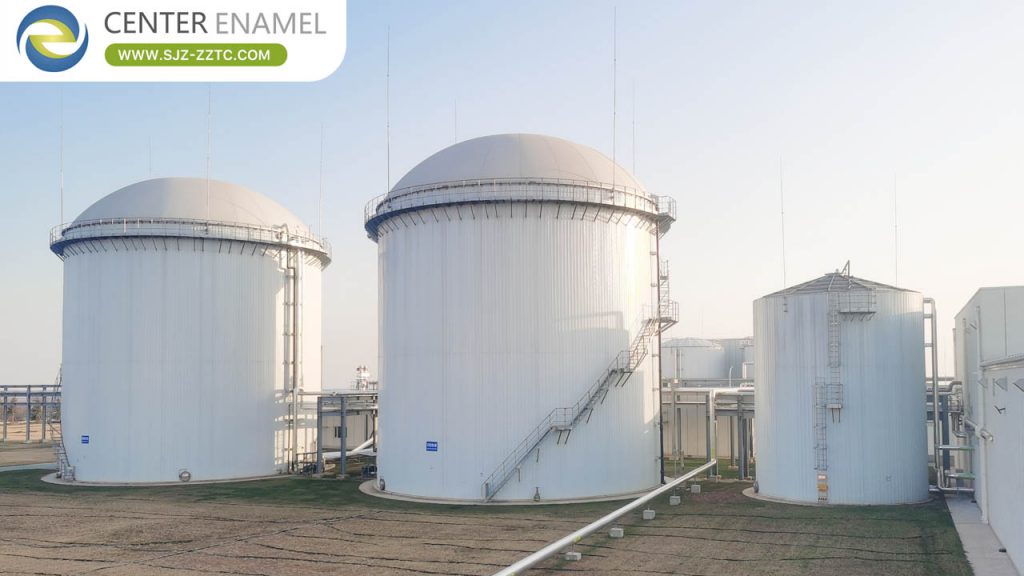
The Three Waste Streams
Municipal sewage is low-strength and steady, so the priority is nutrient removal and reliable discharge. Industrial effluent is high and often variable in strength, demanding process robustness and sometimes recovery. Agricultural and food waste is rich in volatile solids, which makes anaerobic digestion and biogas the logical first choice. Matching the train to the stream is the single decision that controls capital and operating cost.
| Waste Stream | Typical Strength | Common Treatment Goal |
| Municipal sewage | Low COD, steady flow | Nutrient removal and discharge |
| Industrial effluent | High, variable COD | Compliance and sometimes recovery |
| Agricultural and food | High volatile solids | Biogas and digestate |
Aerobic Versus Anaerobic
Aerobic treatment uses oxygen, consumes energy for aeration, and produces no fuel. Anaerobic treatment runs without oxygen, yields biogas at about 0.30-0.45 m3 per kg of COD removed at 35-38 C, and generates far less sludge. The trade is that anaerobic systems need sealed, heated tanks and stable feed, while aerobic is simpler but energy-hungry.
| Aspect | Aerobic | Anaerobic |
| Oxygen | Supplied by aeration | Absent by design |
| Energy | Net consumer | Net producer (biogas) |
| Methane | None | 55-65% of biogas |
| Sludge yield | Higher | Lower (0.05-0.10 kg VSS/kg COD) |
| Best feed | Low-strength municipal | High-strength organic |
Selecting The System
Characterise the waste first: strength, solids, and contaminants decide everything. Then set the goal (discharge limit or energy off-take), pick the biological train, and size the tankage from retention time and loading rate. A boundary condition to respect: anaerobic digestion is not suited to cold, low-strength municipal sewage or to feed with high suspended solids unless those are removed upstream.
Project Case Study: Pharmaceutical Wastewater Treatment In Jiangdong
Project / Application: Pharmaceutical wastewater, high salinity, Hangzhou, China. Industry: Pharmaceutical. Tank Type: Granular sludge anaerobic reactor (GFS). Key Requirements: COD removal under high salinity.
| Field | Value | Source / Evidence |
| Single Tank Capacity | 1,000 m3/day | Company project reference |
| Reactor Type | Granular Sludge Anaerobic Reactor | Company project reference |
| Reactor Size | 12.66 x 24 m, 6 Sets | Company project reference |
| COD Removal Efficiency | not less than 70% | Company project reference |
| Salinity | up to 6,000 mg/L | Company project reference |
| Installation Year | 2019 | Company project reference |
| Parameter | Influent (Design) | Effluent |
| COD | 11,200 | 3,024 |
| SS | 185 | 148 |
| NH3-N | 110 | 99 |
| TN | 270 | 227 |
| Salt | <6,000 mg/L | not stated |
About The Supplier
Shijiazhuang Zhengzhong Technology Co., Ltd (Center Enamel) manufactures Glass-Fused-to-Steel tanks rated for municipal, industrial, and agricultural waste treatment, with enamel firing at 820-930 C and certifications including ISO 9001, NSF/ANSI 61, and CE-EN 1090. The bolted design supports rapid, factory-controlled tank delivery worldwide.
Comparison: Treatment Goals
| Goal | Best Route | Note |
| Safe discharge | Aerobic plus nutrient removal | Energy consumer |
| Energy recovery | Anaerobic digestion | Needs sealed heated tank |
| Low footprint | Membrane or compact train | Higher capital |
Waste treatment is a classification problem before it is an engineering one. Name the stream, set the goal, then let the tankage follow the biological train rather than the reverse.
Frequently Asked Questions
Q1: What does waste treatment cover? A1: It spans municipal sewage, industrial effluent, and agricultural or food waste, each needing a different train.
Q2: How do you choose a treatment system? A2: From waste type, strength, solids, and whether the goal is discharge or recovery.
Q3: What is the difference between aerobic and anaerobic? A3: Aerobic uses oxygen and consumes energy; anaerobic produces biogas and less sludge.
Q4: Which tank suits each waste stream? A4: A corrosion-resistant GFS tank works across all three; geometry follows the reactor.
Q5: Can industrial waste be recovered? A5: Yes, anaerobic treatment of high-strength industrial effluent yields biogas and cuts sludge.
Q6: What temperature does anaerobic need? A6: Mesophilic digestion typically runs at 35-38 C.
Q7: When is anaerobic not suitable? A7: For cold, low-strength municipal sewage or high solids without upstream removal.
Q8: How fast can tankage be built? A8: Bolted GFS panels erect in weeks, faster than cast concrete.
Describe your waste stream and goal to an engineer, or request a treatment-system and tankage recommendation for your site.