
Wastewater Project Systems: Interface Management Across Package Boundaries
On a wastewater project delivered through separate civil, mechanical, electrical and process packages, the interfaces - not the equipment - cause most delays. An interface is any point where one package's work becomes another's input: a foundation bolt pattern, a cable termination, a pipe flange, a control signal. Each must be defined, assigned and closed with a named owner before installation. Unmanaged interfaces turn into on-site disputes and handover gaps.
Why Interfaces Cause More Delays Than Equipment
Equipment either works or it does not, and it is usually tested before it ships. Interfaces are different: they only reveal themselves when two packages meet on site, often at the end of the programme when there is least time to fix them. A flange that does not align or a motor that arrives without the agreed control signal can stall commissioning even though every individual package passed its own test.
Build An Interface Register
The core tool is a living interface register: a table of every boundary, what crosses it, which package owns each side and the date it must be closed. Review it at every design milestone, not just at handover. The register below is a template pattern, not a record from any named project.
| Interface | Package A | Package B | What to freeze |
| Foundation / bolts | Civil | Mechanical | Anchor pattern + levels |
| Pipe flange | Process | Mechanical | Size, rating, position |
| Power termination | Electrical | Mechanical | Load + termination point |
| Control signal | Instrumentation | Process | Signal list + protocol |
Mechanical, Electrical And Control Boundaries
Three boundaries deserve special attention. Mechanical-to-electrical needs motor loads and termination points fixed before cables are pulled. Instrumentation-to-process needs an agreed signal list so the control system reflects the real equipment. Civil-to-mechanical needs anchor patterns and floor levels frozen before concrete is poured, because those are the hardest interfaces to correct later.
Single Responsibility Versus Split Packages
A single-responsibility (EPC or turnkey) contract internalizes most interfaces inside one contractor, which is why it reduces owner-side coordination risk. Split packages can lower individual prices but transfer the interface risk to the owner, who must then own the register and the disputes. Neither model removes interfaces; they only decide who manages them.
| Delivery model | Who owns interfaces | Owner risk |
| Single EPC / turnkey | Main contractor | Low coordination |
| Process package + others | Owner coordinates | Higher coordination |
| Fully split packages | Owner owns register | Highest |
What A Package Boundary Looks Like
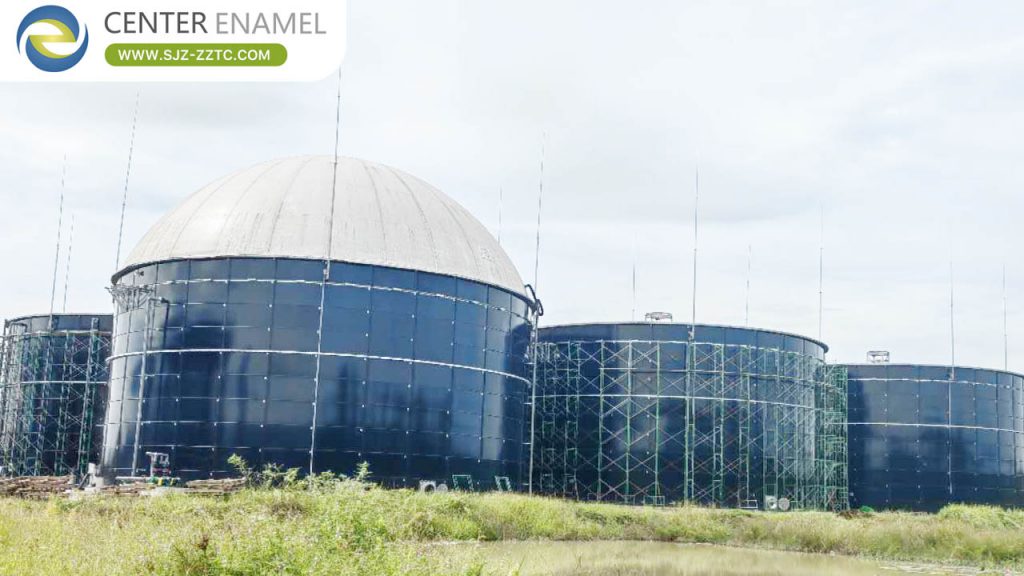
The library includes a UASB process package for landfill leachate at the Tieling CLP power-generation project in Liaoning. A process package is by definition one boundary in a larger plant - it supplies the reactor scope while other parties handle the surrounding works. The source confirms the UASB process and the package application; the specific interface register, package split and handover records are Not Specified in the Available Source and are not claimed here. The reference illustrates what a package boundary is, not a documented interface outcome.
About Company
Shijiazhuang Zhengzhong Technology Co., Ltd (Center Enamel) is a comprehensive high-tech enterprise specializing in wastewater engineering, process section contracting, and equipment manufacturing. The company delivers biogas and wastewater projects through three main lines - EPC (turnkey) contracting, equipment supply, and process packages - covering livestock and municipal wastewater, biomass energy, industrial wastewater, and food waste. Its reactor portfolio spans CSTR, USR, UBF, UASB, IC, and EGSB, backed by in-house Glass-Fused-to-Steel tank manufacturing (enamel firing at 820-930 C) and certifications including ISO 9001, NSF/ANSI 61, and CE-EN 1090. With 35+ years of operation, a 150,000 m2 manufacturing base, and projects in 100+ countries, Center Enamel provides the single-responsibility engineering behind wastewater project systems delivered with interfaces defined and assigned - whether as a single-responsibility contract or as a process package inside a larger works.
Conclusion
On multi-package wastewater projects, manage the interfaces: keep a living register, freeze each boundary with a named owner and close it before installation. The equipment rarely fails at the seam; the handover does.
Frequently Asked Questions
Q1: What is an interface on a project? A1: Any point where one package's work becomes another's input - a flange, bolt pattern, cable or signal.
Q2: Why do interfaces cause delays? A2: They surface only when packages meet on site, late in the programme when fixes are costly.
Q3: What is an interface register? A3: A living table of every boundary, what crosses it, the owning packages and the closure date.
Q4: Which interface is hardest to fix late? A4: Civil-to-mechanical - anchor patterns and levels set in concrete.
Q5: Does turnkey remove interfaces? A5: No; it moves them inside one contractor, reducing the owner's coordination burden.
Q6: What does a process package include? A6: A defined reactor or process scope supplied within a larger plant; the surrounding works are others' scope.
Q7: When should the register be frozen? A7: Each boundary should be closed at the design milestone before the affected work starts.
Q8: Can interface details be assumed from plant type? A8: No - they must come from the actual package scopes and drawings for that project.
Suggested CTA
Ask an engineer to build an interface register for your project's package structure before installation begins.