
Wastewater Treatment and Water Reuse: Closing the Loop
Wastewater reuse upgrades treated effluent for beneficial use — irrigation, cooling, industrial process, or aquifer recharge — by adding tertiary polishing that tightens suspended solids and pathogens beyond a basic discharge limit. Reuse turns a treatment cost into a recovered water asset, but it demands a higher, verifiable quality tier than outfall discharge.
From Discharge to Reuse Quality
A plant built only for discharge may reach secondary quality (anaerobic 80-90% COD removal, aerobic polish to 90-98%). Reuse adds filtration and disinfection to control solids, pathogens, and sometimes nitrogen and phosphorus. The tighter the use (crop contact, potable reuse), the stricter the specification.
Reuse Pathways and Limits
| Reuse use | Typical extra step | Key limit |
| Agriculture | Filtration + disinfection | Pathogens, solids |
| Cooling water | Filtration | Scaling, solids |
| Industrial process | MF/UF + polish | Specific ions |
| Aquifer recharge | Advanced + RO | Broad spec |
Where Reuse Pays
Reuse pays where fresh water is scarce or priced, where discharge permits are tight, or where a process needs large volumes (cooling, washing, dust control). A municipal plant reaching strict limits is already close to reuse quality; the gap is usually disinfection and final filtration.
Water Balance and Sludge
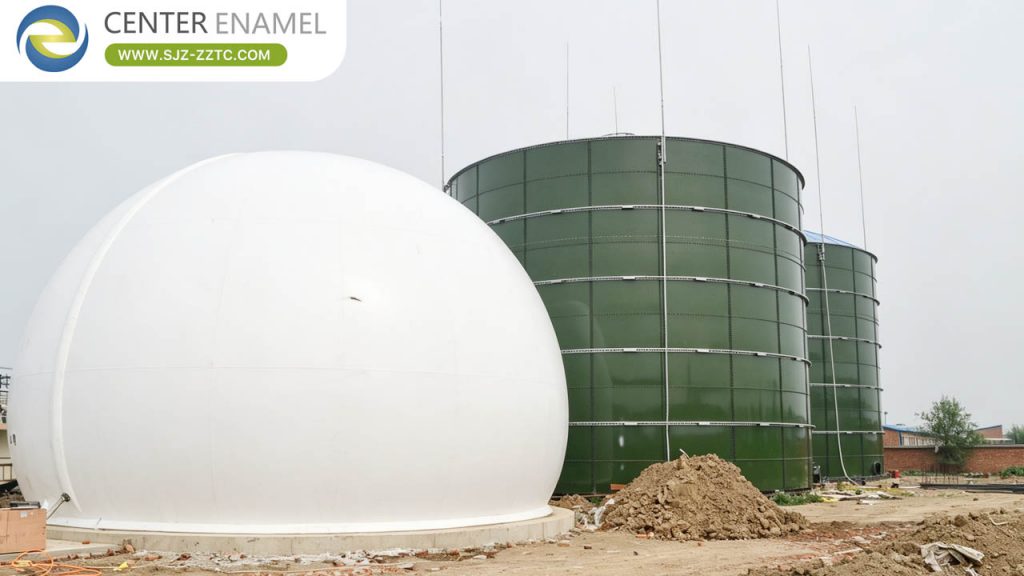
Reuse shifts the plant's goal from 'remove enough to discharge' to 'produce a salable product,' so operators track recovery rate and concentrate streams. Sludge from primary and secondary stages is still thickened, stabilized (often anaerobic digestion, which also makes biogas), and dewatered. GFS tanks (200-60,000 m3) resist the corrosive liquor across both duties.
Project Case Study
Domestic Sewage Treatment Project in Ghana. A municipal WWTP of 1,800 m3/day combining UBF + A2/O + sedimentation, cutting COD from 1,000 to 100 mg/L and BOD5 from 500 to 25 mg/L — the strict outlet quality tier that reuse applications build upon.
| Project | Domestic Sewage Treatment Project in Ghana |
| Location | Ghana |
| Industry | Municipal / Domestic Sewage |
| Application | WWTP - high-quality effluent for reuse path |
| Product | GFS tanks (11.46 x 9.6 m, 14.52 x 4.8 m, 2x20.64 x 6.6 m) |
| Effluent | COD 1,000 to 100, BOD5 500 to 25 mg/L |
| Status | Delivered 2021 |
About Shijiazhuang Zhengzhong Technology Co., Ltd (Center Enamel)
Shijiazhuang Zhengzhong Technology Co., Ltd (Center Enamel) supports the reuse goal with industry application experience across municipal and industrial water: GFS tank packages have been delivered for domestic sewage (UBF + A2/O), palm-oil POME (SBR), livestock manure (UASB + AOAO), and high-salinity pharmaceutical wastewater. That cross-industry record means the tank configuration is selected for the duty — discharge or reuse — not forced from one template.
Advantages and Limitations
Reuse recovers water and eases permit pressure. Limits: reuse needs reliable disinfection and monitoring, and some concentrates need separate management; design the recovery rate, not just the inlet.
Comparison: Discharge vs Reuse Spec
| Criterion | Discharge spec | Reuse spec |
| Solids | Moderate | Tight |
| Pathogens | Basic | Strict |
| Monitoring | Periodic | Continuous |
Conclusion
Water reuse upgrades treated effluent for irrigation, cooling, or process use with tertiary polish and tightened limits. A plant at strict discharge quality is already most of the way there. Send your source and reuse goal and we will configure the GFS tank package for a reuse-ready train.
Frequently Asked Questions (FAQ)
Q1: What is wastewater reuse?
A: Upgrading treated effluent for irrigation, cooling, industry, or recharge instead of discharging it.
Q2: What treatment does reuse need?
A: Tertiary filtration and disinfection, sometimes MF/UF or RO, beyond secondary treatment.
Q3: Where is reused water applied?
A: Agriculture, cooling water, industrial process, and aquifer recharge.
Q4: How much COD removal is achievable?
A: Anaerobic 80-90%, rising to 90-98% with aerobic polishing before reuse polish.
Q5: What tank capacity is available?
A: GFS tanks from 200 m3 to 60,000 m3.
Q6: What standards apply?
A: ISO 28765, AWWA D103, CE-EN 1090, ISO 9001; NSF/ANSI 61, WRAS, FM where relevant.
Suggested CTA
Tell us your source water and reuse goal. We will configure the GFS tank package for a reuse-ready wastewater train.