
Wastewater Treatment Plant Design: A Complete Guide for Industrial and Municipal Projects
Wastewater treatment plant (WWTP) design is the engineering backbone of clean water reuse, environmental compliance, and biogas recovery for communities and industries worldwide. A well-designed plant protects rivers, reduces regulatory risk, and can even turn high-strength industrial effluent into renewable energy. Center Enamel, a global leader in glass-fused-to-steel (GFS) tank and anaerobic digester solutions, has delivered WWTP design packages across more than 45 countries-from palm oil mills in Malaysia and piggeries in Vietnam to municipal STPs in Sweden and pharmaceutical plants in India.
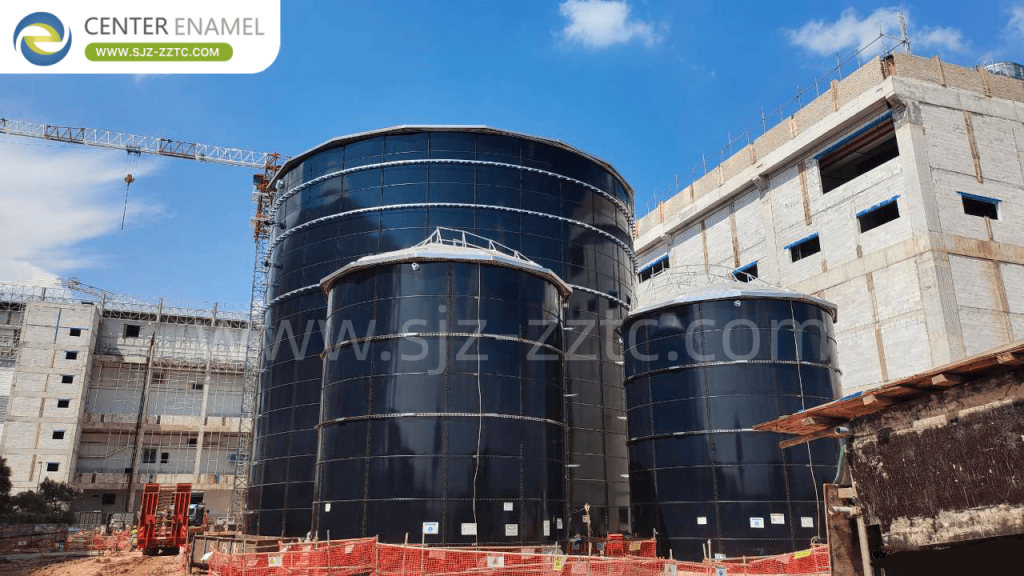
This guide walks you through the core elements of modern WWTP design, the process options engineers choose between, and the tank technologies that determine a plant's 30-year service life.
What Is Wastewater Treatment Plant Design?
Wastewater treatment plant design is the integrated engineering process of sizing unit operations-screening, primary sedimentation, biological reactors, secondary clarification, sludge handling, and disinfection-to meet a target effluent standard. It starts with a characterization study of the influent: flow (m³/day), COD, BOD₅, TSS, nitrogen, phosphorus, temperature, pH, and toxic compounds. These numbers drive every downstream decision.
A design is not a one-size-fits-all. Municipal sewage with low concentration (~200-500 mg/L COD) follows a different path than food-processing wastewater (2,000-20,000 mg/L COD) or leachate (up to 60,000 mg/L COD). The designer's job is to match hydraulic load, organic load, and sludge age so that the plant is stable, energy-efficient, and affordable to operate.
Key Factors Shaping Modern WWTP Design
Three forces define today's WWTP design paradigm. First, discharge standards are tightening: China's GB 18918 Class 1A, the EU Urban Waste Water Treatment Directive, and Indonesia's MENLH regulation all demand lower effluent COD, ammonia, and nutrients. Second, energy and sludge cost pushes designers toward anaerobic recovery-biogas offsets 40-80% of a plant's energy demand on high-strength waste. Third, site constraints (cold climate, seismic zone, limited land) favor prefabricated, modular GFS tanks over cast-in-place concrete.
Primary and Biological Treatment Process Selection
The biological stage is the heart of any WWTP. Designers choose between suspended-growth, attached-growth, and membrane configurations based on influent strength and effluent target.
| Process | Typical Influent COD | Organic Loading (kg COD/m³·d) | Best For | Effluent Quality |
| UASB | 3,000-10,000 mg/L | 5-15 | Brewing, distillery, pulp & paper | BOD removal 80-90% |
| CSTR | 5,000-40,000 mg/L | 2-6 | Sludge, manure, agricultural waste | High solids (TS 8-12%) |
| IC Reactor | 3,000-8,000 mg/L | 10-25 | Food & beverage, soft drink | Compact footprint |
| USR | 10,000-60,000 mg/L | 3-8 | Piggery manure, straw, POME | High-solids slurry digestion |
| A2O (Anaxic-Anoxic-Oxic) | 200-500 mg/L | 0.5-1.2 | Municipal STP, nutrient removal | TN < 15 mg/L, TP < 1 mg/L |
| MBR | 200-1,000 mg/L | 0.8-1.5 | Reuse applications, tight land | SS < 5 mg/L, direct reuse |
Anaerobic Digestion Technologies: UASB, CSTR, IC, and USR
Anaerobic treatment converts organic pollutants into biogas (CH₄ + CO₂) and stabilizes sludge. UASB (Upflow Anaerobic Sludge Blanket) relies on a granular sludge bed; its three-phase separator at the top is the critical design element. IC (Internal Circulation) is a high-rate two-stage UASB ideal for weak-to-medium strength effluent where footprint is constrained. CSTR (Continuous Stirred-Tank Reactor) is the workhorse for high-solids waste such as sewage sludge and animal manure, with mixing and heating coils inside the digester. USR (Upflow Solids Reactor) is the preferred choice for piggery manure, straw-laden agricultural waste, and palm oil mill effluent (POME)-Center Enamel delivered a 5,000 m³ USR digester for a Malaysian POME plant that recovers biogas to power 2 MW of on-site generation.
Aerobic Polishing: A2O and MBR Systems
For nutrient removal, A2O (Anaerobic-Anoxic-Oxic) configuration removes both carbon, nitrogen (denitrification), and phosphorus (bio-P uptake). It remains the standard for municipal STPs worldwide. When effluent must be reused for irrigation or industrial process water, MBR replaces secondary clarifiers with hollow-fiber or flat-sheet membranes, cutting TSS below 5 mg/L at 30-50% smaller footprint.
Tank Material Selection: GFS Tanks vs. Concrete and Bolted Steel
The reactor tank itself determines the project's schedule, durability, and lifecycle cost. Center Enamel manufactures GFS (Glass-Fused-to-Steel) tanks-porcelain enamel fired onto steel panels at 850°C, delivering a ceramic surface superior to epoxy-coated or painted steel.
| Criterion | GFS Tank (Center Enamel) | Cast-in-Place Concrete | Bolted Epoxy Steel |
| Installation time | 8-12 weeks | 6-12 months | 10-14 weeks |
| Service life | ≥ 30 years | 20-25 years | 15-20 years |
| Corrosion resistance | Excellent (pH 3-11) | Moderate (sulfide attack) | Fair (coating scratches) |
| Maintenance cost | Low (touch-up paint) | High (crack sealing) | Medium (re-coating) |
| Expansion capability | Easy (add panels) | Difficult | Moderate |
| Leak risk | Very low (Gaskets + silicone) | Seepage common | Panel seam leaks |
Biogas Storage: Double Membrane Roofs
Every anaerobic WWTP needs gas storage. Center Enamel's double membrane roof-an outer weather-resistant PVC/PVDF membrane and inner gas-holding membrane-floats above the digester, stores biogas at constant pressure, and eliminates the need for a separate gasholder. The roof handles thermal expansion, UV exposure, and seismic load, and is standard on Center Enamel projects in Sweden, Germany, and Southeast Asia.
Advanced Oxidation Processes (AOP) for Effluent Polishing
For refractory industrial wastewater-pharmaceutical, chemical, textile dyeing-biological treatment alone cannot meet COD < 100 mg/L discharge. AOP (ozone, H₂O₂/UV, or Fenton) generates hydroxyl radicals to break recalcitrant molecules. Center Enamel often integrates AOP polishing after UASB + A2O trains on pharma projects in India and Bangladesh.
Global Case Studies: Center Enamel WWTP Portfolio
Center Enamel has supplied GFS tanks, digesters, and double membrane roofs for WWTP projects on six continents: a 3,000 m³ CSTR for a piggery in Vietnam; a 8,000 m³ UASB + A2O package for a municipal STP in Nepal; a POME USR plant in Malaysia; a sewage sludge digestion train for a municipal works in Sweden; and multiple IC reactor installations for breweries and soft-drink plants in Africa.
Technical Advantages Summary
- Design scope: From process flow diagram to P&ID, civil, mechanical, and electrical-single-source EPC support.
- GFS tank durability: pH range 3-11, corrosion resistance outperforms concrete and painted steel.
- Modular delivery: Factory-fabricated panels shipped flat-pack, reducing site labor by 60%.
- Biogas recovery: Integrated double membrane roof turns waste into revenue.
- Global service: On-site installation supervision, commissioning, and 24-month warranty in 45+ countries.
Frequently Asked Questions
Q1: How long does a typical wastewater treatment plant design take? A: A basic industrial WWTP (5,000-20,000 m³/day) takes 8-16 weeks for basic design and 6-10 months for detailed engineering, procurement, and construction with GFS tanks. Concrete-built plants typically add 4-6 months.
Q2: Which anaerobic process should I choose for high-strength food wastewater? A: For COD 3,000-8,000 mg/L with low solids, choose UASB or IC. For POME or manure with high suspended solids, choose USR or CSTR. Center Enamel's engineering team runs a jar-test and pilot program to size the reactor correctly.
Q3: Are GFS tanks suitable for municipal sewage treatment plants in cold climates? A: Yes. Center Enamel GFS tanks are insulated and clad with aluminum or stainless-steel weather sheeting, and operate reliably in temperatures down to -30°C-proven on municipal projects in Sweden, Germany, and northern China.
Partner with Center Enamel for Your Next WWTP Project
Whether you are planning a new municipal STP, an industrial anaerobic digester for a palm oil mill, brewery, or piggery, or upgrading an existing plant to meet tighter discharge standards, Center Enamel delivers the engineering, GFS tanks, double membrane roofs, and process know-how you need-on time, on budget, and built for 30 years of service.
Contact our engineering team today for a free WWTP design consultation, process sizing, and a tailored GFS tank quotation.