
Wastewater Treatment Plant Operation and Maintenance
Operating a wastewater treatment plant means keeping the treatment train stable: monitoring the biology, controlling aeration and dosing, managing sludge, and inspecting tankage so the plant holds its discharge or reuse limit day after day. Good O&M is what turns a commissioned plant into a plant that performs in year five, not just at handover.
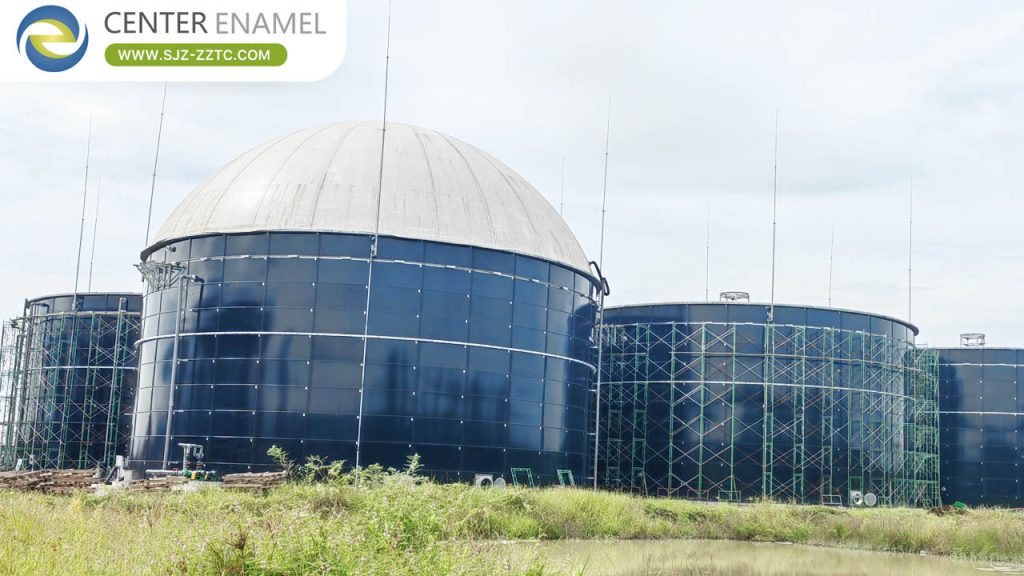
Daily Operations
Operators track influent flow and load, dissolved oxygen in the biological stage, sludge return rates, and outlet quality. Where anaerobic stages are used (UASB/UBF), they also watch gas production and H2S. A well-run system reaches 80-90% COD removal by anaerobic treatment and 90-98% with aerobic polishing.
Key O&M Tasks
| Task | Why it matters | Typical frequency |
| DO and load check | Protect biology | Continuous / daily |
| Sludge return | Settling quality | Continuous |
| Tank inspection | Catch coating loss | Monthly / annual |
| Aeration tune | Energy cost | Weekly |
| Calibration | Reliable data | Quarterly |
Sludge Management
Sludge from primary and secondary stages is thickened, stabilized (often anaerobic digestion, which also makes biogas), and dewatered. Stabilized digestate is stored in corrosion-resistant tanks before land application. Anaerobic sludge yield is only 0.05-0.10 kg VSS per kg COD, far lower than aerobic.
Tank and Equipment Care
Equalization, reactor, and sludge tanks built as bolted GFS (200-60,000 m3) resist acidic, H2S-bearing liquor, but coatings should be inspected for loss at manways and at the water line. Aeration blowers dominate energy use at 0.5-1.5 kWh/kg COD removed, so tuning them is the biggest OPEX lever.
Project Case Study
Domestic Sewage Treatment Project in Ghana. A municipal WWTP of 1,800 m3/day combining UBF + A2/O + sedimentation, cutting COD from 1,000 to 100 mg/L and BOD5 from 500 to 25 mg/L — a plant defined by its discharge limit and the O&M that sustains it.
| Project | Domestic Sewage Treatment Project in Ghana |
| Location | Ghana |
| Industry | Municipal / Domestic Sewage |
| Application | WWTP - UBF + A2/O |
| Product | GFS tanks (11.46 x 9.6 m, 14.52 x 4.8 m, 2x20.64 x 6.6 m) |
| Effluent | COD 1,000 to 100, BOD5 500 to 25 mg/L |
| Status | Delivered 2021 |
About Shijiazhuang Zhengzhong Technology Co., Ltd (Center Enamel)
Shijiazhuang Zhengzhong Technology Co., Ltd (Center Enamel) supports WWTP performance with installation and technical support: beyond factory-built GFS tanks, the team provides flat-pack shipment, on-site assembly supervision, and commissioning input so the tankage integrates cleanly with the process and mechanical packages. That installation backing is what lets a plant reach and hold its guaranteed outlet.
Advantages and Limitations
A disciplined O&M plan protects permit compliance and asset life. Limits: variable industrial loads need equalization, and aeration energy is significant, so design and operate for the lowest feasible load first.
Comparison: Stable vs Reactive O&M
| Criterion | Planned O&M | Reactive O&M |
| Compliance | Reliable | At risk |
| Cost | Predictable | Spiky |
| Asset life | Longer | Shorter |
WWTP O&M is the daily work of holding the discharge limit: monitor biology, tune aeration, manage sludge, and inspect tankage. Size and coat the tanks for the duty. Send your plant profile and we will configure the GFS tank package built for easy, low-risk operation.
Frequently Asked Questions (FAQ)
Q1: What does operating a WWTP involve?
A: Monitoring biology and load, controlling aeration and dosing, managing sludge, and inspecting tankage.
Q2: How much COD removal is achievable?
A: Anaerobic 80-90%, rising to 90-98% with aerobic polishing.
Q3: How is sludge handled?
A: Thickened, stabilized (often anaerobic digestion), and dewatered.
Q4: What is the main energy cost?
A: Aeration at 0.5-1.5 kWh/kg COD removed.
Q5: What tank capacity is available?
A: GFS tanks from 200 m3 to 60,000 m3.
Q6: What standards apply?
A: ISO 28765, AWWA D103, CE-EN 1090, ISO 9001; NSF/ANSI 61, WRAS, FM where relevant.
Suggested CTA
Send your plant profile and outlet limit. We will configure the GFS tank package built for stable, low-risk operation.