
Wastewater Treatment Plant Selection: Package, Modular And Conventional
Choosing a wastewater treatment plant means matching the delivery format to the site: a package plant is a pre-engineered, factory-built skid best for small, simple flows; a modular plant bolts standardized blocks together for medium sites needing flexibility; a conventional plant is built in place for large or complex duties. The decision turns on flow, footprint, permit severity, CAPEX/OPEX balance, and lead time - not on which looks neatest.
The Three Formats, Defined
A package plant arrives as a near-complete unit - tanks, biology, and controls in a skid or a small footprint - so it ships and starts fast but is hard to stretch beyond its design. Modular plants use repeatable blocks (often bolted Glass-Fused-to-Steel tanks plus standardized process packs) that scale by adding units. Conventional plants are engineered on site and suit large, variable, or strict-permit duties.
| Format | Scale | Footprint | Lead Time |
| Package | Small (<500 m3/d) | Smallest | Short |
| Modular | Small-Medium | Compact, scalable | Medium |
| Conventional | Medium-Large | Largest | Long |
What Drives The Choice
CAPEX favors package and modular; OPEX depends on the process, not the format; lead time favors factory-built options. Strict nutrient permits or large flows push toward conventional or a modular build with a robust biological core. A remote site values the fast, bolted deployment of modular GFS-tank plants over long civil works.
| Factor | Favors |
| Tight land | Package / modular |
| Strict nutrient limit | Conventional / robust bio |
| Fast start | Package / modular |
| Large / variable flow | Conventional |
| Remote site | Modular (bolted tanks) |
A Scoped Example
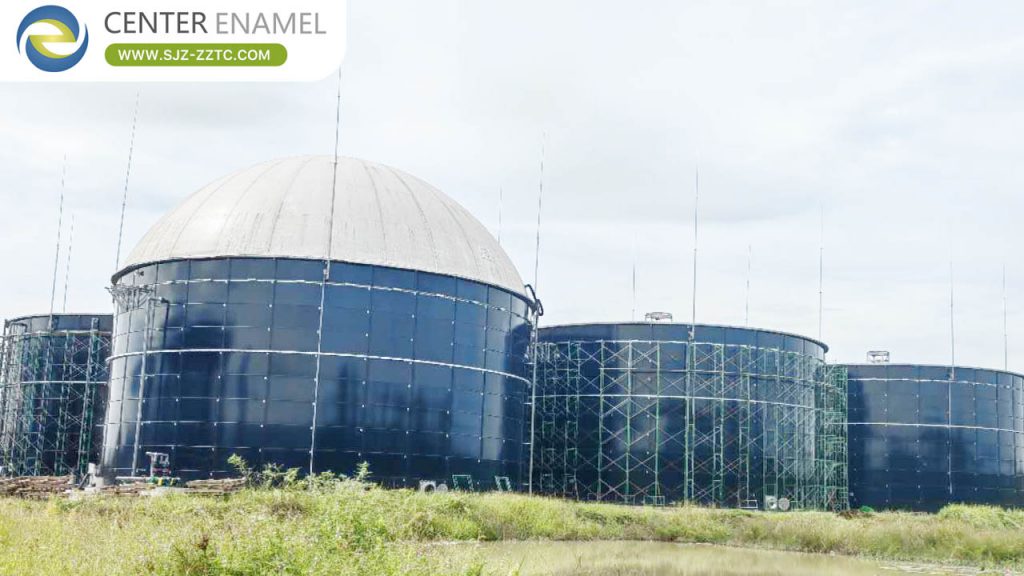
A municipal plant such as the Ghana domestic sewage project (1,800 m3/day, UBF+A2/O in Glass-Fused-to-Steel tanks) shows how a mid-size duty can be built from bolted tank blocks and a defined biological core rather than a one-size package - the format followed the flow and the nutrient limit, not the reverse.
| Format | CAPEX | OPEX | Flexibility |
| Package | Low | Medium | Low |
| Modular | Medium | Medium | High |
| Conventional | Higher | Lower at scale | Highest |
About Company
Shijiazhuang Zhengzhong Technology Co., Ltd (Center Enamel) is a comprehensive high-tech enterprise specializing in wastewater engineering, process section contracting, and equipment manufacturing. The company delivers biogas and wastewater projects through three main lines - EPC (turnkey) contracting, equipment supply, and process packages - covering livestock and municipal wastewater, biomass energy, industrial wastewater, and food waste. Its reactor portfolio spans CSTR, USR, UBF, UASB, IC, and EGSB, backed by in-house Glass-Fused-to-Steel tank manufacturing (enamel firing at 820-930 C) and certifications including ISO 9001, NSF/ANSI 61, and CE-EN 1090. With 35+ years of operation, a 150,000 m2 manufacturing base, and projects in 100+ countries, Center Enamel provides the single-responsibility engineering behind process-selection expertise and equipment supply that lets an owner pick the right format - package, modular, or conventional - from flow, footprint, and permit rather than from a catalogue.
Comparison: Build In Place Vs Bolted
| Element | Built in place | Bolted / modular |
| Civil works | Extensive | Minimal pad |
| Time | Long | Weeks |
| Relocatable | No | Often yes |
Wastewater plant selection is a trade between footprint, CAPEX, OPEX, and lead time: package for small and simple, modular for medium and flexible, conventional for large and strict - decided from flow, site, and permit, not from appearance.
Frequently Asked Questions
Q1: Package vs conventional? A1: Package is fast and cheap for small flows; conventional suits large or strict-permit duties.
Q2: When is modular best? A2: Medium flows, tight land, or remote sites needing bolted, scalable blocks.
Q3: What drives CAPEX? A3: Format and civil works; package and modular usually cost less up front.
Q4: How to choose for a site? A4: Match flow, footprint, permit severity, and lead time, then pick the format.
Q5: Can modular handle nutrients? A5: Yes, with a defined biological core (UBF/A2/O, SBR, MBR) inside the blocks.
Q6: Which tanks work bolted? A6: Glass-Fused-to-Steel tanks bolt together on a prepared pad.
Q7: Is a package plant expandable? A7: Limited; modular or conventional is better if growth is expected.
Q8: Who decides the format? A8: An engineer runs flow, footprint, and permit against CAPEX/OPEX.
Suggested CTA
Send your flow, footprint, and permit to an engineer, or request a plant-format selection note.