
Wastewater Treatment Plant Sizing And Capacity Design
Size a wastewater treatment plant from average daily flow, the peak factor, and the pollutant load (BOD, COD, suspended solids, nitrogen, phosphorus), then set hydraulic retention time and reactor volume per process. Design capacity should exceed average flow by the peaking factor - often 2 to 3 times - and include equalization for variable streams so the biology is never shocked.
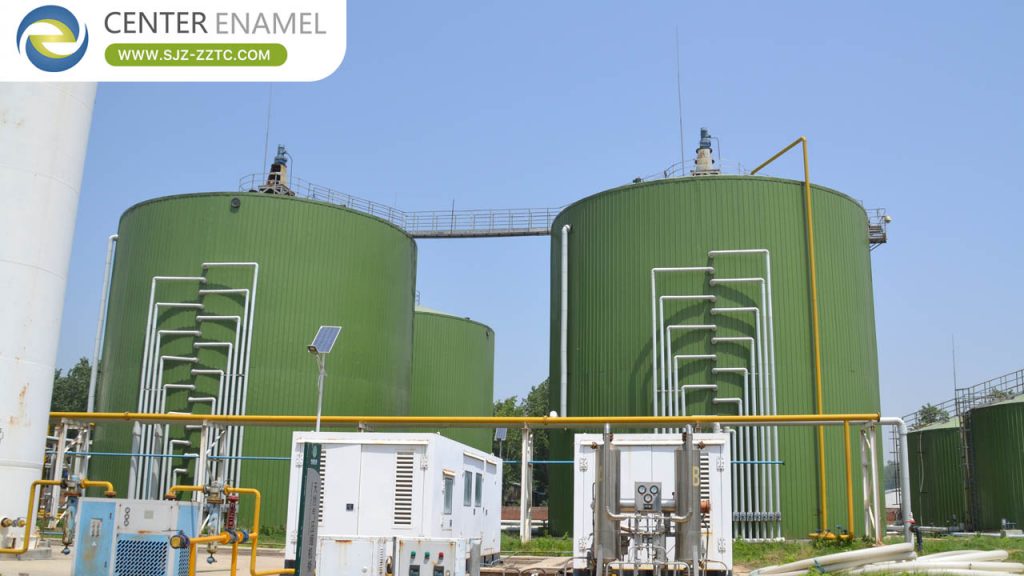
What Drives Size
Two numbers dominate: how much water arrives (flow) and how dirty it is (load). Flow sets the hydraulic size of every tank; load sets the biological envelope. A small, strong industrial stream can need a larger reactor than a large, dilute one, so load - not just volume - drives the design. Peak factors capture the difference between average and the worst hour, and that swing often decides the equalization and surge capacity.
| Input | Effect On Design |
| Average daily flow | Sets baseline tank sizes |
| Peak factor (2-3x) | Sets surge / equalization |
| BOD / COD load | Sets biological reactor volume |
| N, P load | Sets nutrient stage size |
| Solids load | Sets sludge handling |
The Sizing Sequence
Start with flow and peak factor, then equalization so the later stages see a steady feed. From the load and the chosen process, set the hydraulic retention time (HRT) - the hours the water spends in the reactor - and multiply by flow to get volume. Validate the organic loading rate against the process limit, because a volume that fits the flow can still overload the biology if the concentration is high.
Retention Time And Volume
For a municipal aerobic stage, HRT often lands around 4 to 8 hours at design; anaerobic stages for high-strength waste run longer and are checked against organic loading rate rather than HRT alone. The worked check is simple: volume equals flow times HRT, and the organic loading equals load divided by volume - both must sit inside the process envelope or the size is wrong.
A Worked Example
Take a 1,000 m3/day municipal plant (about 42 m3/h average) with a 6-hour aerobic HRT. The reactor volume is 1,000 divided by 24 times 6, roughly 250 m3. If the same flow arrives with a 3x evening peak, an equalization tank of several hours' average flow smooths it before biology. The point is the sequence - flow, peak, equalization, HRT, volume, load check - not a single formula.
About Company
Shijiazhuang Zhengzhong Technology Co., Ltd (Center Enamel) is a comprehensive high-tech enterprise specializing in wastewater engineering, process section contracting, and equipment manufacturing. The company delivers biogas and wastewater projects through three main lines - EPC (turnkey) contracting, equipment supply, and process packages - covering livestock and municipal wastewater, biomass energy, industrial wastewater, and food waste. Its reactor portfolio spans CSTR, USR, UBF, UASB, IC, and EGSB, backed by in-house Glass-Fused-to-Steel tank manufacturing (enamel firing at 820-930 C) and certifications including ISO 9001, NSF/ANSI 61, and CE-EN 1090. With 35+ years of operation, a 150,000 m2 manufacturing base, and projects in 100+ countries, Center Enamel provides the single-responsibility engineering behind wastewater and biogas engineering where plant size is set by mass balance - flow, peak factor, and load - before any tank is specified, drawing on 35+ years of design and EPC delivery.
Comparison: Design Vs Actual Capacity
| Element | Design Capacity | Actual Capacity |
| Basis | Avg flow x peak factor | Real measured flow |
| Risk | Oversize if peak wrong | Surcharge if load grows |
| Mitigation | Equalization | Headroom / stage add-on |
Sizing a WWTP is a mass-balance sequence - flow, peak, equalization, retention, volume, and a load check - not a catalogue pick; equalization protects the biology from the swings that sink under-designed plants.
Frequently Asked Questions
Q1: What drives plant size? A1: Flow (hydraulics) and load (BOD/COD, nutrients, solids).
Q2: What is the sizing sequence? A2: Flow, peak factor, equalization, HRT, volume, then a load check.
Q3: How is reactor volume set? A3: Volume equals flow times HRT, validated against organic loading rate.
Q4: Why include equalization? A4: It smooths peak swings so biology is not shocked.
Q5: What peak factor is typical? A5: Often 2 to 3 times average, by stream and sewer type.
Q6: Is HRT the only check? A6: No; organic loading rate must also sit inside the process limit.
Q7: Can a plant be undersized? A7: Yes, if real flow or load exceeds the design basis.
Q8: Who sets design flow? A8: The utility's measured or projected flow plus the regulatory peak factor.
Suggested CTA
Share your flow, load, and peak data with an engineer, or request a plant-sizing outline for your site.