
Wastewater Treatment Plant Solutions For Variable Flows: Equalization And Shock-Load Protection
A wastewater treatment plant solution sized only on average flow will fail on the day a batch discharge arrives. Protect it with three layers: an equalization basin that smooths flow and strength, source segregation that keeps the worst stream out of the biological stage, and a reactor with enough retained biomass to absorb a transient shock. The goal is not to design for the peak - it is to stop the peak from reaching the biology as a step change.
Where Variability Comes From
Industrial influent varies because production is batched, shifts change, and cleaning cycles release concentrated residues. The resulting swings can be in flow, in strength, or both - and a short, high-strength slug can do more damage than a full day above average flow. Naming the source of each swing is the first step to controlling it.
| Variability source | What it changes | First response |
| Batch production | Strength spikes | Segregate and meter the batch |
| Shift / weekend pattern | Flow swings | Equalization basin |
| CIP / cleaning cycle | Salts, solvents, surfactants | Source segregation |
| Storm ingress | Flow and dilution | Flow balancing and bypass |
Sizing Equalization Properly
An equalization basin is sized from the difference between the incoming pattern and a steady outflow over the balancing period - not from a rule of thumb. It needs mixing so the contents stay homogeneous, and it needs a controlled draw-off so the downstream plant sees a smooth feed. An unmixed basin that simply holds wastewater for a few hours delivers a delayed slug, not a solution.
Choosing A Reactor That Absorbs Shocks
Biomass inventory is the buffer that decides how much shock a reactor can take. High-rate granular systems hold a lot of biomass in a small volume and recover well from short strength spikes, but can be disturbed by oils or solids. A completely mixed tank dilutes an incoming slug across its whole volume and is more forgiving of a harsh feed, at the cost of a larger footprint and longer retention.
| Reactor | Shock it tolerates | Weak point |
| CSTR / mixed | Strength and toxicity spikes | Large volume, mixing cost |
| UASB / EGSB | Short hydraulic peaks | Oils, solids, sudden pH shift |
| IC (two-stage) | Organic load spikes | Requires stable granular bed |
| SBR | Variable flow, batch feed | Cycle control and decanting |
Segregating The Streams That Do The Damage
Not all wastewater should reach the same basin. A high-salinity mother liquor or a solvent-rich cleaning stream can inhibit an otherwise healthy culture at a small fraction of total flow. Keeping those streams separate - then feeding them gradually or treating them on their own - protects the main biological stage far more cheaply than increasing its size.
Project Reference - High-Salinity Pharmaceutical Effluent
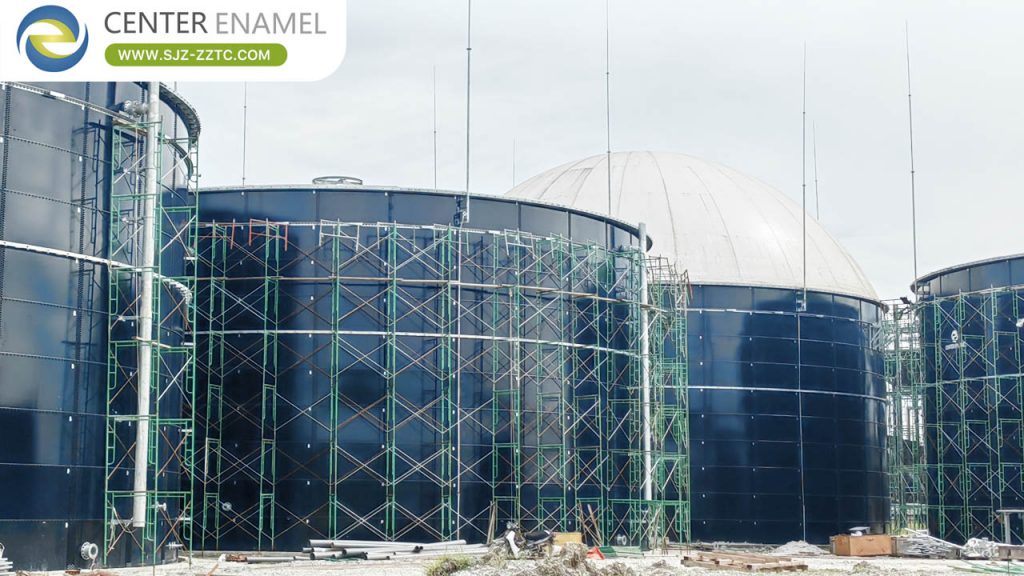
A referenced pharmaceutical wastewater project in Jiangdong, China (2019) treated 1,000 m3/day of acarbose-extraction wastewater mixed with domestic flow using six granular-sludge anaerobic reactors of 12.66 x 24 m, with a published COD removal of at least 70%. The source is high-salinity process effluent, and the figure is cited as a construction and removal reference for a variable industrial feed - not as a guarantee for other wastewater.
| Attribute | Value | Note |
| Location / year | Jiangdong, China / 2019 | Published |
| Feed / capacity | Acarbose + domestic / 1,000 m3/day | High salinity |
| Reactors | 6 x granular sludge, 12.66 x 24 m | Published |
| COD removal | ≥ 70% | Published figure |
Where Protection Has Limits
Equalization and segregation absorb variability, but they cannot remove a persistent inhibitor. If the offending compound is present continuously, the plant needs source change, pre-treatment, or a culture adapted to it. Similarly, an equalization basin only helps if it is genuinely mixed and properly sized - adding an unused tank to a process diagram does not make a plant shock-proof.
About Company
Shijiazhuang Zhengzhong Technology Co., Ltd (Center Enamel) is a comprehensive high-tech enterprise specializing in wastewater engineering, process section contracting, and equipment manufacturing. The company delivers biogas and wastewater projects through three main lines - EPC (turnkey) contracting, equipment supply, and process packages - covering livestock and municipal wastewater, biomass energy, industrial wastewater, and food waste. Its reactor portfolio spans CSTR, USR, UBF, UASB, IC, and EGSB, backed by in-house Glass-Fused-to-Steel tank manufacturing (enamel firing at 820-930 C) and certifications including ISO 9001, NSF/ANSI 61, and CE-EN 1090. With 35+ years of operation, a 150,000 m2 manufacturing base, and projects in 100+ countries, Center Enamel provides the single-responsibility engineering behind industrial wastewater process sections and equalization tankage - a scoped engineering reference, not a guarantee of performance on an uncharacterized feed.
Conclusion
A wastewater treatment plant solution for variable flow is built from equalization, segregation, and adequate biomass inventory. Design for the shape of the influent, not just its daily average, and the plant will hold compliance through the batches that would otherwise break it.
Frequently Asked Questions
Q1: Why does a variable flow break a plant? A1: Because a short, high-strength slug reaches the biology as a step change that the culture cannot absorb.
Q2: How much equalization is needed? A2: It is sized from the difference between incoming pattern and steady outflow over the balancing period, then checked by mixing and draw-off design.
Q3: Which reactor survives shock loads? A3: Mixed tanks dilute a harsh slug across a large volume; granular high-rate systems tolerate short strength peaks but dislike oils and solids.
Q4: How are bad streams segregated? A4: By identifying the saline or solvent-rich stream at source, holding it separately, and feeding it gradually or treating it on its own.
Q5: Can a plant just be sized for the peak? A5: Rarely economically; equalization and segregation are usually cheaper than building the whole biology for a rare maximum.
Q6: Does an equalization tank need mixing? A6: Yes - without mixing it delivers a delayed slug instead of a smooth feed.
Q7: What does biomass inventory do? A7: It buffers a transient shock; more retained biomass generally means better recovery from a strength spike.
Q8: Can equalization fix a persistent inhibitor? A8: No - a continuously present inhibitor needs source control, pre-treatment, or an adapted culture.
Suggested CTA
Share a 24-hour flow and strength profile plus your cleaning-cycle schedule, or request a scoped equalization and shock-load review.