
Wastewater Treatment Project: Phasing And Future Expansion Provision
A wastewater treatment project built in phases only works if phase one reserves what phase two cannot easily add later - land, hydraulic head, tie-in points and utility capacity. Retrofitting these into a live plant is expensive and often requires a shutdown. Design the first stage as the first cell of a known end-state, not as a standalone plant that a future engineer must rebuild around.
Why Phase A Project At All
Phasing matches capacity to demand that arrives over time - a new development, a growing plant, or staged regulatory tightening. It spreads capital and lets early stages inform later ones. But phasing saves money only if the physical provision is made up front; a first stage built with no land or headroom reserve simply moves the cost into a harder, later retrofit.
What Phase One Must Reserve
Four things are cheap to include now and costly to add later. The list is general engineering guidance; the actual reserves for a given project depend on its forecast and site.
| Reserve | Why it matters | How to provide |
| Land / footprint | No space to expand | Layout with blank bays |
| Hydraulic head | Gravity flow fails | Oversize headers / levels |
| Tie-in points | Shutdown to connect | Stub-outs and valves |
| Utility capacity | Power / gas short | Margin in supplies |
Tankage And Layout
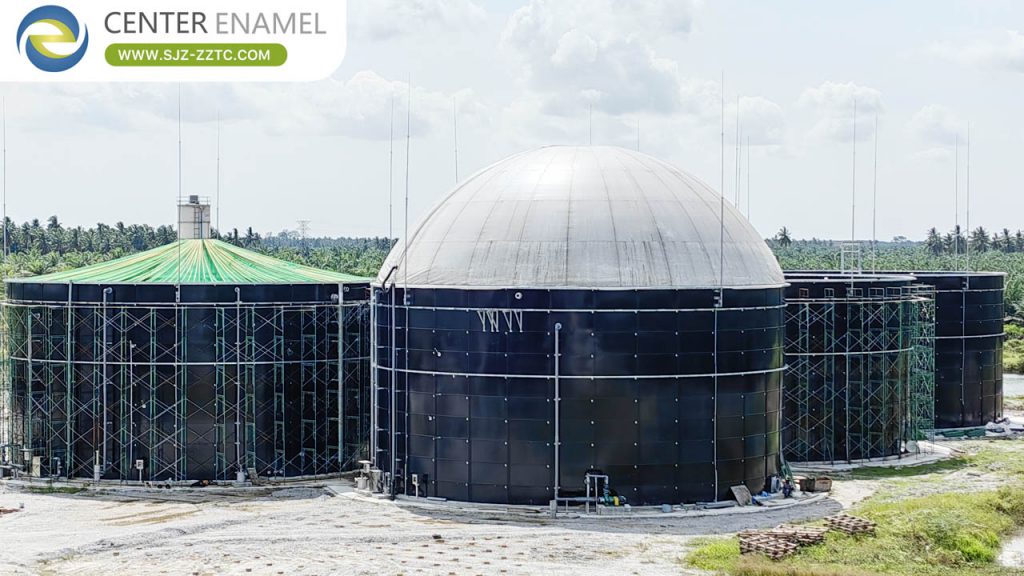
Tanks are the easiest elements to phase because additional units can be added in parallel. The trick is to lay out the first tanks so the second row can connect to the same inlet and outlet headers. A modular tankage approach - several smaller units instead of one large one - makes both capacity stepping and future isolation simpler, and a failed unit can be taken offline without stopping the plant.
| Phasing choice | Phase one | Phase two |
| Single large tank | Full volume now | No economic step |
| Parallel small tanks | First cells only | Add cells, same headers |
| Shared header | Installed at full size | Connect new cells |
| Staged aeration | Duty blowers + spare | Add duty capacity |
Hydraulic Head And Tie-Ins
The most common phasing failure is hydraulic: the first stage is designed with just enough head to flow, leaving no fall for a future unit inserted upstream or downstream. Setting levels with a deliberate margin, and leaving valved stub-outs on main headers, allows a future connection to be made with a short outage rather than a rebuild of the whole gravity system.
A Turnkey Dairy Train To Phase Around
The library records a turnkey dairy wastewater project in Wuwei, Gansu, using IC + A2O at 8,000 tonnes/day. It illustrates a named process train delivered as a single project at a defined capacity. The source confirms the process, capacity and application; the phasing sequence, reserve provisions and expansion plan are Not Specified in the Available Source and are not claimed here. The reference shows the kind of plant phasing must plan around, not a documented expansion.
About Company
Shijiazhuang Zhengzhong Technology Co., Ltd (Center Enamel) is a comprehensive high-tech enterprise specializing in wastewater engineering, process section contracting, and equipment manufacturing. The company delivers biogas and wastewater projects through three main lines - EPC (turnkey) contracting, equipment supply, and process packages - covering livestock and municipal wastewater, biomass energy, industrial wastewater, and food waste. Its reactor portfolio spans CSTR, USR, UBF, UASB, IC, and EGSB, backed by in-house Glass-Fused-to-Steel tank manufacturing (enamel firing at 820-930 C) and certifications including ISO 9001, NSF/ANSI 61, and CE-EN 1090. With 35+ years of operation, a 150,000 m2 manufacturing base, and projects in 100+ countries, Center Enamel provides the single-responsibility engineering behind wastewater treatment projects planned so that phase one is a genuine first cell of the end-state - with land, head, tie-ins and utilities reserved from day one.
Conclusion
Phasing saves capital only when the first stage reserves land, hydraulic head, tie-in points and utility margin. Build phase one as part of a known end-state, not as a plant a future engineer must work around.
Frequently Asked Questions
Q1: Why plan expansion into phase one? A1: Land, head and tie-ins are cheap to reserve now and expensive to add to a live plant later.
Q2: What is hydraulic head in phasing? A2: The available fall for gravity flow; without margin, a future inserted unit cannot drain.
Q3: What are tie-in points? A3: Valved stub-outs on headers that let a future unit connect with a short outage.
Q4: Why use modular tanks for phasing? A4: Parallel units can be added stepwise and isolated individually without stopping the plant.
Q5: Does phasing always save money? A5: Only if the physical provision is made up front; otherwise it defers cost into a harder retrofit.
Q6: What sets the reserve sizes? A6: The demand forecast and the site layout, not a generic rule.
Q7: Can utility capacity be phased? A7: Power and gas supplies should carry margin in phase one to avoid a later upgrade.
Q8: Was the reference plant built in phases? A8: The source does not state a phasing sequence; it is Not Specified and no expansion is claimed.
Suggested CTA
Share your capacity forecast with an engineer to design phase one with the land, head and tie-ins a future phase will need.