
Wastewater Treatment Projects: Integrating Anaerobic Digestion for Biogas Recovery
A wastewater treatment project today is judged on more than effluent quality — energy performance has become a headline KPI. Conventional activated sludge plants consume 25–60 kWh per 1,000 m³ treated, and electricity can represent 20–40% of operating costs, making energy recovery a core design driver rather than an optional add-on.
The solution is anaerobic digestion of the sludge stream. When primary and waste activated sludge are digested, each tonne of volatile solids yields 600–900 m³ of biogas at 60–65% methane, which can cover 30–60% of a plant’s electrical demand through CHP. Leading utilities now operate digesters at 90%+ of theoretical capacity and sell surplus electricity or biomethane into grids.
This guide covers the wastewater treatment project design pathway: sludge characterization, digester sizing, CHP integration, and the technologies that push plants toward energy neutrality — with a comparison table and ROI framework for the investment decision.
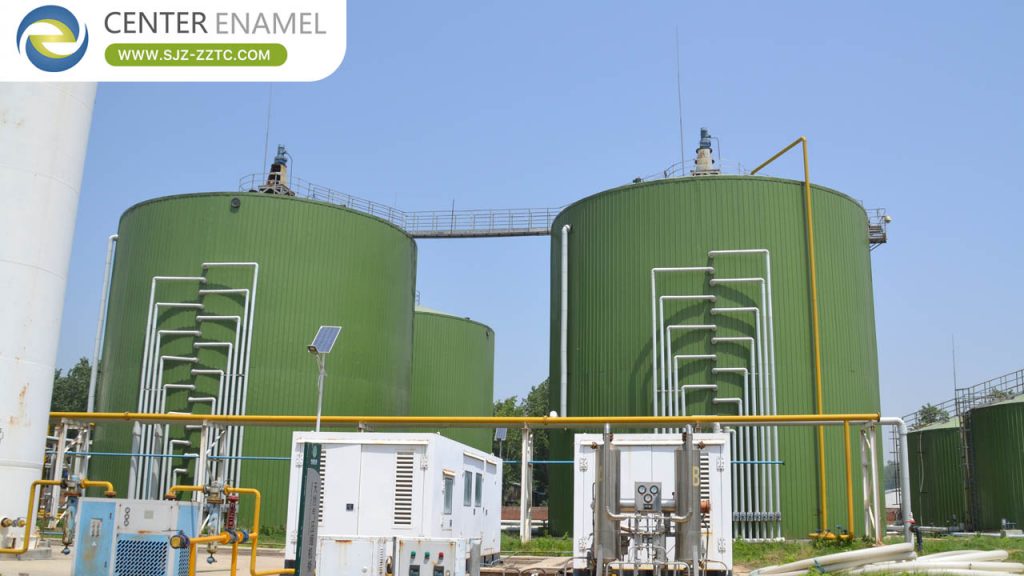
How Biogas Recovery Is Integrated into Wastewater Treatment Plants
Sludge digestion sits between primary treatment and final disposal. Thickened sludge (4–6% solids) is heated to 35–38°C in a mesophilic digester with a 20–25 day retention time, producing biogas that fuels CHP engines or is upgraded to biomethane. Digested sludge is then dewatered to 22–30% solids for agricultural reuse or incineration.
Key design parameters include volatile solids loading rate (1.5–3.0 kg VS/m³/day), mixing intensity, and digester configuration — egg-shaped, cylindrical, or plug-flow. Gas storage and flare systems handle production variability, while H2S removal (iron chloride dosing or biological scrubbing) protects CHP engines.
Modern plants layer multiple recovery technologies: high-rate primary clarification to capture more carbon, thermal hydrolysis pre-treatment to boost biogas yield by 20–40%, and co-digestion with food waste or fats to increase gas production and earn gate fees. These upgrades convert a cost center into a profit center.
Comparative Data Table: Sludge-to-Biogas Technology Configurations
| Configuration | Biogas Yield (m³/t VS) | Energy Coverage | CAPEX Impact | Maturity | Best Fit |
| Conventional Mesophilic Digestion | 600–750 | 30–40% of plant load | Low (retrofit) | Proven | Standard municipal WWTP |
| Digestion + Thermal Hydrolysis | 720–900 | 45–60% | Moderate (+20–30%) | Proven | Large plants, space-limited sites |
| Co-digestion with Food Waste | +15–40% vs baseline | 50–70% | Low–Moderate | Proven | Plants with reliable organic waste supply |
| Digestion + Biomethane Upgrading | Same as digestion | Export fuel / transport | High (upgrading unit) | Proven | Plants with gas grid or fleet demand |
The table reveals a staged roadmap: most plants start with conventional digestion, then add pre-treatment or co-digestion as gas demand and gate-fee opportunities grow. The key is designing the digestion core correctly from day one — reactor volume, mixing, and gas handling are costly to retrofit later.
Pathway to Energy-Neutral and Energy-Positive Plants
Energy neutrality in a wastewater treatment project requires cutting demand and raising recovery simultaneously. Demand-side measures — fine-bubble aeration with DO control, high-efficiency blowers, and heat recovery — typically cut consumption 15–25%. Supply-side, digestion plus CHP covers the remainder.
Case benchmarks: plants achieving energy neutrality typically combine digestion, CHP at 40%+ electrical efficiency, and demand optimization. European leaders reach 100–130% energy self-sufficiency, exporting surplus power. North American plants average 30–50% self-sufficiency today, showing the headroom in mature markets.
Financial payback for digester and CHP investment ranges from 5–8 years based on electricity displacement alone; adding co-digestion gate fees shortens this to 3–5 years. With carbon credits for avoided methane (1 t CH₄ = 25–28 t CO₂e under standard protocols), the climate case strengthens the business case further.
Frequently Asked Questions (FAQ)
Q1: How do wastewater treatment plants recover biogas?
A: Sludge is thickened, heated to 35–38°C, and digested anaerobically for 20–25 days. The biogas produced (60–65% methane) fuels CHP engines for electricity and heat, or is upgraded to biomethane. Energy recovery typically covers 30–60% of plant electrical demand.
Q2: What is sludge digestion?
A: Sludge digestion is the biological breakdown of organic solids in sludge by microorganisms in an oxygen-free reactor. It stabilizes the sludge, reduces volume by 30–40%, destroys pathogens, and produces biogas — solving both disposal cost and energy supply in one process.
Q3: Can a wastewater treatment plant become energy neutral?
A: Yes. Combining anaerobic digestion with CHP, co-digestion of food waste, and 15–25% demand reduction allows plants to reach 100% self-sufficiency. European leaders already export surplus energy; payback on digestion investments typically ranges from 3–8 years depending on gate fees.
Q4: How much biogas comes from sewage sludge?
A: Each tonne of volatile solids yields roughly 600–900 m³ of biogas at 60–65% methane. A 100,000 m³/day plant treating typical municipal wastewater can produce 2–4 MW of biogas-based electricity depending on sludge capture and pre-treatment.