
Wastewater Treatment Projects: Types, Scope, And Delivery Models
Wastewater treatment projects fall into packaged plants for small, standard flows and engineered tank-and-process builds for larger or complex streams. Municipal and industrial projects differ mainly in pollutant profile and permit strictness. Delivery model and tankage choice drive both cost and risk.
Types Of Wastewater Projects
Packaged plants arrive as skids for quick deployment. Engineered builds combine site-specific tankage (often GFS) with a tailored process train. Hybrid projects use modular tanks around a standard process.
| Type | Best For | Tankage |
| Packaged | Small, standard flow | Factory skid |
| Engineered | Large or complex | GFS or concrete |
| Hybrid | Growing load | Modular GFS |
Municipal Vs Industrial
Municipal sewage centers on nutrient removal (N and P) at predictable strength. Industrial wastewater varies widely, from palm oil POME to high-salinity pharmaceutical streams, and often needs anaerobic pre-treatment plus tailored polishing.
Delivery Models
EPC gives one guarantee; design-build compresses schedule; BOOT transfers operation. The model should match the owner's appetite for O&M risk, not just the lowest bid.
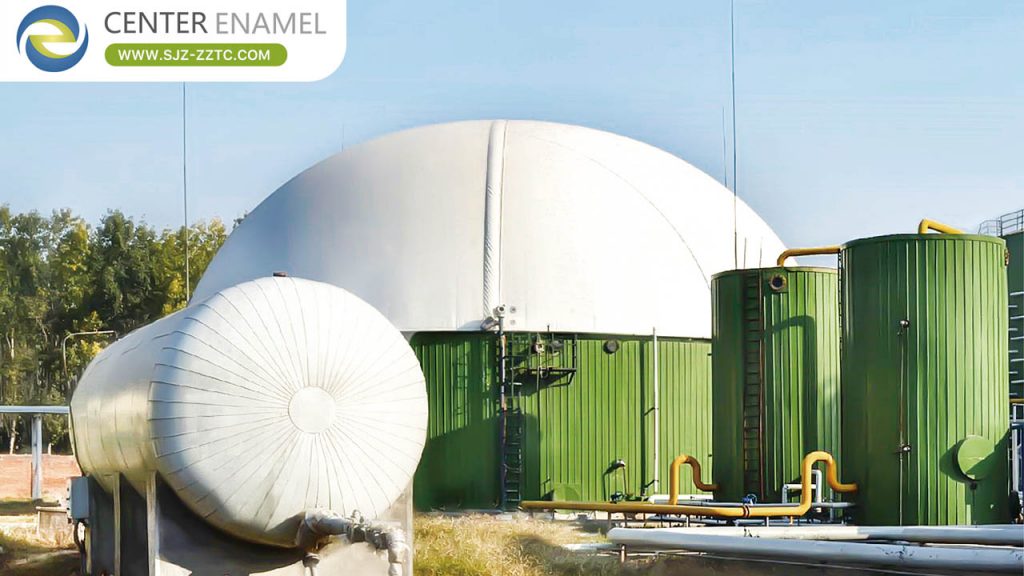
Project Case Study: Indonesia Biogas Project (Anaerobic Reactors)
Project / Application: Anaerobic reactors at palm oil WWTP, Indonesia. Industry: Palm oil. Tank Type: GFS. Key Requirements: Flexible anaerobic capacity for POME.
| Field | Value | Source / Evidence |
| Application | Anaerobic Reactors at Palm Oil WWTP | Company project reference |
| Tank Model A | Ø17.58 x 8.4 m | Company project reference |
| Tank Model B | Ø16.82 x 7.2 m | Company project reference |
| Tanks Quantity | 3 Nos. of GFS Tanks | Company project reference |
| Installation Year | 2013 | Company project reference |
| Process | Anaerobic Digestion | Company project reference |
About The Supplier
Shijiazhuang Zhengzhong Technology Co., Ltd (Center Enamel) has delivered wastewater and biogas tankage across municipal, palm oil, pharmaceutical, and livestock projects, with enamel firing at 820-930 C and ISO 9001, NSF/ANSI 61, CE-EN 1090, and ISO 28765 certification.
Comparison: Scope Boundaries
| Scope | Includes | Excludes |
| Plant only | Tanks + process | O&M, land |
| Turnkey | Plant + install | Long-term ops |
| BOOT | Plant + operate | Ownership transfer later |
Pick the project type from flow and complexity, then choose a delivery model that puts schedule and effluent risk with the party best able to carry it. Tankage should follow the process, never lead it.
Frequently Asked Questions
Q1: What types of wastewater projects exist? A1: Packaged skids, engineered tank-and-process builds, and hybrid modular plants.
Q2: How do municipal and industrial differ? A2: Municipal targets nutrients at steady strength; industrial varies and often needs anaerobic pre-treatment.
Q3: Which delivery model fits? A3: EPC for one guarantee, design-build to fast-track, BOOT to outsource operation.
Q4: How is tankage chosen? A4: From the process zones and retention time, using GFS for corrosion and speed.
Q5: What tank dimensions are typical? A5: Palm oil anaerobic builds used GFS tanks from 16.82 to 19.86 m diameter.
Q6: Why GFS over concrete? A6: Faster assembly, factory QA, and corrosion resistance for aggressive effluents.
Q7: What certifications apply? A7: ISO 9001, NSF/ANSI 61, CE-EN 1090, ISO 28765.
Q8: Can a project combine approaches? A8: Yes; hybrid builds use modular GFS tanks around a standard process.
Describe your flow, pollutant profile, and permit to get a project-type and delivery-model recommendation, or contact an engineer.