
How Center Enamel Delivers Wastewater Treatment Solutions for Complex Chemical Effluent?
The industrial wastewater landscape is defined by clear divergence. Leading companies consolidate integrated service capabilities through technical integration and capital operations, and industry concentration continues to rise. Chinese manufacturers keep strengthening their advantage in mid-tier equipment exports, international giants target high-end customers and the most complex industrial wastewater markets, while local players hold the mid-to-low-end and industrial park centralized treatment segments through service responsiveness and cost advantages.
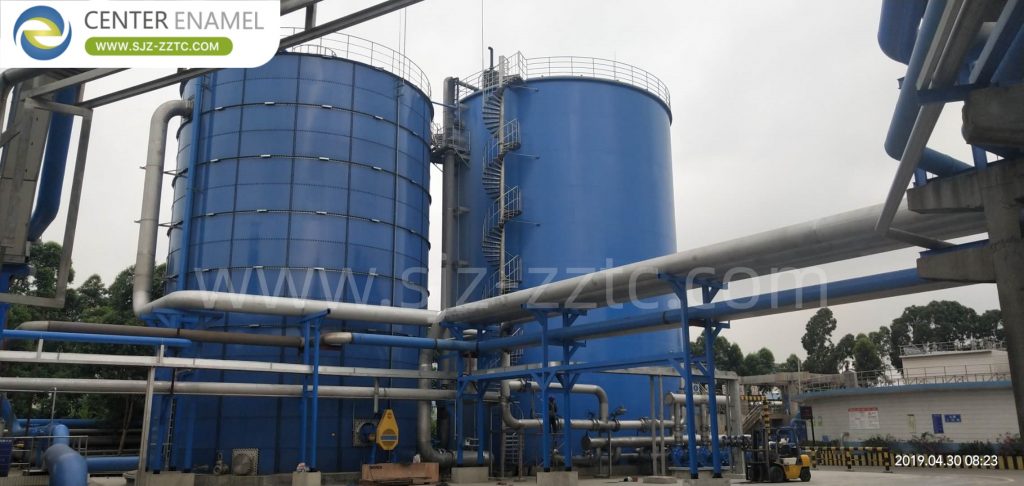
Across all of these tiers, anaerobic reactors-UASB, EGSB, and the IC Process-dominate high-concentration organic wastewater pretreatment in food processing, pharmaceutical fermentation, alcohol brewing, and chemical production. Because these reactors depend on steel tank shells, corrosion resistance and gas-tightness directly determine long-term operational stability, which is why the role of GFS tanks in such scenarios keeps growing.
Turning that technology into reliable, long-life performance is exactly where a full-scope provider of Wastewater Treatment Solutions makes the difference. Center Enamel builds the complete chain-enamel materials, GFS tanks, IC Process reactors, and EPC delivery-so treatment efficiency and containment durability are designed as one system, not assembled from unrelated parts.
Market Forces Shaping Modern Wastewater Treatment Solutions
Competitive pressure is pushing providers toward integration. Buyers increasingly expect a single accountable partner who can combine biological process design, corrosion-proof containment, and on-site construction-rather than coordinating a reactor vendor, a tank supplier, and a civil contractor separately. This demand explains why integrated service capability, supported by proprietary core technology, has become the decisive differentiator. It also explains why GFS tanks have moved from a niche alternative to a mainstream choice: they combine factory-controlled quality with the corrosion and gas-tightness performance that high-rate anaerobic treatment demands.
The IC Process: The Engine of High-Rate Anaerobic Treatment
The IC Process, or Internal Circulation Anaerobic Reactor, is the third-generation high-efficiency anaerobic treatment technology built upon UASB. Its core innovation is a built-in gas-lift internal circulation system that enables autonomous wastewater recirculation without external return pumps. The reactor uses a dual-zone configuration-a lower main reaction zone and an upper polishing zone-where biogas gas-lift creates hydraulic internal circulation, significantly increasing upflow velocity and enhancing sludge-wastewater contact. Extremely compact by design, the IC Process is purpose-built for high-concentration, high-flow industrial organic wastewater, combining high efficiency, energy savings, and minimal footprint as the core process for modern industrial high-strength wastewater treatment.
How the IC Process Handles Complex Chemical Effluent
In operation, pretreated high-strength organic wastewater enters the lower main reaction zone from the bottom, mixing with recirculated sludge-water mixture and rising rapidly. Anaerobic microorganisms degrade organic matter efficiently, producing large volumes of biogas. The gas-lift action of that biogas carries the mixed liquor upward to the top gas-liquid separator, where biogas is collected. The degassed sludge-water mixture then returns by gravity through downcomers to the reactor bottom, creating autonomous internal circulation that repeatedly enhances pollutant degradation. After multiple circulation cycles, the wastewater enters the upper polishing zone for further reaction and sludge-water separation. Remaining trace organics are fully degraded, sludge settles back to the lower reaction zone, treated effluent overflows from the top, and aged sludge is periodically discharged. The result is fully autonomous circulation and efficient continuous operation-high-rate treatment that shrinks footprint, energy demand, and operator intervention at the same time.
Where the IC Process Is the Right Fit
The IC Process is primarily applied to high-concentration, high-flow soluble industrial organic wastewater, covering brewery, beverage, starch, pharmaceutical, chemical, and papermaking high-strength streams. It suits land-constrained projects with high treatment efficiency requirements in large industrial wastewater treatment facilities, and it serves as the primary process for high-strength wastewater needing rapid COD/BOD removal. It is equally suitable for centralized industrial park WWTPs and large enterprise proprietary treatment systems, particularly for wastewater with significant quality fluctuations and extremely high pollutant concentrations. It is not suitable for high-solids, high-viscosity wastewater.
Understanding Chemical Wastewater Complexity
Chemical wastewater originates from the entire production chain of petrochemicals, coal chemicals, fine chemicals, fertilizers and pesticides, and consumer chemicals-one of the heaviest pollution loads and most complex wastewater categories in industry. Key pollution stages include chemical reaction synthesis, raw material refining and separation, product purification and crystallization, catalyst regeneration, and solvent recovery. Auxiliary discharges include equipment and pipeline washing, reactor cleaning, floor washing, cooling water, and scrubber drainage. Petrochemical wastewater is primarily oily wastewater and alkaline residue, rich in hydrocarbons, phenols, and sulfides. Coal chemical wastewater is mainly coal gasification scrubber water, rich in ammonia nitrogen, cyanides, phenols, and heterocyclic compounds. Fine chemical wastewater has diverse compositions with various synthesis intermediates, residual raw materials, and byproducts. Pesticide wastewater contains organophosphorus and organochlorine pesticide residues. Wastewater generation is continuous, with significant fluctuations as product lines change. Large petrochemical plants have high continuous discharge volumes, while small and medium-sized chemical plants discharge intermittently with extremely unstable water quality.
This complexity directly translates into cost. Chemical wastewater O&M ranks among the highest of all wastewater types, with poor overall economic viability second only to pharmaceutical wastewater. Strong toxicity and high salinity require extensive segregated pretreatment equipment-high capital investment and complex operation. Advanced oxidation demands continuous addition of expensive chemicals such as hydrogen peroxide, ozone, and catalysts. High-salinity evaporation crystallization and reverse osmosis membrane treatment consume enormous energy. Salt-bearing and toxic sludge is hazardous waste whose compliant disposal can account for over 30% of total costs. Equipment in high-salt, highly corrosive, strongly oxidizing environments suffers frequent corrosion damage with high repair and replacement costs. Frequent water quality fluctuations demand dedicated 24/7 monitoring and adjustment. Resource recovery benefits are minimal, and overall investment far exceeds returns-making chemical wastewater one of the highest economic burdens in industrial wastewater treatment. Delivering viable Wastewater Treatment Solutions here requires containment that survives this environment, which is precisely the role of GFS tanks.
GFS Tanks: Containment Built for Corrosive, Extreme Conditions
Center Enamel has independently developed over 200 specialized enamel frit formulations and supporting patents, allowing anti-corrosion enamel to be customized for the exact media a customer stores. This adaptability is comprehensively superior to concrete tanks, which use a single material suited mainly to neutral clean water. When storing corrosive materials such as chemical wastewater or high-salinity streams, concrete tanks require additional anti-corrosion linings-linings that are prone to failure and cannot adapt to alternating high and low concentration storage conditions.
GFS tanks can be specifically formulated for the full chemical wastewater profile-strong acids, strong alkalis, high organic content, and high salinity-and a single tank can switch between multiple wastewater and fermentation feedstock storage requirements. Because they are universally applicable across biogas anaerobic digestion, municipal wastewater, food processing, and industrial water treatment, factories avoid rebuilding tanks when media change, meeting the needs of diversified, multi-condition environmental protection projects.
GFS Tanks Adaptable to Extreme Climates
GFS tanks can undergo customized wind and seismic design based on project site climate and geological conditions, with environmental adaptability far superior to concrete tanks. Concrete tanks are cast-in-place monolithic structures whose seismic and wind resistance depend entirely on on-site construction quality; in remote areas, typhoon-prone zones, and earthquake belts, that quality is difficult to control. Under strong earthquakes or typhoons, concrete tanks are prone to cracking and base settlement damage, with subsequent reinforcement costs equivalent to rebuilding. GFS tanks, by contrast, collect local seismic intensity, maximum wind pressure, and foundation bearing capacity data before construction, then apply customized thickened steel panels, stiffening ribs, and anchored base components-all factory-prefabricated to standardized specifications. The bolted panel structure distributes stress excellently, making it less prone to overall fracture under seismic and typhoon impacts, and minor foundation settlement will not cause through-cracking. Structural parameters can be flexibly adjusted for mountainous, coastal typhoon-zone, and high-seismic-zone projects, providing long-term protection against extreme natural climate damage.
Proven Case: South Africa Brewery High-Strength Wastewater Treatment Project
The integration of IC Process technology and GFS tanks is validated in practice. Center Enamel's South Africa Brewery High-Strength Wastewater Treatment Project focuses on high-concentration organic wastewater treatment in South Africa's brewing industry, featuring both GFS tanks and stainless steel tanks as core equipment. GFS tanks serve as the primary anaerobic digestion system, suited to brewery wastewater's high-COD, high-sugar, readily decomposable characteristics for efficient organic pollutant degradation. Stainless steel tanks are used for wastewater transfer and chemical storage supporting processes. The complete equipment package delivers excellent corrosion resistance and flexible assembly, providing long-term stable treatment of brewery production and cleaning wastewater-solving local brewing industry pollution challenges. This is a mature brewery wastewater treatment case in Africa.
Table 1: South Africa Brewery Project Equipment Configuration
| Equipment Type | Primary Function | Key Performance Requirement |
| GFS Tanks | Primary anaerobic digestion system | High-COD/high-sugar degradation; corrosion resistance; gas-tightness |
| Stainless Steel Tanks | Wastewater transfer and chemical storage | Chemical compatibility; structural integrity |
| Complete Equipment Package | Production and cleaning wastewater treatment | Flexible assembly; long-term operational stability |
Table 2: IC Process Capability Profile
| Parameter | Specification |
| Technology generation | Third-generation high-efficiency anaerobic (built upon UASB) |
| Core innovation | Built-in gas-lift internal circulation, no external return pumps |
| Reactor configuration | Dual zone: lower main reaction zone + upper polishing zone |
| Target wastewater | High-concentration, high-flow soluble industrial organic streams |
| Typical industries | Brewery, beverage, starch, pharmaceutical, chemical, papermaking |
| Ideal applications | Land-constrained facilities, industrial park WWTPs, large proprietary systems |
| Limitations | Not suitable for high-solids, high-viscosity wastewater |
30+ Years of Wastewater Treatment Solutions Delivery
Center Enamel has been deeply engaged in the environmental bolted storage equipment field for over 30 years. Starting with proprietary enamel anti-corrosion material technology, the company has gradually completed a full-industry-chain upgrade from a single tank manufacturer to a comprehensive environmental EPC service provider. Throughout its 30+ year history, the company has been recognized as a National High-Tech Enterprise, National Specialized and Sophisticated "Little Giant," Manufacturing Single Champion, and Provincial Green Factory. It has successfully delivered over 30,000 environmental projects globally, establishing itself as a leading enterprise in the global GFS tank storage industry. The company has fully integrated the entire chain from enamel frit R&D and intelligent environmental equipment manufacturing to EPC project contracting-every business breakthrough achieved through proprietary core anti-corrosion technology.
Construction Manpower Reserve for Global Projects
Capability means little without execution capacity. Center Enamel has established its own domestic and international certified construction teams, with regular practical training on GFS tank installation and overseas construction standards for various countries. Domestically, regional construction teams cover multiple zones and can simultaneously deploy multiple crews for large tank farm projects. Internationally, cross-border professional installation teams are equipped to the construction standards of each country-sufficient manpower reserves ensure uninterrupted construction delivery for remote African sites, high-standard European and American facilities, and other demanding projects.
Frequently Asked Questions
Q: What types of wastewater can the IC Process treat?
The IC Process targets high-concentration, high-flow soluble organic wastewater from brewery, beverage, starch, pharmaceutical, chemical, and papermaking industries. It is ideal for land-constrained sites and industrial park WWTPs, but unsuitable for high-solids or high-viscosity streams.
Q: Why choose GFS tanks over concrete for chemical wastewater?
GFS tanks use customized enamel formulations that resist strong acids, alkalis, high salinity, and organics. Concrete requires anti-corrosion linings that fail under alternating concentrations, while GFS offers one inert, gas-tight surface with factory-controlled quality.
Q: Can GFS tanks withstand extreme climates and seismic zones?
Yes. Each tank is designed using local seismic intensity, maximum wind pressure, and bearing capacity data, with thickened panels, stiffening ribs, and anchored bases-prefabricated to standardized specifications for typhoon, mountainous, and high-seismic projects.
Ready to specify the right Wastewater Treatment Solutions for your chemical effluent? Share your water quality data with Center Enamel and receive a tailored IC Process and GFS tank configuration engineered for your discharge limits.
Our engineers are standing by to turn your project parameters into a guaranteed treatment design. Contact Center Enamel today to learn why our GFS tanks and IC Process technology set the benchmark for complex industrial wastewater worldwide.