
How a Wastewater Treatment Solutions Provider Harnesses GFS Tanks to Solve Industrial Wastewater
Industrial wastewater operators are caught between rising effluent complexity, tightening discharge rules, and pressure to cut energy and O&M costs. The answer increasingly comes from a single, accountable partner rather than a patchwork of vendors. As an experienced wastewater treatment solutions provider, Center Enamel has spent 30+ years deploying GFS tanks and integrated anaerobic trains across 100+ countries-turning the "three highs" of industrial effluent into manageable, recoverable streams.
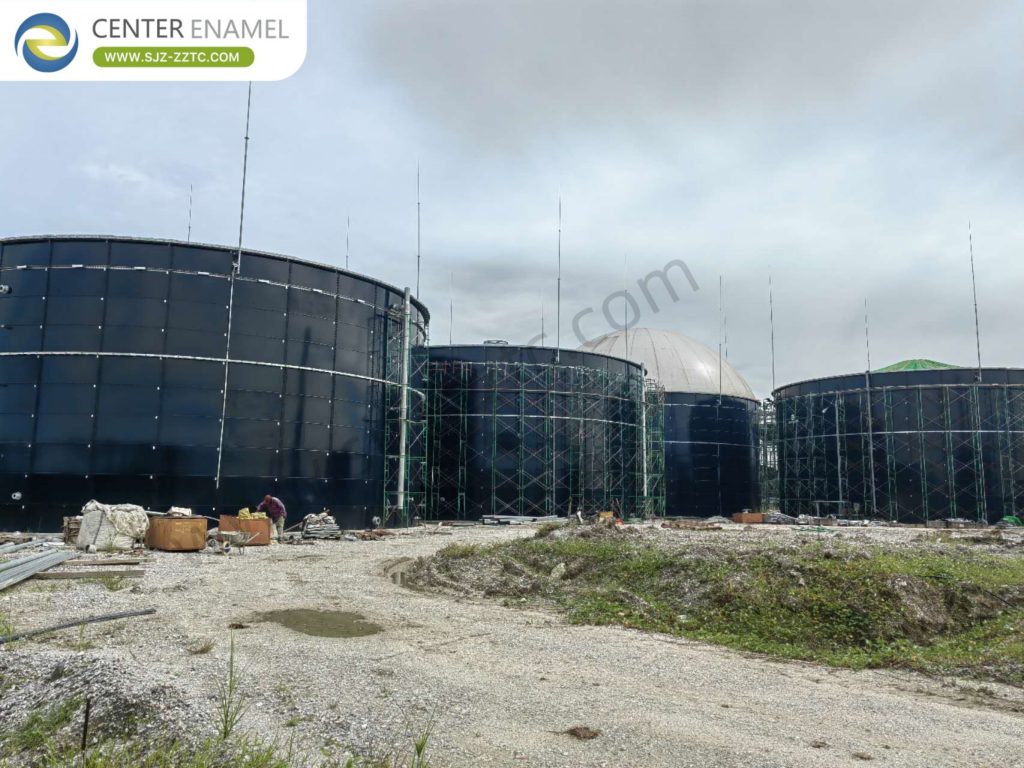
The "Three Highs" Defining Today's Industrial Effluent
The core challenges of industrial wastewater treatment center on the "three highs"-high difficulty, high cost, and high energy consumption. Effluent from new energy, chemical, and pharmaceutical industries is complex in composition, with numerous characteristic pollutants that traditional processes struggle to remove. Chinese manufacturers have long held a price advantage in mid-to-low-end equipment, yet end users increasingly demand both technical depth and lifecycle value rather than upfront cost alone. On top of this, continuously tightening emission standards force plants toward constant process upgrades, while digitalization and low-carbon targets raise the bar for operational refinement.
These pressures hit chemical producers with particular force, because the pollutants themselves are not merely difficult-they are dangerous.
Why Chemical Effluent Carries the Highest Ecological Risk
Among all industrial wastewater types, chemical effluent shows the strongest environmental toxicity and highest ecological risk, combining acute toxicity, chronic toxicity, and environmental persistence. Toxic organics such as benzene-series compounds, phenols, cyanides, and halogenated hydrocarbons at high concentrations are strongly inhibitory and even lethal to aquatic organisms and microbial communities; trace-level discharges can still inflict irreversible damage. Halogenated hydrocarbons and polycyclic aromatic hydrocarbons persist in the environment, bioaccumulate through the food chain, and carry carcinogenic, teratogenic, and mutagenic risks. High-salinity discharges drive soil salinization and groundwater mineralization, heavy metals accumulate in sediments, and trace endocrine disruptors can interfere with aquatic reproduction-even at concentrations below conventional detection limits.
With effluent this corrosive and toxic, the vessel that holds it becomes a critical design decision-and here GFS tanks consistently outperform concrete.
Why GFS Tanks Outperform Concrete in Extreme Climates
GFS tanks can be customized for wind and seismic loads based on site climate and geology, with environmental adaptability far superior to concrete tanks. Concrete tanks are cast-in-place monolithic structures, with seismic and wind resistance entirely dependent on on-site construction quality; in remote areas, typhoon-prone zones, and earthquake belts, that quality is difficult to control. Under strong earthquakes or typhoons, concrete tanks are prone to cracking and base settlement, with repair costs close to rebuilding.
Before construction, GFS tanks projects collect local seismic intensity, maximum wind pressure, and foundation bearing-capacity data, then deploy customized thickened steel panels, stiffening ribs, and anchored base components-all factory-prefabricated to standardized specifications. The bolted panel structure distributes stress evenly, resists overall fracture under seismic and typhoon impacts, and tolerates minor foundation settlement without through-cracking. Structural parameters can be flexibly adjusted for mountainous, coastal typhoon, and high-seismic sites, providing long-term protection against extreme natural climate damage.
Inside these durable vessels, the biological engine of Center Enamel's wastewater treatment solutions is the IC anaerobic reactor.
The IC Process: Compact, Shock-Tolerant, Energy-Recovering
The IC Process delivers top-tier treatment efficiency within only one-third of the footprint required by traditional anaerobic processes for the same capacity-a decisive compactness advantage on crowded industrial sites. Its built-in gas-lift internal circulation eliminates external recirculation equipment, autonomously forcing mixing between sludge and wastewater; the resulting hydraulic shear ensures thorough microbe–pollutant contact, raising degradation efficiency and enabling the system to withstand high water-quality and hydraulic shock loads. The dual-zone configuration pairs high-rate degradation with deep polishing for stable effluent, while a high degree of sludge granulation keeps biomass active and resists washout. With high automation, low failure rates, large biogas output, and long-term energy and O&M costs far below conventional anaerobic units, the IC process is purpose-built for large-flow, high-concentration industrial wastewater.
Above the vessels, biogas and odor must be contained-and here Center Enamel's aluminum geodesic dome completes the system.
Aluminum Geodesic Domes: Sealing the System Above
Center Enamel's independently developed Aluminum Geodesic Dome Roof is manufactured from high-strength aluminum alloy plates formed by integral stamping, using a triangular-grid, spherical, self-supporting structure that spans large diameters without internal columns. Aluminum alloy offers outstanding weather and corrosion resistance against acid rain, salt spray, and UV radiation, suiting it to extreme outdoor climates worldwide. The design complies with AWWA D108, with plate thickness, rib sections, and joint connections verified by finite-element stress analysis to meet wind and snow building codes across regions. Weighing only one-third to one-half of a steel roof of equal span, it reduces top-of-tank load and can be mounted without wall reinforcement. Double sealing between panels-using specialized sealant strips and mechanical interlocking-delivers airtight gas storage and enclosed odor control for biogas collection, wastewater odor abatement, and drinking-water protection. The column-free interior leaves mixers and water distributors unobstructed, while aluminum's resistance to microbial growth eliminates recurring anti-corrosion maintenance, lowering total lifecycle cost.
Equipment is only as good as its installation-and as a wastewater treatment solutions provider with 10,000+ tanks in service, Center Enamel has standardized quality control end to end.
Full-Process Quality Control: Four Dimensions, Three Regions
Center Enamel has established full-chain quality control across four dimensions-factory protection, on-site assembly, completion inspection, and long-term warranty-to guarantee every GFS tank. At the factory stage, all enameled panels, seals, and structural components receive rust-proof and moisture-proof independent packaging with dedicated supports, preventing damage during sea and land transport. On site, unified assembly specifications are followed panel-by-panel, with layer-by-layer tightening and leak testing, plus air-tightness and verticality checks after each tank section; dual-membrane covers and anaerobic piping undergo simultaneous pressure testing. Regional acceptance is differentiated: EU/US projects follow stringent CE/NSF inspection criteria, Southeast Asian hot-humid sites receive enhanced corrosion and sealing acceptance, and remote African projects add foundation re-inspection procedures. Upon completion, full construction reports, pressure-test records, and anti-corrosion appearance documents are issued with photo/video archives.
| QC Dimension | Standard Applied |
| Factory protection | Rust/moisture-proof independent packaging; dedicated transport supports |
| On-site assembly | Panel-by-panel tightening; layered leak, air-tightness, and verticality tests |
| Completion acceptance | Construction reports, pressure-test records, anti-corrosion sign-off |
| EU/US projects | CE / NSF stringent inspection criteria |
| Southeast Asia | Enhanced corrosion protection and sealing acceptance |
| Remote Africa | Additional foundation settlement re-inspection |
| Long-term track record | 10,000+ tanks globally, no large-scale leakage or deformation |
This discipline is why Center Enamel's GFS tanks have accumulated a global reference base that few competitors can match.
Global Track Record: 30,000+ Projects in 100+ Countries
Center Enamel's project portfolio spans over 100 countries across Southeast Asia, Africa, Europe, and the Americas, with more than 30,000 mature installations accumulated across palm oil, livestock, municipal, brewing, food-waste biogas, and chemical effluent treatment. This breadth allows the company to rapidly match customized wastewater treatment solutions to regional climates, water-quality profiles, and regulatory regimes, rather than forcing every site onto a single template.
| Region | Representative Industries | Typical Equipment Package |
| Southeast Asia | Palm oil, food processing, municipal | GFS anaerobic reactor + aluminum dome |
| Africa | Brewing, livestock, agro-processing | GFS tanks + IC/USR anaerobic system |
| Europe & Americas | Municipal, food & beverage, industrial | GFS tanks + CE/NSF-certified accessories |
| Global total | 100+ countries / 30,000+ projects | Full-chain EPC delivery, 30+ year design life |
Frequently Asked Questions
Q1. What makes Center Enamel a one-stop wastewater treatment solutions provider?
A1. Center Enamel integrates enamel frit R&D, GFS tank manufacturing, IC anaerobic process design, aluminum dome covers, cross-border installation, and long-term O&M in one chain-delivering a single accountable solution rather than multiple disconnected vendors.
Q2. Why choose GFS tanks over concrete for industrial wastewater?
A2. GFS tanks are factory-prefabricated, bolted, and customizable for seismic, wind, and foundation conditions; their enamel surface resists corrosive effluent, avoids on-site cracking risks, and reaches a 30+ year anti-corrosion service life.
Q3. How is installation quality guaranteed on global projects?
A3. Four-dimensional QC covers factory packaging, on-site assembly and pressure testing, completion sign-off, and long-term warranty, with regionalized acceptance under CE/NSF for EU/US projects and enhanced corrosion/settlement checks for Southeast Asian and African sites.
Looking for a wastewater treatment solutions provider that can deliver GFS tanks and anaerobic systems on time, on spec, and in your climate? Share your effluent profile and site conditions-our engineering team will return a tailored proposal within 48 hours.
From process design and GFS tank fabrication to cross-border installation and lifelong O&M support, Center Enamel's global team is ready-contact us today to turn your industrial wastewater challenge into a stable, compliant, and recoverable asset.