
How Do Integrated Wastewater Treatment Solutions and GFS Tanks Solve Modern Industrial Challenges?
The competitive landscape of industrial wastewater shows clear divergence. Leading companies are building integrated service capabilities through technical integration and capital operations, and industry concentration is gradually increasing. Chinese companies continue to consolidate their advantages in mid-tier equipment exports. International giants target high-end customers and complex industrial wastewater markets, while local players occupy the mid-to-low-end and industrial park centralized treatment markets with service responsiveness and cost advantages.
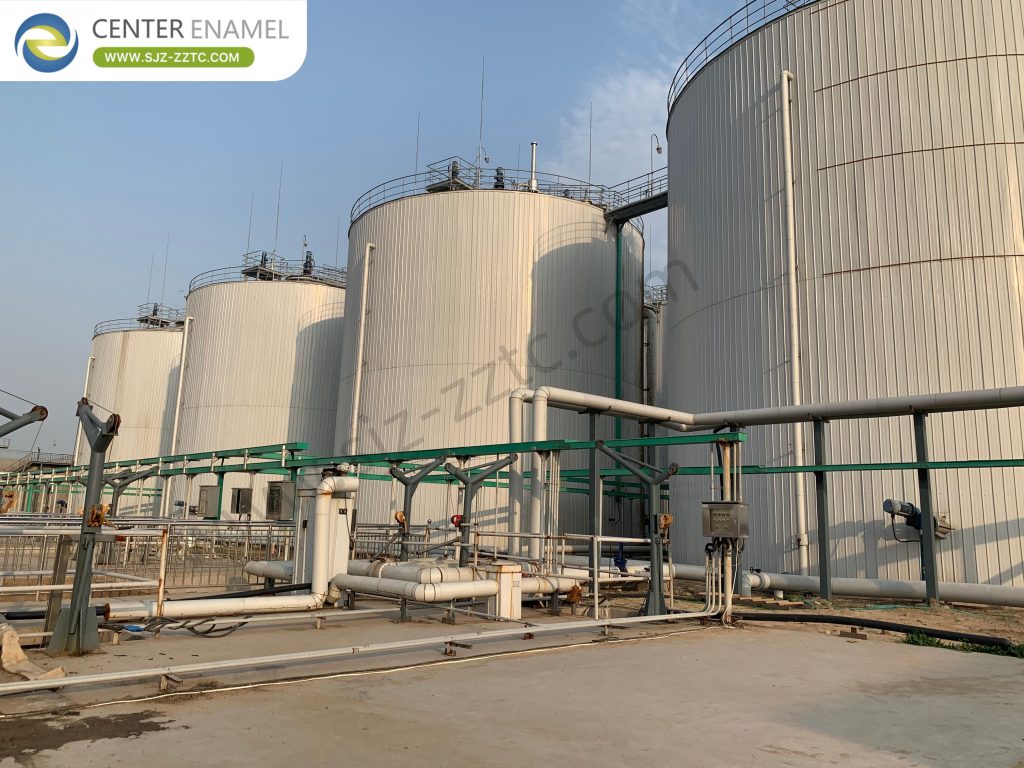
In the anaerobic process segment, UASB, EGSB, and IC anaerobic reactors-with advantages of high loading rates, small footprints, and stable operation-are widely used in high-concentration organic wastewater pretreatment in food processing, pharmaceutical fermentation, alcohol brewing, chemical, and other industries. These reactors use steel tank shells, and their corrosion resistance and gas-tightness directly determine long-term operational stability. This is precisely where GFS Tanks prove their worth, and why complete Wastewater Treatment Solutions must be engineered around the right containment system from the very start.
Why Do GFS Tanks Fit Modern Intensive Plant Layouts So Well?
Layout flexibility is the first advantage that GFS Tanks bring to any project. They offer flexible customization of size and appearance, with higher land utilization rates, making them ideally suited for modern compact plant layouts with significant advantages over fixed poured concrete tanks. Concrete tanks cannot alter volume or shape after pouring, with heavy bases occupying large areas, making placement difficult on narrow or irregular plots, and their rough, uniform appearance cannot match modern facility aesthetic requirements.
GFS Tanks, by contrast, can be precisely customized as needed, with capacities ranging from dozens of cubic meters to 50,000 cubic meters freely selectable. Tank height and diameter can be flexibly combined to fit narrow or irregularly shaped plots, effectively saving plant land occupation. Enamel color customization is also supported, achieving visual harmony with plant buildings and environmental facilities. During later plant expansion, GFS Tanks can be directly adjusted in layout and expanded; concrete tanks, being monolithic structures, must be demolished and rebuilt, offering less flexibility in land resource utilization. This aligns well with the intensive construction and aesthetic operation and maintenance needs of industrial parks-an essential consideration when designing Wastewater Treatment Solutions for space-constrained sites.
Where Does the IC Process Deliver the Greatest Value?
Within the broader family of Wastewater Treatment Solutions, the IC process occupies a distinctive niche. It is primarily designed for high-concentration, high-flow soluble industrial organic wastewater, covering brewery, beverage, starch, pharmaceutical, chemical, and papermaking high-strength wastewater. It suits land-constrained projects with high treatment efficiency requirements in large industrial wastewater treatment facilities, and can serve as the primary process for high-strength wastewater with rapid COD/BOD removal. It is equally suitable for centralized industrial park WWTPs and large enterprise proprietary treatment systems, particularly for wastewater with significant quality fluctuations and extremely high pollutant concentrations. It is not suitable for high-solids, high-viscosity wastewater. For the right stream, it is the preferred anaerobic process for modern high-efficiency industrial wastewater treatment-and it pairs naturally with GFS Tanks, whose corrosion resistance and gas-tightness safeguard the reactor's long-term stability.
How Economical Are These Wastewater Treatment Solutions to Operate?
Economics decide whether Wastewater Treatment Solutions survive long term, and here the picture is favorable. O&M costs are moderate to low-white water recirculation greatly reduces external treatment volume, with good overall economics. White water recirculation systems have moderate capital investment but recover large quantities of fiber and water, yielding significant economic benefits. Pretreatment fiber recovery can be sold, reducing treatment costs. Alkali recovery systems recover alkali and generate steam from lignin combustion, delivering substantial resource recovery benefits. Anaerobic plus aerobic processes are mature and stable, with low chemical consumption and moderate energy consumption. Equipment primarily consists of conventional pumps and aerators-simple structure, low failure rates, and controllable maintenance costs. Fiber sludge can be recovered or sold, keeping disposal costs low. Large volume but moderate pollutant concentration means economies of scale reduce unit treatment costs. Overall, resource recovery revenues from fiber recovery, alkali recovery, and steam generally cover O&M costs, producing good economics.
Table 1: O&M Cost and Recovery Profile
| Cost / Benefit Item | Impact |
| White water recirculation | Reduces external treatment volume; recovers fiber and water |
| Fiber recovery | Recoverable or saleable; lowers disposal costs |
| Alkali recovery + lignin steam | Substantial resource recovery revenue |
| Chemical and energy consumption | Low to moderate |
| Equipment maintenance | Simple pumps/aerators; low failure rate |
| Overall economics | Recovery revenues generally cover O&M costs |
Which Countries Can Center Enamel's GFS Tanks Reach?
None of these Wastewater Treatment Solutions matter without delivery capability, and here Center Enamel's track record speaks clearly. The company is the pioneer of Chinese GFS equipment exports, with installation service coverage across over 100 countries and regions-possessing full delivery capability across climates, regulations, and geographies. Overseas coverage includes Southeast Asia (Vietnam, Thailand, Malaysia, Indonesia, Cambodia, Bangladesh, Nepal, and others), Africa (Ghana, South Africa, Mali, Guinea, Zambia, Kenya, Pakistan, and others), Europe and the Americas (Sweden, USA, Russia, and others), the Middle East, and Latin America-adaptable to tropical rainy high-salt-spray conditions, high-altitude mountainous terrain, Nordic severe cold, and high-standard European/American facility requirements.
Table 2: Global Delivery Coverage
| Region | Representative Countries | Site Conditions Handled |
| Southeast Asia | Vietnam, Thailand, Malaysia, Indonesia, Cambodia, Bangladesh, Nepal | Tropical rainy, high salt spray |
| Africa | Ghana, South Africa, Mali, Guinea, Zambia, Kenya, Pakistan | Remote sites, varied terrain |
| Europe / Americas | Sweden, USA, Russia | Nordic cold, high-standard facilities |
| Middle East | Multiple markets | Arid, high-temperature conditions |
| Latin America | Multiple markets | Coastal and inland sites |
The company uses a dual-service model of "own cross-border construction teams + overseas local agent coordination"-whether clients are in developed countries or remote developing regions, it provides one-stop services including on-site survey, on-site installation, process commissioning, and operator training. Complete coverage spans biogas engineering, municipal wastewater, industrial wastewater, livestock manure, drinking water storage, and other global mainstream environmental engineering projects, giving the company the full delivery capability to undertake large-scale tank farm projects in any country worldwide.
What Service Model Supports Long-Term Operations?
Delivery is only the beginning; service sustains the asset. Center Enamel's own cross-border construction teams plus a global localized agent network enable modular GFS tank assembly with short construction periods and dismantlable, reusable capability-suitable for overseas short-term projects, phased expansions, and relocation needs-with full-lifecycle after-sales O&M support ensuring long-term stable client operations.
When Should You Choose an FRP Roof Cover?
Not every tank needs gas-tight sealing, and choosing the right roof keeps Wastewater Treatment Solutions cost-effective. The FRP Roof is a general-purpose economical roof for atmospheric pressure storage tanks without air-tightness requirements, suitable for drinking water storage, agricultural irrigation water, firewater reserve, and general production wastewater temporary storage. It is available in two styles-flat and dome-allowing flexible selection based on tank specifications and site aesthetic requirements. The roof is integrally molded from resin and fiberglass: lightweight, with natural water resistance and mild acid/alkali corrosion resistance. It will not rust or rot in long-term humid environments, eliminating the frequent anti-corrosion maintenance required for metal roofs.
The dome style features excellent drainage performance due to its curved structure, resisting water accumulation, dust buildup, snow load, and strong winds. The flat style facilitates the installation of maintenance walkways, level gauges, and vents on top, making inspection and operation convenient. The product is fully insulated with no risk of galvanic corrosion, will not contaminate drinking water quality, and meets environmental standards for domestic water storage. Its modular design with low individual component weight allows for simple on-site hoisting and assembly, offering high construction efficiency and affordable procurement and installation costs. It is only suitable for atmospheric pressure water storage tanks without biogas collection or pressurization requirements, and is not recommended for anaerobic fermentation gas-producing conditions. It is widely used in rural agricultural water storage tanks, industrial park firewater tanks, waterworks buffer tanks, and small to medium-sized domestic wastewater temporary storage facilities-a cost-effective general-purpose roof choice for conventional water storage applications, and a sensible complement to GFS tank-based Wastewater Treatment Solutions wherever pressurization is not required.
FAQ
Q1: What makes GFS Tanks suitable for anaerobic reactors?
GFS Tanks provide the corrosion resistance and gas-tightness that anaerobic reactors demand, with capacities up to 50,000 m³ and flexible height-diameter combinations.
Q2: Which wastewater streams suit the IC process?
High-concentration, high-flow soluble organic streams from brewery, beverage, starch, pharmaceutical, chemical, and papermaking industries-not high-solids or high-viscosity wastewater.
Q3: Does Center Enamel install tanks overseas?
Yes. Own cross-border construction teams plus local agents deliver on-site survey, installation, commissioning, and operator training across 100+ countries.
Looking for Wastewater Treatment Solutions tailored to your site and stream? Share your project parameters with our engineers for a process and tank recommendation.
Contact Center Enamel to compare GFS Tanks configurations and confirm delivery timelines for your region.