
How Does the Right Wastewater Treatment Technology and EPC Contractor Solve the "Three Highs"?
Industrial wastewater treatment today is defined by what the industry calls the "three highs": high difficulty, high cost, and high energy consumption. Wastewater from new energy, chemical, and pharmaceutical industries is complex in composition, carrying numerous characteristic pollutants that traditional processes struggle to remove. Chinese companies have built significant price advantages in the mid- to low-end equipment segment, yet the industry still faces relentless pressure from increasingly stringent emission standards, plus new requirements for digitalization and low-carbon transformation. Meeting these demands requires more than equipment selection-it requires a coherent Wastewater Treatment Technology stack delivered by an experienced EPC Contractor. The difference between a plant that performs and one that struggles usually comes down to how well those two elements are integrated.
Why Do the "Three Highs" Demand a New Technology Approach?
The "three highs" are not abstract concerns-they translate into real operational pain. High difficulty stems from complex pollutant profiles that resist conventional biological treatment. High cost shows up in chemical consumption, energy use, and hazardous sludge disposal. High energy consumption reflects processes that demand intensive aeration, pumping, and thermal treatment. Traditional treatment trains were designed for simpler effluent and now fall short on all three fronts. The pressure is compounded by tightening standards: limits on total nitrogen, total phosphorus, and characteristic pollutants continue to shrink, while digitalization and low-carbon mandates add operational reporting and energy efficiency requirements. A modern Wastewater Treatment Technology strategy must therefore address treatment performance, resource recovery, and operational intelligence in a single coordinated design-not as separate add-ons.
Where Does Wastewater Treatment Technology Deliver the Most Value?
The highest-value technology choices concentrate where pollutant loads are heaviest and land is tightest. For high-concentration, high-flow soluble organic wastewater-covering brewery, beverage, starch, pharmaceutical, chemical, and papermaking streams-the IC reactor has become the preferred anaerobic process. It suits land-constrained projects with high treatment efficiency requirements, serving as the primary process for rapid COD/BOD removal in large industrial facilities. It is particularly effective in centralized industrial park WWTPs and large enterprise proprietary treatment systems where water quality fluctuates significantly and pollutant concentrations run extremely high. It is not suitable for high-solids, high-viscosity wastewater, so pre-screening and equalization remain essential.
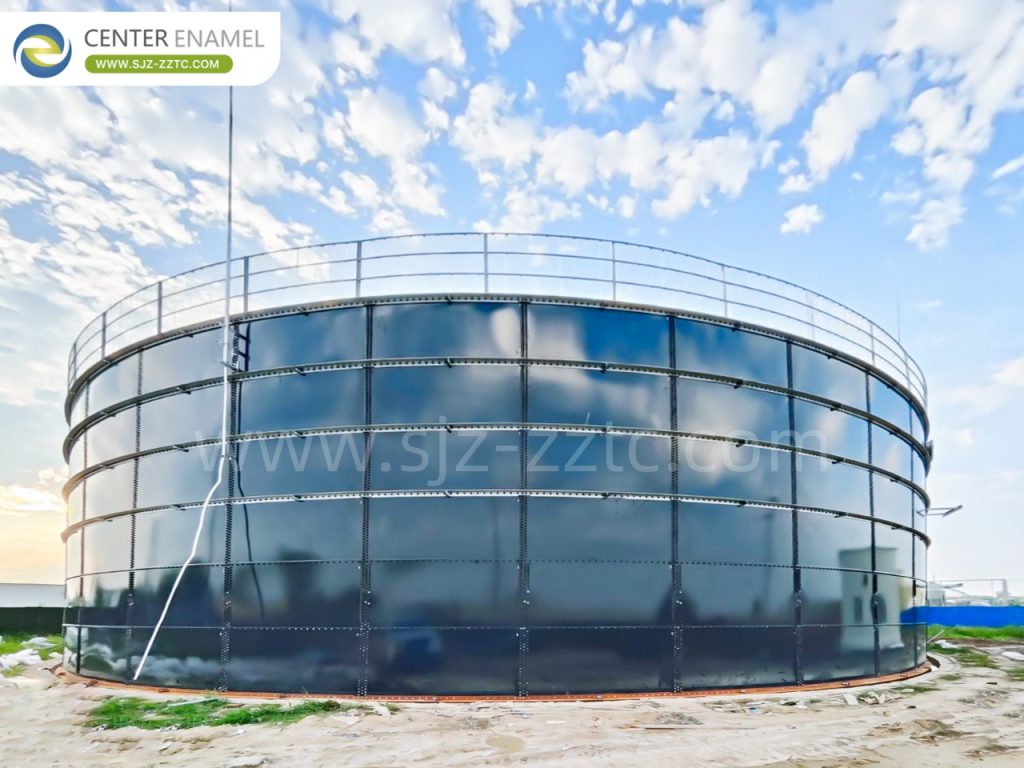
Around the reactor, the containment technology matters just as much: GFS tanks are fully factory-prefabricated to standardized specifications, with finished quality stability far exceeding cast-in-place concrete. Concrete tanks are built in the open air, where rebar tying, pouring, and curing depend on worker skill, temperature, and rainfall-wall thickness, density, and strength vary between batches, and hidden defects like honeycombing, voids, and insufficient thickness are common. GFS panels, seals, and reinforcement components are mass-produced in automated factories, with stamping, high-temperature enameling, and cutting controlled by CNC equipment to unified standards. Full-process inspection from raw material to finished component eliminates on-site construction risk, delivering consistent performance tank after tank.
What Does a Realistic Cost Picture Look Like for the Toughest Streams?
Not every wastewater type responds equally to advanced technology. Chemical wastewater ranks among the highest in O&M cost of all wastewater types, with poor overall economic viability second only to pharmaceutical wastewater. Strong toxicity and high salinity require extensive segregated pretreatment equipment-high capital investment and complex operation. Advanced oxidation demands continuous addition of expensive chemicals such as hydrogen peroxide, ozone, and catalysts. High-salinity evaporation crystallization and reverse osmosis consume enormous electricity and steam. Salt-bearing and toxic sludge is hazardous waste, and compliant disposal can account for over 30% of total costs. Equipment in high-salt, highly corrosive, strong oxidizing environments suffers frequent corrosion damage, driving high repair and replacement costs that demand premium corrosion protection. Frequent water quality fluctuations require dedicated 24/7 monitoring and adjustment, pushing labor costs upward. Resource recovery benefits are minimal, and overall investment far exceeds returns. This is precisely why an experienced EPC Contractor matters: realistic cost modeling at the design stage prevents unpleasant surprises during operation.
Table 1: IC Reactor Applicable Scenarios
| Criterion | Suitability |
| Wastewater type | High-concentration, high-flow soluble organics |
| Target industries | Brewery, beverage, starch, pharmaceutical, chemical, papermaking |
| Site conditions | Land-constrained, high-efficiency requirements |
| System type | Industrial park WWTPs, large enterprise proprietary systems |
| Water quality profile | Significant fluctuations, extremely high pollutant concentrations |
| Not suitable for | High-solids, high-viscosity wastewater |
Table 2: Chemical Wastewater Cost Drivers
| Cost Factor | Impact |
| Segregated pretreatment equipment | High capital investment, complex operation |
| Advanced oxidation chemicals | Very high chemical costs (H₂O₂, ozone, catalysts) |
| Evaporation crystallization & RO | Significant electricity and steam consumption |
| Hazardous sludge disposal | Over 30% of total costs |
| Corrosion damage & repairs | High replacement costs; premium protection required |
| 24/7 monitoring & adjustment | High labor costs |
| Resource recovery benefits | Minimal; investment far exceeds returns |
How Does an EPC Contractor Deliver Across 100+ Countries?
Delivery capability separates credible EPC Contractors from equipment sellers. Center Enamel is the pioneer of Chinese GFS equipment exports, with installation service coverage across more than 100 countries and regions-possessing full delivery capability across climates, regulations, and geographies. Overseas coverage includes Southeast Asia (Vietnam, Thailand, Malaysia, Indonesia, Cambodia, Bangladesh, Nepal), Africa (Ghana, South Africa, Mali, Guinea, Zambia, Kenya, Pakistan), Europe and the Americas (Sweden, USA, Russia), the Middle East, and Latin America-adaptable to tropical rainy high-salt-spray conditions, high-altitude mountainous terrain, Nordic severe cold, and high-standard European/American facility requirements. The company operates a dual-service model of own cross-border construction teams plus overseas local agent coordination. Whether clients are in developed countries or remote developing regions, the scope covers on-site survey, on-site installation, process commissioning, and operator training. Complete coverage spans biogas engineering, municipal wastewater, industrial wastewater, livestock manure, and drinking water storage-providing the full delivery capability to undertake large-scale tank farm projects in any country worldwide.
What Support Extends Beyond Commissioning?
A plant's performance over its service life depends on what happens after handover. Center Enamel's modular GFS tank assembly keeps construction periods short and allows tanks to be dismantled and reused-suitable for overseas short-term projects, phased expansions, and relocation needs. Full-lifecycle after-sales O&M support ensures long-term stable client operations. For storage applications that do not require biogas collection or high-pressure sealing, the Aluminum Alloy Trough Deck Roof offers an economical cover solution for drinking water, production wastewater, and firewater reserve tanks. Its body is integrally formed from anti-corrosion aluminum alloy plates paired with aluminum support trusses.
The lightweight design imposes less load on the tank foundation, reducing civil construction investment. A naturally formed dense oxide protective layer resists rain and mild wastewater corrosion, blocks wind, rain, insects, fallen leaves, and odor volatilization, and prevents dust and debris from causing secondary contamination. The flat roof structure accommodates maintenance walkways, guardrails, vents, and level monitoring ports, while the simple sealing structure enables short construction timelines and virtually eliminates anti-corrosion painting maintenance-keeping operational costs extremely low. It has been widely implemented in waterworks clear water tanks, industrial circulating water tanks, park firewater tanks, and domestic wastewater temporary storage facilities.
Frequently Asked Questions
Q: What wastewater types suit IC reactor technology?
A: High-concentration, high-flow soluble organic streams from brewery, beverage, starch, pharmaceutical, chemical, and papermaking industries-especially land-constrained sites needing rapid COD/BOD removal.
Q: Why choose an EPC Contractor over separate equipment suppliers?
A: A single EPC Contractor integrates process design, tank manufacturing, installation, and commissioning-reducing interface risk and ensuring consistent quality from raw material to startup.
Q: How long does GFS tank installation take overseas?
A: Modular GFS panels assemble quickly on site, and with cross-border construction teams plus local agents, projects are delivered on schedule across 100+ countries.
Send us your project parameters and our engineers will return a preliminary process configuration with tank specifications and delivery timeline.
Reach out to Center Enamel to discuss how the right Wastewater Treatment Technology and a proven EPC Contractor can move your project from planning to operation.